CM Fadnavis Chairs Dharavi Redevelopment Review Meet
Synopsis
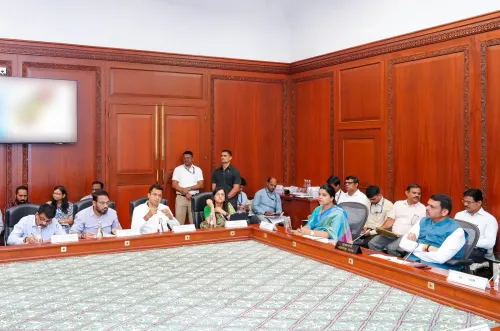
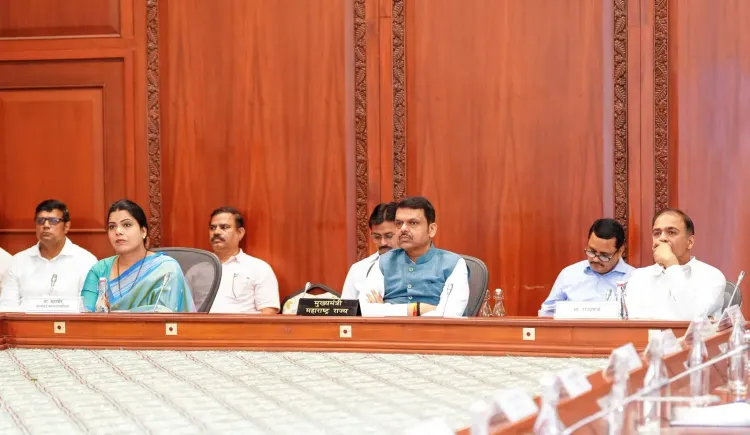
Chief Minister Devendra Fadnavis chaired a review meeting on the Dharavi Redevelopment Project at Sahyadri Guest House, Mumbai on 8 June 2026. Mumbai Mayor Ritu Tawde and MoS Dr. Pankaj Bhoyar were among those present, signalling continued top-level attention to Asia's largest slum redevelopment initiative.
Key Takeaways
CM Devendra Fadnavis personally chaired the review meeting on 8 June 2026 at Sahyadri Guest House, Mumbai .
Mumbai Mayor Ritu Tawde and MoS Dr.
Pankaj Bhoyar attended alongside senior state officials, reflecting multi-agency coordination.
The Dharavi Redevelopment Project was first proposed in 2004 and covers roughly 240 hectares in central Mumbai.
An estimated six to seven lakh residents of Dharavi are the primary beneficiaries of the rehabilitation component.
The project involves complex coordination between the state government, the Slum Rehabilitation Authority , and the Brihanmumbai Municipal Corporation .
Key upcoming milestones include tender awards, phased rehabilitation timelines, and resolution of inter-agency coordination issues.
The Chief Minister's Office of Maharashtra announced on Monday, 8 June 2026 that Chief Minister Devendra Fadnavis chaired a high-level review meeting on the Dharavi Redevelopment Project at Sahyadri Guest House, Mumbai at 12:40 pm. The meeting was attended by Minister of State Dr. Pankaj Bhoyar, Mumbai Mayor Ritu Tawde, and senior government officials.
Context
The Chief Minister's Office posted in English, Marathi, and Hindi, signalling the administration's intent to communicate the development across Maharashtra's diverse linguistic communities. The post confirmed the gathering was a formal review — 'आढावा बैठक' (review meeting) — focused specifically on the status and progress of the Dharavi Redevelopment Project, one of the most closely watched urban renewal initiatives in India.
The presence of Mayor Ritu Tawde alongside state-level officials underlines the dual state-municipal coordination that the project demands, given that Mumbai's civic body plays a critical role in land records, infrastructure provisioning, and resettlement logistics.
Policy Backdrop
The Dharavi Redevelopment Project was first formally proposed in 2004 by the Maharashtra government through the Slum Rehabilitation Authority (SRA), making it over two decades in the making. Located in the heart of Mumbai, Dharavi is widely described as Asia's largest slum, spanning roughly 240 hectares and home to an estimated six to seven lakh residents alongside a dense informal economy.
The project envisions transforming the area into a mixed-use development combining rehabilitated housing for existing residents with commercial and residential real estate. Maharashtra governments across successive administrations have reviewed and revised the project's structure, with implementation delays driven by legal challenges, land ownership complexities involving central government parcels, and the sheer scale of resident consultation required.
CM Fadnavis, a BJP leader who has served multiple terms as Chief Minister, has consistently positioned urban infrastructure and slum rehabilitation as priorities for the state. His direct chairmanship of the review signals continued political attention at the highest level of the Maharashtra government.
Stakeholders and Impact
The most immediate stakeholders are the estimated six to seven lakh residents of Dharavi, who stand to receive free rehabilitated housing under the project's slum-dweller entitlement norms. Equally affected are the thousands of small businesses and workshops that form the backbone of Dharavi's informal manufacturing economy, whose relocation and continuity remain a persistent concern.
The Mumbai civic body's involvement, represented at the meeting by Mayor Tawde, is critical for on-ground coordination — from water and sanitation connections to road access and school provisioning in resettlement zones. MoS Dr. Pankaj Bhoyar's participation reflects the state government's multi-ministerial oversight structure for the project.
What's Next
Observers will watch for announcements on specific project milestones emerging from this review, including tender awards, phased rehabilitation timelines, and resolution of pending coordination issues between state agencies and the Brihanmumbai Municipal Corporation (BMC). Any acceleration in the project's timeline would have significant implications for Mumbai's housing market and the livelihoods of Dharavi's large resident and business community.
With senior officials from multiple wings of government in the room, this review meeting may set the agenda for the next phase of one of urban India's most consequential redevelopment efforts.
Point of View
Not merely an administrative one. The inclusion of Mumbai Mayor Ritu Tawde alongside state officials reflects an attempt to close the state-municipal coordination gap that has historically slowed the project. Coming more than two decades after the project's initial proposal, sustained top-level reviews suggest the current administration is under pressure to show tangible progress before the political window narrows. How quickly outcomes from this review translate into on-ground milestones will be the real test of momentum.
NationPress
24 Oct 2026
Frequently Asked Questions
What is the Dharavi Redevelopment Project?
The Dharavi Redevelopment Project is a Maharashtra government initiative, first proposed in 2004, to redevelop Dharavi — widely described as Asia's largest slum — in Mumbai into mixed-use housing and commercial space, providing free rehabilitated homes to existing residents.
Why did CM Fadnavis hold a review meeting on Dharavi?
CM Devendra Fadnavis chaired the review meeting on 8 June 2026 at Sahyadri Guest House, Mumbai to assess the current status and progress of the Dharavi Redevelopment Project, with senior state and municipal officials present.
Who attended the Dharavi review meeting on 8 June 2026?
The meeting was attended by Minister of State Dr. Pankaj Bhoyar, Mumbai Mayor Ritu Tawde, and senior government officials, in addition to CM Devendra Fadnavis who chaired the session.
How many people live in Dharavi?
Dharavi is estimated to be home to approximately six to seven lakh residents and also hosts a large informal manufacturing and trading economy across its roughly 240 hectares in central Mumbai.
What are the next steps for the Dharavi Redevelopment Project?
Key milestones to watch include tender awards, phased rehabilitation timelines for residents, and improved coordination between the Maharashtra state government and the Brihanmumbai Municipal Corporation.