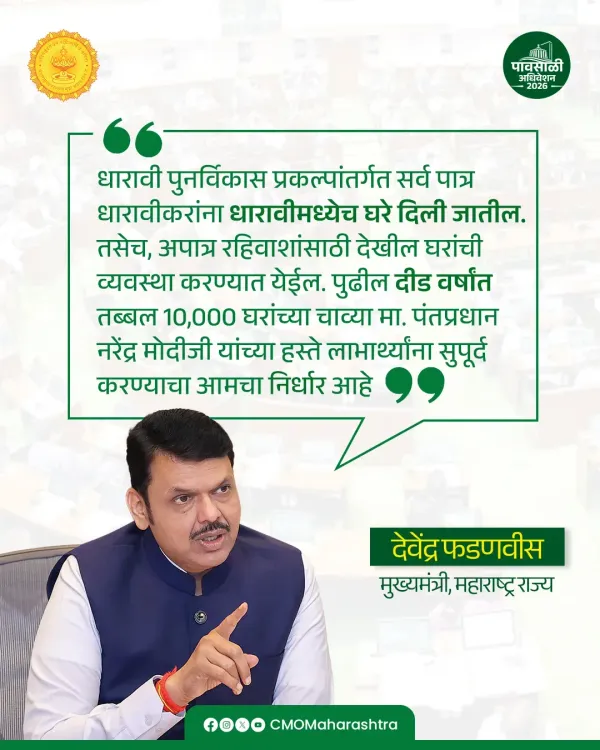
CM Fadnavis Pushes Dharavi Redevelopment to New Phase
Synopsis
The Chief Minister's Office of Maharashtra announced on 8 July 2026 that the Dharavi Redevelopment Project is gaining pace, with CM Devendra Fadnavis personally associated with the push to deliver formal homes to over 5 lakh residents of Asia's largest slum cluster in Mumbai.
Key Takeaways
The Chief Minister's Office of Maharashtra posted on 8 July 2026 that the Dharavi Redevelopment Project is accelerating.
Dharavi spans roughly 2.1 sq km in Mumbai and houses over 5 lakh people , making it one of Asia's largest informal settlements.
The project was formally initiated in 2004 through a dedicated special purpose vehicle under the Slum Rehabilitation Scheme .
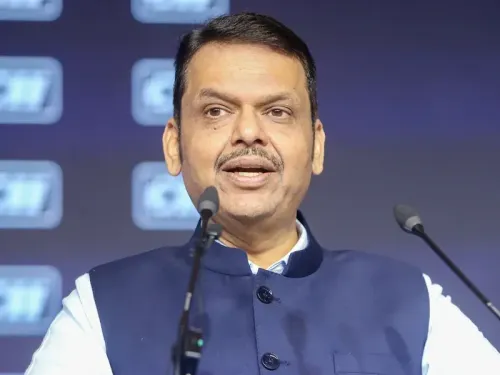
CM Devendra Fadnavis has been tagged directly, signalling his personal ownership of the project's forward momentum.
Key milestones to watch include tender finalisation, resident consent processes, and phased construction and relocation timelines.
The redevelopment carries implications for both residential beneficiaries and the informal commercial economy operating within Dharavi.
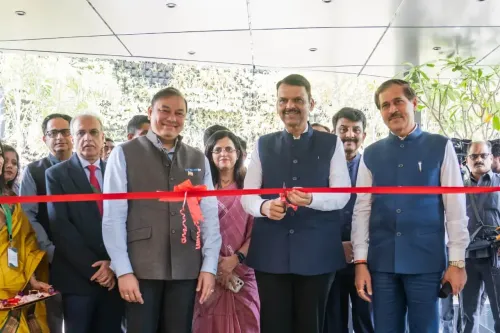
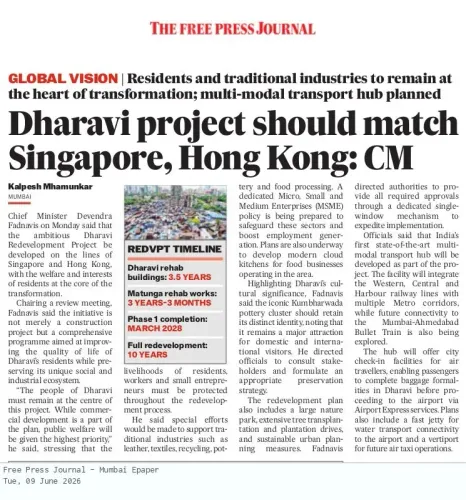
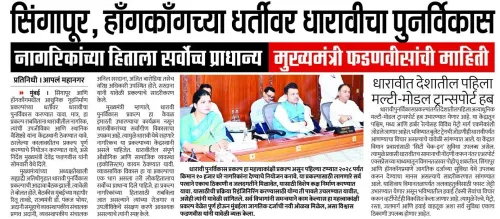
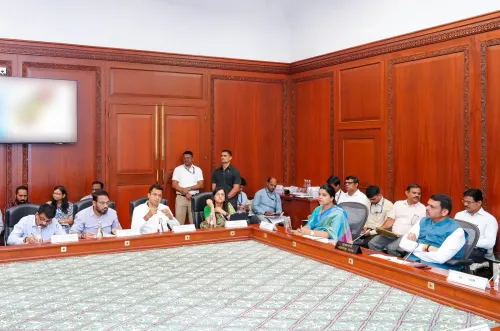
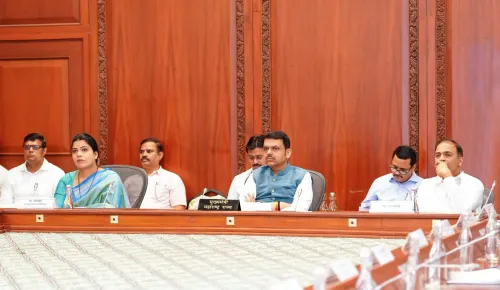
The Chief Minister's Office of Maharashtra announced on Wednesday, 8 July 2026 that the Dharavi Redevelopment Project is gaining momentum, declaring that the dream of a home for Dharavi residents now stands on the threshold of reality. The post, tagged to Chief Minister Devendra Fadnavis, signals a renewed push by the state government to accelerate one of India's most-watched urban renewal initiatives.
Context
The CMO's post in Marathi reads: 'धारावीच्या पुनर्विकासाला वेग; धारावीकरांच्या स्वप्नातील घर आता वास्तवाच्या उंबरठ्यावर!' — translated: 'Dharavi redevelopment gains pace; the dream home of Dharavi residents now stands on the threshold of reality.' The message was shared with the hashtags #DharaviRedevelopment and #DevendraFadnavis, underscoring the Chief Minister's personal ownership of the project's progress.
Dharavi, located in the heart of Mumbai, spans roughly 2.1 square kilometres and is home to over 5 lakh people, making it one of Asia's largest and most densely populated informal settlements. The area also hosts a thriving informal economy worth thousands of crore of rupees, adding layers of complexity to any redevelopment effort.
Policy Backdrop
The Dharavi Redevelopment Project was formally initiated by the Maharashtra government in 2004 through the creation of a dedicated special purpose vehicle. Over two decades, successive state governments have pursued the project under the broader Slum Rehabilitation Scheme framework, which aims to convert informal settlements into formal housing and commercial real estate across Mumbai.
Chief Minister Devendra Fadnavis has been a consistent and vocal champion of the project across multiple terms in office. The current communication from the CMO suggests the administration is at a stage where tangible housing delivery for residents is being positioned as imminent, though specific construction timelines and tender details are yet to be formally announced.
Stakeholders and Impact
The primary beneficiaries of the project are the over 5 lakh residents of Dharavi, many of whom have lived in cramped, informal tenements for generations, lacking formal property rights and access to basic civic amenities. For them, the promise of a pucca home with legal title represents a transformative social and economic shift.
Beyond residents, the project carries significant implications for Mumbai's real estate landscape. The redevelopment of 2.1 sq km of centrally located land involves complex negotiations between the state government, developers, and existing occupants — both residential and commercial. The informal industrial clusters within Dharavi, which produce goods ranging from leather goods to pottery, also face relocation and rehabilitation as part of the plan.
What's Next
Observers and policy watchers will closely track the finalisation of tenders, resident consent processes, and the announcement of phased construction and relocation timelines in the coming months. The Maharashtra government's ability to translate this political signal into ground-level delivery — particularly the handing over of formal housing units to eligible residents — will be the key measure of the project's progress.
With CM Fadnavis directly associated with this push, the Dharavi project is set to remain a flagship test of the state's urban governance capacity and its commitment to housing for all in Maharashtra's financial capital.
Point of View
Positioning CM Fadnavis as the driving force behind a project that has languished for over two decades under multiple governments. By framing homes as 'on the threshold of reality,' the administration is raising public expectations and tying the Chief Minister's credibility to delivery. This fits a broader pattern in Maharashtra politics where large-scale Mumbai infrastructure projects are used as proof of governance competence ahead of electoral cycles. The real test, however, will be whether ground-level progress — tenders, consent, and actual unit handovers — matches the rhetorical momentum.
NationPress
7 Oct 2026
Frequently Asked Questions
What is the Dharavi Redevelopment Project?
The Dharavi Redevelopment Project is a Maharashtra government initiative, formally launched in 2004, to redevelop Asia's largest slum cluster in Mumbai — covering roughly 2.1 sq km and housing over 5 lakh people — into formal residential and commercial real estate under the Slum Rehabilitation Scheme.
Who is leading the Dharavi redevelopment in 2026?
Chief Minister Devendra Fadnavis is the primary political champion of the Dharavi Redevelopment Project. The Chief Minister's Office of Maharashtra posted on 8 July 2026 that the project is gaining pace under his leadership.
How many people live in Dharavi, Mumbai?
Dharavi is home to over 5 lakh (500,000) people across an area of approximately 2.1 square kilometres in central Mumbai, making it one of the most densely populated informal settlements in Asia.
When did the Dharavi Redevelopment Project start?
The Dharavi Redevelopment Project was formally announced by the Maharashtra government in 2004, when a special purpose vehicle was created to oversee the initiative. The project has seen multiple phases and changes in leadership over the two decades since.
What are the next steps for Dharavi redevelopment?
Key milestones to watch include the finalisation of construction tenders, completion of resident consent and registration processes, and the announcement of phased relocation and housing delivery timelines by the Maharashtra government.