Dharavi redevelopment: CM Fadnavis sets 2028 deadline, eyes Singapore-level standards
Synopsis
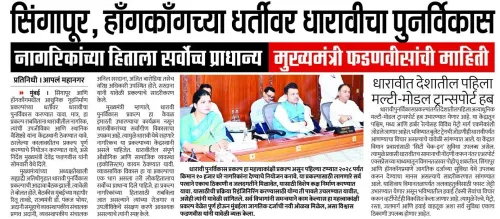
Maharashtra CM Devendra Fadnavis has set March 2028 as the handover deadline for Dharavi's first redevelopment phase, promising 10,000 homes, India's first multi-modal transport hub, and Singapore-level infrastructure — all while insisting that Dharavi's potters, leather workers and food processors must not be displaced from the new city it becomes.
Key Takeaways
CM Devendra Fadnavis reviewed the Dharavi Redevelopment Project on 8 June , setting a March 2028 deadline for the first-phase handover.
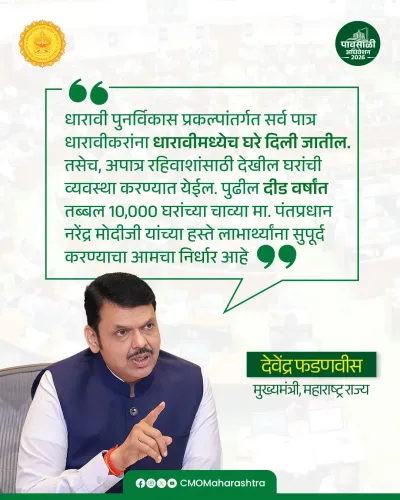
At least 10,000 homes will be delivered to residents in the first phase, with independent kitchens, bedrooms, toilets and natural lighting.
India's first Multi-Modal Transport Hub will be built at Dharavi, integrating Western, Central and Harbour rail lines, Metro routes, an Airport Express, a jetty and a vertiport.
A dedicated MSME scheme is being drafted to protect Dharavi's traditional industries — leather, textiles, recycling, pottery and food processing.
Kumbharwada , the potters' colony, will be preserved as a cultural and tourism asset after stakeholder consultations.
Rehabilitation buildings in Dharavi to be completed in 42 months ; Matunga rehabilitation in 39 months .
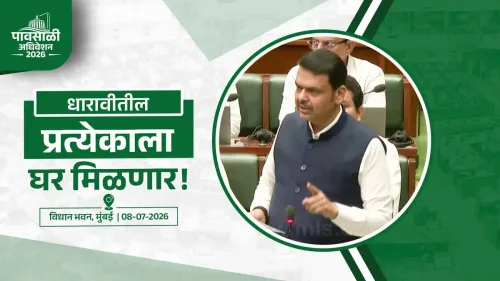
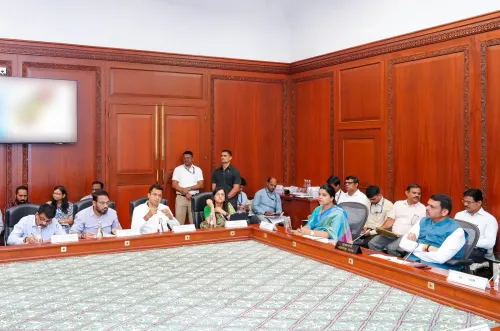
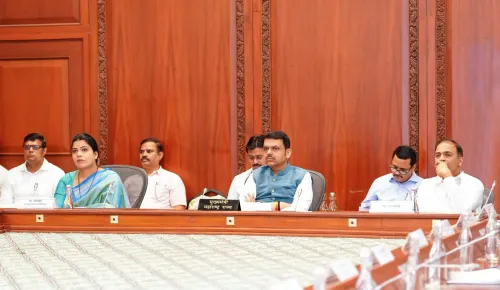
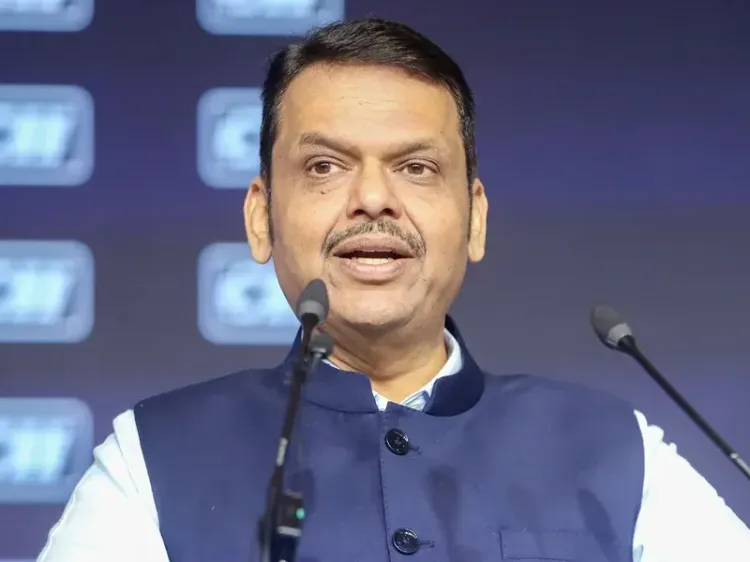
Maharashtra Chief Minister Devendra Fadnavis on Monday, 8 June directed officials to redevelop Dharavi on the lines of modern urban projects in Singapore and Hong Kong, while placing residents, livelihoods and the settlement's distinct cultural identity at the heart of the transformation. Speaking at a high-level review meeting of the Dharavi Redevelopment Project, Fadnavis set a firm target of delivering at least 10,000 homes to residents in the first phase by March 2028.
What the Chief Minister Said
'The Dharavi Redevelopment Project is not merely a construction programme to erect buildings, but a holistic initiative for the overall development of Dharavi's residents,' CM Fadnavis said at the review meeting. He stressed that commercial development is only one component of the plan, and that public welfare must receive the highest priority.
Fadnavis made it explicit that protecting the employment and livelihoods of local residents is paramount, and that Dharavi's entire industrial and social ecosystem must be preserved through the process.
Kumbharwada and Cultural Heritage
The Chief Minister specifically highlighted Kumbharwada, the potters' colony, as a vital part of Dharavi's cultural and tourism legacy — not merely a commercial pottery hub. He directed officials to consult stakeholders and arrive at an amicable solution that preserves Kumbharwada's unique identity, given its significance as a tourist destination.
He also instructed that the proposed Nature Park concept within the project be implemented with meticulous planning for tree transplantation and fresh plantation drives, to maintain ecological balance.
Infrastructure and the Multi-Modal Transport Hub
A centrepiece of the redevelopment is India's first state-of-the-art Multi-Modal Transport Hub at Dharavi, which will connect the Western, Central and Harbour railway lines with multiple upcoming Metro routes. Plans are also under consideration to link the Bullet Train network to Dharavi in the future, according to the government release.
The hub will feature a 'City Check-In' facility, allowing air travellers to check in their baggage at Dharavi and travel directly to the airport via an Airport Express line. A fast jetty for water transport to the airport and a vertiport for future air-taxi services are also planned, bringing rail, Metro, road, water and air connectivity under one roof.
The project additionally includes beautification of the Bandra-Kurla Complex (BKC)–Dharavi corridor, featuring a central green belt, pedestrian pathways and modern architecture. The land currently occupied by a bus depot will be redeveloped into modern residential and commercial complexes.
Housing, MSME Protection and Women's Welfare
Eligible residents will receive new homes equipped with independent kitchens, bedrooms, toilets and natural lighting. Separate sanitation facilities for women will be a key feature of the new housing complexes, officials confirmed.
A dedicated MSME scheme is being drafted to protect Dharavi's major traditional industries — leather, textiles, recycling, pottery and food processing. An advanced 'Cloud Kitchen' concept is also being developed to boost the local food industry. Special emphasis is being placed on job creation and women's empowerment across these sectors.
Timelines and Administrative Reforms
Construction of rehabilitation buildings in Dharavi is planned for completion within 42 months, while a 39-month timeline has been fixed for rehabilitation in the Matunga area. The deadline for completion and handover of the first phase has been set for March 2028.
To accelerate clearances, Fadnavis ordered the setting up of a special single-window cell and called for a re-engineering of administrative processes. Officials confirmed that adequate funding is in place and that the project is progressing as planned. With coordinated inter-departmental effort, Fadnavis expressed confidence that the project would give Mumbai a new global identity.
Point of View
A vertiport, bullet-train connectivity — is considerable, but Dharavi's redevelopment has a long history of ambitious announcements running into political and logistical headwinds. The explicit commitment to preserve Kumbharwada and the MSME ecosystem is notable and responds to a genuine criticism: that large-scale slum redevelopment tends to displace the very economic networks that give such settlements their vitality. The 2028 first-phase deadline is tight given that slum relocation, environmental clearances and railway-land rehabilitation are still in progress. Whether the single-window cell translates into actual speed on the ground — rather than another layer of coordination — will be the real test of Fadnavis's direction.
NationPress
23 Oct 2026
Frequently Asked Questions
What is the Dharavi Redevelopment Project and what is its current status?
The Dharavi Redevelopment Project is a large-scale urban renewal initiative to replace Asia's largest informal settlement in Mumbai with modern housing and infrastructure. As of June 2025, work on railway land, rehabilitation buildings and environmental clearances is progressing in phases, with adequate funding confirmed by officials.
When will residents receive new homes under the Dharavi redevelopment?
CM Fadnavis has set March 2028 as the deadline for the completion and handover of the first phase, which targets delivery of at least 10,000 homes to eligible residents. Rehabilitation construction in Dharavi is planned within 42 months, and in Matunga within 39 months.
What is the Multi-Modal Transport Hub planned for Dharavi?
It will be India's first state-of-the-art transport hub integrating the Western, Central and Harbour railway lines with Metro routes, an Airport Express line, a fast jetty for water transport and a vertiport for future air-taxi services. A 'City Check-In' facility for air travellers will also be housed at the hub.
How will Dharavi's traditional industries and small businesses be protected?
A dedicated MSME scheme is being drafted to safeguard Dharavi's core sectors — leather, textiles, recycling, pottery and food processing. Kumbharwada, the potters' colony, will be preserved as a cultural and tourism landmark after stakeholder consultations, per CM Fadnavis's directive.
How does the Dharavi project compare to international urban redevelopments?
CM Fadnavis has explicitly benchmarked the project against modern housing and urban infrastructure in Singapore and Hong Kong. The vision includes world-class amenities, a central green belt along the BKC-Dharavi corridor, modern commercial complexes and a multi-modal transport hub — elements drawn from high-density, high-connectivity urban models in those cities.