CM Fadnavis: Dharavi Experience Centre to answer all redevelopment questions
Synopsis
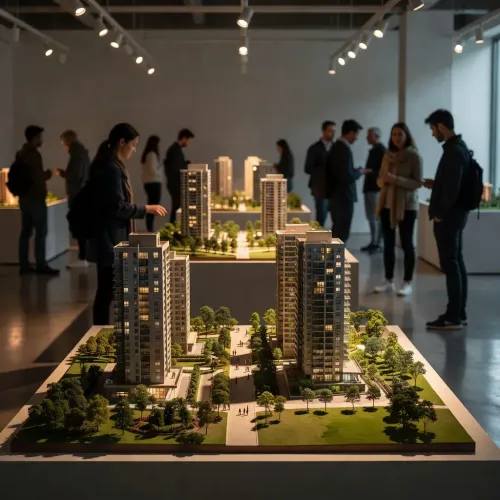
Maharashtra CM Devendra Fadnavis announced the 'Dharavi Experience Centre' on 2 October 2026, a dedicated public information hub in Mumbai designed to answer all questions related to the massive Dharavi Redevelopment Project.
Key Takeaways
Dharavi Experience Centre launched by CM Fadnavis on 2 October 2026 in Mumbai as a single-window information hub for the redevelopment project.
The centre is designed to address all public questions — from resident eligibility and housing allotment to commercial land use and industry relocation.
Dharavi covers roughly 240 hectares in central Mumbai and is home to an estimated 6–7 lakh people .
The announcement was made bilingually — in Marathi and Hindi — signalling outreach to both local and national audiences.
The move marks a transparency push by the Fadnavis government for a project that has faced years of legal and political challenges.
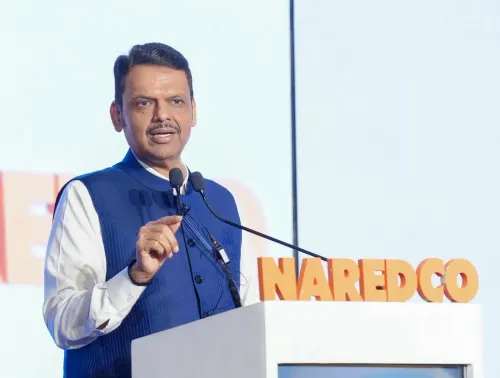
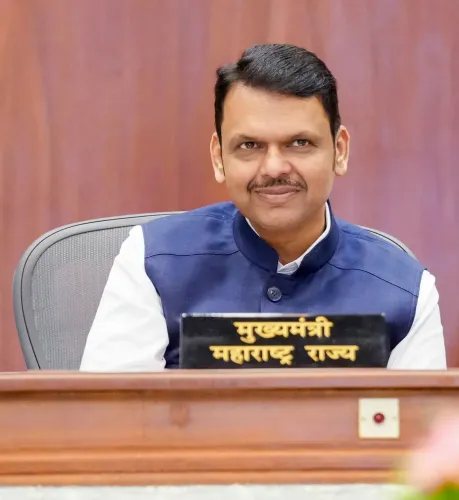
Every question that Mumbai's residents, investors, and sceptics have about the long-debated overhaul of Dharavi — Asia's largest slum — now has one official address. Maharashtra Chief Minister Devendra Fadnavis on Friday, 2 October 2026, announced the launch of the 'Dharavi Experience Centre' in Mumbai, positioning it as the single window of information for everything related to the Dharavi Redevelopment Project.
Posting in both Marathi and Hindi, CM Fadnavis wrote: 'धारावी पुनर्विकासाशी संबंधित प्रत्येक प्रश्नाचे उत्तर धारावी एक्सपिरियन्स सेंटरमध्ये मिळेल' — 'Every question related to Dharavi redevelopment will be answered at the Dharavi Experience Centre.' The bilingual post signals the state government's intent to speak to both Maharashtra's Marathi-speaking residents and the wider Hindi-speaking public with a unified message.
What the Dharavi Experience Centre is meant to do
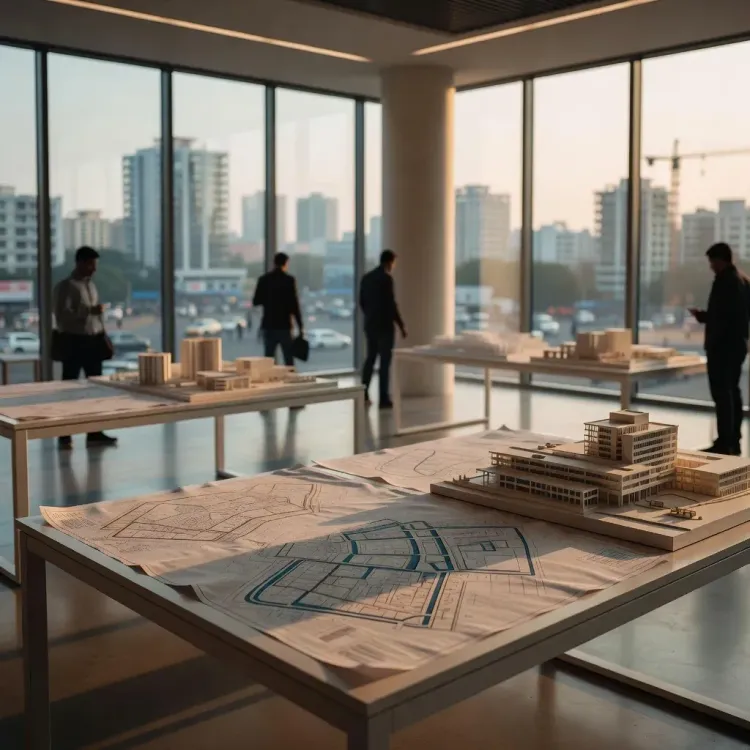
The Centre, as described by the Chief Minister, is designed to be a physical and informational hub where residents, eligible slum-dwellers, prospective stakeholders, and curious citizens can walk in and get clarity on the redevelopment plan. Dharavi, spread across roughly 240 hectares in the heart of Mumbai, is home to an estimated six to seven lakh people and hosts a dense informal economy worth billions of rupees annually.
The redevelopment project — one of the most consequential urban renewal exercises in India's history — has been mired for years in questions about eligibility criteria for free housing, commercial land use, the role of the private developer, and the fate of the micro-industries that make Dharavi tick. An experience centre that directly addresses these concerns marks a shift from policy paperwork to public communication.
Transparency push in a project that has seen prolonged debate
The Dharavi Redevelopment Project has had a turbulent journey — stalled tenders, legal challenges, and intense political scrutiny over who benefits and who gets displaced. By institutionalising a dedicated public-facing centre, the Fadnavis government is making a visible bet on transparency as a tool to build resident trust and keep the project's momentum intact.
The announcement comes on Gandhi Jayanti, a symbolically loaded date in Indian public life, lending the outreach exercise an additional civic resonance even if the post makes no explicit reference to it.
For a city that has watched the Dharavi project inch forward for nearly two decades, a walk-in centre where residents can see plans, ask questions, and get answers in plain language is not a small thing. The real test begins the moment the first displaced family walks through its doors.
Point of View
Not merely an information kiosk. For a redevelopment project that has repeatedly stalled on questions of public trust — who gets a free flat, whose livelihood survives, who profits — putting a physical, walk-in answer hub in the middle of Mumbai is the Fadnavis government's acknowledgement that the information deficit has been as damaging as any legal hurdle. The bilingual rollout also hints at a wider political audience: the project carries national visibility, and reassuring Hindi-speaking communities beyond Maharashtra matters as the BJP looks to consolidate its urban-renewal credentials. Whether the centre delivers on its promise will depend on the quality and candour of information it actually provides.
NationPress
2 Oct 2026
Frequently Asked Questions
What is the Dharavi Experience Centre?
The Dharavi Experience Centre is a public-information hub launched by Maharashtra CM Devendra Fadnavis on 2 October 2026 where residents and stakeholders can get answers to all questions related to the Dharavi Redevelopment Project.
Where is the Dharavi Experience Centre located?
The centre is located in Mumbai, in connection with the Dharavi Redevelopment Project area, though CM Fadnavis's announcement did not specify a precise street address.
What is the Dharavi Redevelopment Project?
The Dharavi Redevelopment Project is a large-scale urban renewal initiative to redevelop Dharavi — a roughly 240-hectare informal settlement in central Mumbai home to an estimated 6–7 lakh people — providing formal housing and infrastructure.
Who will benefit from the Dharavi redevelopment?
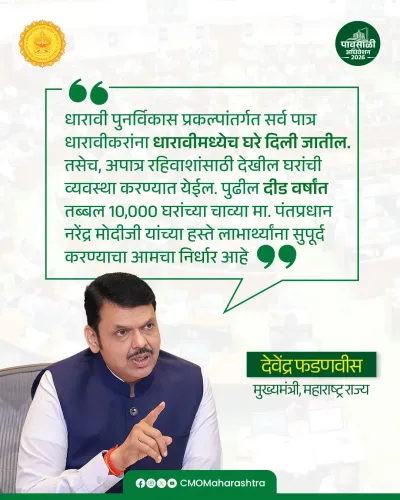
Eligible slum-dwellers in Dharavi are slated to receive free formal housing under the project, while commercial and infrastructure development is also planned for the area. The Dharavi Experience Centre is meant to clarify eligibility and process details for residents.
Why has the Dharavi Redevelopment Project been controversial?
The project has faced prolonged controversy over eligibility cut-off dates for free housing, the fate of Dharavi's informal industries, the role of the private developer, and displacement concerns — issues the new Experience Centre is intended to address publicly.