Amit Shah, CM Fadnavis Pay Tribute to Shivaji Maharaj in Pune
Synopsis
Union Home Minister Amit Shah and Maharashtra Chief Minister Devendra Fadnavis jointly offered floral tributes to Chhatrapati Shivaji Maharaj at Pune Zilla Parishad on 16 November 2026, reaffirming the Maratha king's enduring place at the centre of Maharashtra's political and cultural identity.
Key Takeaways
Union Home Minister Amit Shah and CM Devendra Fadnavis paid floral tributes to Chhatrapati Shivaji Maharaj at Pune Zilla Parishad on 16 November 2026 at 2 pm .
The tribute was confirmed by the official Chief Minister's Office of Maharashtra account on X.
Chhatrapati Shivaji Maharaj founded the Maratha Empire in the 17th century and remains Maharashtra's most revered historical figure.
Pune holds deep historical Maratha significance and regularly hosts such official commemorations at civic institutions.
The joint presence of a Union Cabinet minister and the Chief Minister elevated the event beyond routine local ceremony.
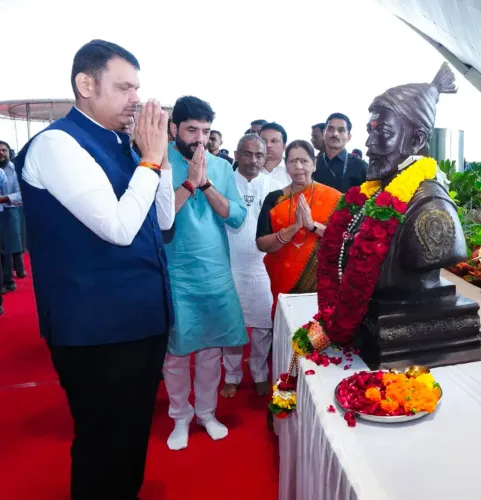
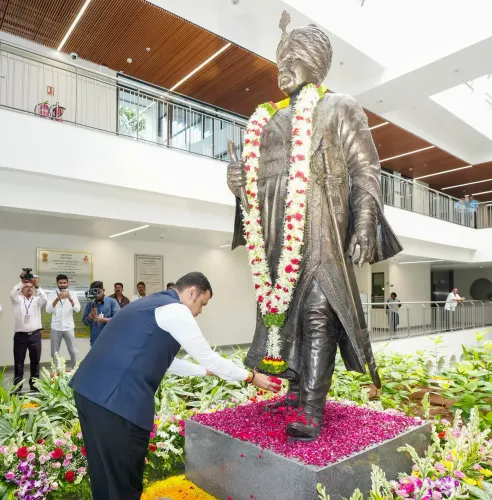
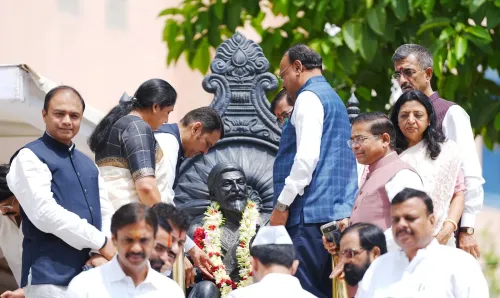
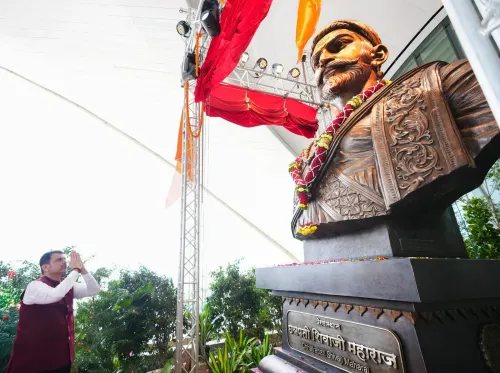
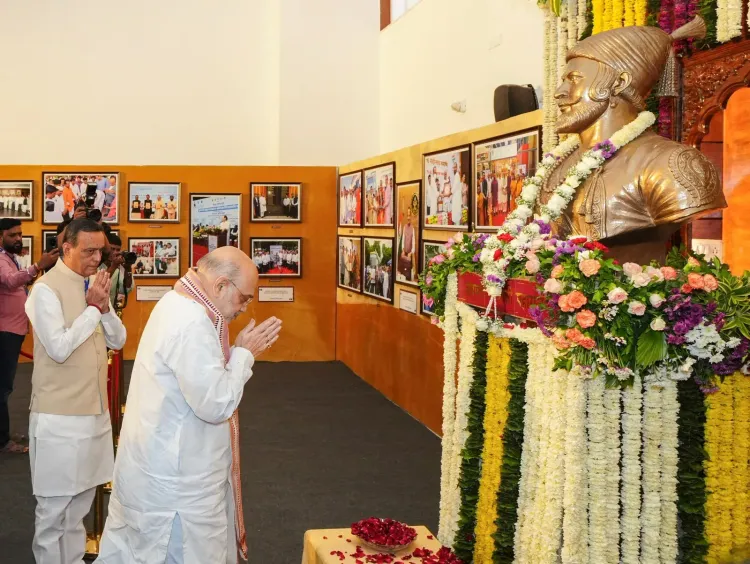
At 2 pm on Monday, 16 November 2026, two of India's most prominent BJP leaders stood before a statue of the 17th-century Maratha king at Pune Zilla Parishad — not for a rally or a policy announcement, but for a moment of quiet reverence. The Chief Minister's Office of Maharashtra confirmed that Union Home and Cooperation Minister Amit Shah and Chief Minister Devendra Fadnavis jointly offered floral tributes to Chhatrapati Shivaji Maharaj, the founding king of the Maratha Empire and Maharashtra's most enduring symbol of identity and governance.
A joint salute at the heart of Pune's civic centre
The tribute was held at the Pune Zilla Parishad — the district-level local government body that maintains public memorials and serves as a site for official ceremonial functions. Both leaders offered a floral wreath at the statue, a gesture the CMO described as 'पुष्पांजली अर्पण करून अभिवादन' — paying homage through an offering of flowers. The presence of a Union Cabinet minister alongside the Chief Minister lent the occasion a weight that extends beyond routine local commemoration.
Shivaji Maharaj and Pune's Maratha legacy
Chhatrapati Shivaji Maharaj, who established the Maratha Empire in the 17th century, remains one of the most venerated historical figures in Indian political culture — and especially in Maharashtra. His legacy as an administrator, military strategist, and champion of local sovereignty is invoked across party lines. Pune, with its deep Maratha historical roots, has long been the focal point of such observances. Political leaders — regardless of affiliation — routinely pay tribute at district and municipal sites to affirm cultural continuity with the Maratha tradition.
Shah's Maharashtra visit and the ceremonial tradition
Amit Shah, as Union Minister of Home Affairs and Cooperation, has frequently participated in state-level ceremonial events in BJP-governed Maharashtra, often combining administrative engagements with public tributes to historical icons. Devendra Fadnavis, across both his tenures as Chief Minister, has built a consistent record of such public homage. Together, the gesture signals both political alignment and a shared invocation of Maharashtra's founding narrative — Shivaji Maharaj's ideal of swarajya, or self-rule, as a touchstone of governance.
In a state where reverence for Chhatrapati Shivaji Maharaj crosses caste, class, and party lines, the image of a Union minister and a Chief Minister bowing together at his statue carries a message that needs no policy footnote.
Point of View
Co-opting the Maratha icon's imagery alongside administrative visibility reinforces a cultural legitimacy that is especially valuable in a state with a complex caste and regional identity matrix. Amit Shah's participation alongside CM Fadnavis signals that the Centre-state political alignment in Maharashtra is being actively projected through symbolic statecraft. As elections and local governance dynamics evolve, such ceremonial moments serve as low-cost, high-visibility affirmations of ideological continuity with Maharashtra's foundational narrative.
NationPress
16 Nov 2026
Frequently Asked Questions
Where did Amit Shah and Devendra Fadnavis pay tribute to Shivaji Maharaj?
They offered floral tributes at the statue of Chhatrapati Shivaji Maharaj at Pune Zilla Parishad on 16 November 2026.
Why do Maharashtra leaders regularly pay tribute to Chhatrapati Shivaji Maharaj?
Chhatrapati Shivaji Maharaj is the founder of the 17th-century Maratha Empire and the most revered historical figure in Maharashtra, symbolising regional identity, self-governance, and cultural pride across all communities.
What is Pune Zilla Parishad?
Pune Zilla Parishad is the district-level local government body in Pune that maintains public memorials and hosts official events, including ceremonial tributes to historical figures.
What is Amit Shah's role in the Union Cabinet?
Amit Shah serves as India's Union Minister of Home Affairs and Cooperation and is one of the senior-most leaders of the Bharatiya Janata Party.
Who is Devendra Fadnavis?
Devendra Fadnavis is the Chief Minister of Maharashtra and a senior BJP leader known for consistent public engagement with the state's historical and cultural icons.