Sonowal sets India's course for Top 5 shipbuilding by 2047
Synopsis
Union Ports Minister Sarbananda Sonowal has announced India's ambition to rank among the world's Top 10 shipbuilding nations by 2030 and Top 5 by 2047, positioning domestic maritime manufacturing as a pillar of the Viksit Bharat vision and a major source of youth employment.
Key Takeaways
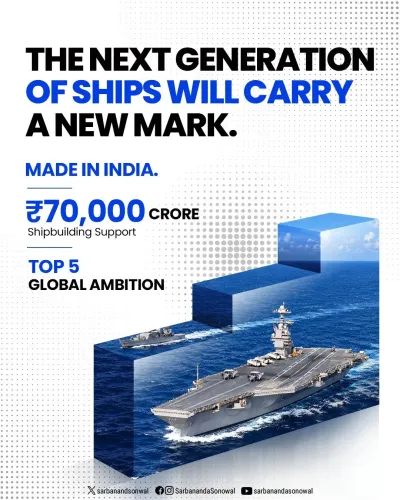
Sarbananda Sonowal set a target for India to enter the Top 10 shipbuilding nations globally by 2030 .
A more ambitious Top 5 ranking by 2047 aligns with India's Viksit Bharat centenary blueprint.
The push is framed as an extension of the Make in India (launched 2014) and Sagarmala Project (launched 2015) policy lineage.
Sonowal cited new opportunities for Indian industries, enterprises, and youth as key intended benefits.
India's current shipbuilding base includes public-sector yards and growing private players, but the gap to dominant East Asian shipbuilders remains significant.
Budget announcements and maritime industry forums will be the next key milestones for translating this commitment into concrete policy.
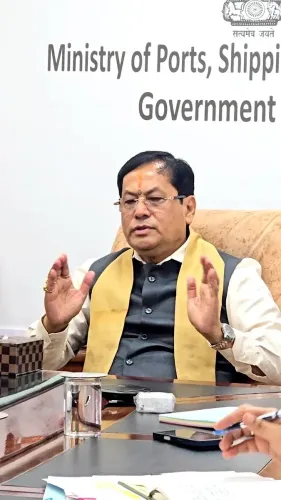
The next wave of ships sailing out of Indian yards will carry a 'Made in India' stamp — and Union Ports and Shipping Minister Sarbananda Sonowal wants the world to take notice. In a post on X on Monday, 16 November 2026, Sonowal laid out an ambitious maritime manufacturing roadmap: a Top 10 global shipbuilding rank by 2030, and a Top 5 position by 2047, the year India marks a century of independence.
From Sagarmala to shipyards: the manufacturing push behind the ambition
India's shipbuilding push does not emerge from a vacuum. The Make in India initiative, launched in 2014, set the template: bring strategic manufacturing home, build domestic capacity, and compete in global value chains. The Sagarmala Project, launched in 2015 under the Ministry of Ports, Shipping and Waterways, extended that logic to the sea — prioritising port modernisation, coastal shipping, and industrial clusters along India's coastline. Shipbuilding is the next logical frontier. India currently imports a large share of its commercial fleet; reversing that dynamic would shift both capital and skilled labour back onshore.
Sonowal framed the goal in generational terms: 'This growth will create new opportunities for Indian industries, enterprises and youth, while strengthening our position in global maritime trade.' That is a deliberate pitch — not just to boardrooms, but to a younger workforce that will need the technical jobs a scaled-up shipbuilding sector produces, from naval architects and marine engineers to steel fabricators and digital systems specialists.
Why the 2047 deadline carries real strategic weight
The 2047 horizon is not incidental. 'Viksit Bharat 2047' — India's development blueprint for its centenary — provides the political and policy architecture within which ministries are increasingly framing long-range targets. Anchoring a Top 5 shipbuilding rank to that year ties the maritime sector into a broader national aspiration, raising the stakes for follow-through. The intermediate milestone — Top 10 by 2030 — gives industry and policymakers a nearer checkpoint to measure progress against.
Global shipbuilding today is dominated by South Korea, China, and Japan. Breaking into that tier requires sustained investment in dry docks, skilled labour pipelines, steel supply chains, and competitive financing for buyers. India's expanding coastline infrastructure, combined with growing defence shipbuilding experience at public yards, provides a base — but the gap to the top tier remains substantial. The minister's statement signals political will; the harder work is in the fiscal and industrial policy decisions that will follow.
What industry and job-seekers stand to gain
Sonowal pointed specifically to 'Indian industries, enterprises and youth' as the intended beneficiaries. For shipbuilding firms — both large public-sector yards and emerging private players — a credible government commitment to global competitiveness is a signal to invest in capacity. For young Indians entering the workforce, a scaled maritime manufacturing sector represents a route into high-value technical employment that has historically flowed to East Asian economies. The minister's language of 'growing global confidence' also points to export ambitions: not just building for domestic demand, but winning international orders.
The next concrete test will come at the Union Budget and major maritime industry forums, where financial assistance schemes, production-linked incentives, or capacity-expansion targets could translate this strategic declaration into executable policy.
India has built railways, launched satellites, and exported pharmaceuticals at global scale. Now one of its most consequential ministers is betting the country can do the same on water — and that the ships of the future will bear an Indian signature.
Point of View
Shipping and Waterways into India's overarching Viksit Bharat 2047 framework — lending political durability to what are otherwise long-horizon industrial targets. By anchoring shipbuilding ambition to a national centenary milestone, the ministry raises the political cost of backtracking. The intermediate 2030 benchmark, however, will be the real test: it is close enough to hold officials accountable and to reveal whether fiscal commitments — production-linked incentives, dry-dock financing, skilled-labour pipelines — match the rhetoric. India's defence shipbuilding record at public yards offers a credible foundation, but commercial competitiveness against South Korea, China, and Japan demands a scale of private-sector mobilisation that existing policy scaffolding has only partially delivered.
NationPress
16 Nov 2026
Frequently Asked Questions
What is India's shipbuilding rank target by 2030?
Union Ports Minister Sarbananda Sonowal has stated the goal is to place India among the Top 10 shipbuilding nations in the world by 2030 , with a further ambition to reach the Top 5 by 2047 .
What is the Sagarmala Project and how does it relate to shipbuilding?
The Sagarmala Project , launched in 2015 , is a government initiative for port-led economic development covering port modernisation, coastal shipping, and industrial clusters. Shipbuilding expansion is a natural extension of this maritime infrastructure push.
How does the Make in India initiative connect to India's shipbuilding ambitions?
Make in India , launched in 2014 , aims to boost domestic manufacturing and reduce import dependence. Shipbuilding is part of this strategy — building vessels domestically rather than importing them shifts capital and skilled jobs back into India.
Which countries currently dominate global shipbuilding?
Global shipbuilding is dominated by South Korea , China , and Japan . India's stated goal of reaching the Top 5 by 2047 means competing directly with this East Asian bloc over the next two decades.
What jobs could India's shipbuilding growth create?
A scaled-up shipbuilding sector would generate high-value technical employment including roles for naval architects, marine engineers, steel fabricators, and digital systems specialists , primarily benefiting Indian youth entering the workforce.