Sonowal Pitches India as Global Shipbuilding Hub
Synopsis
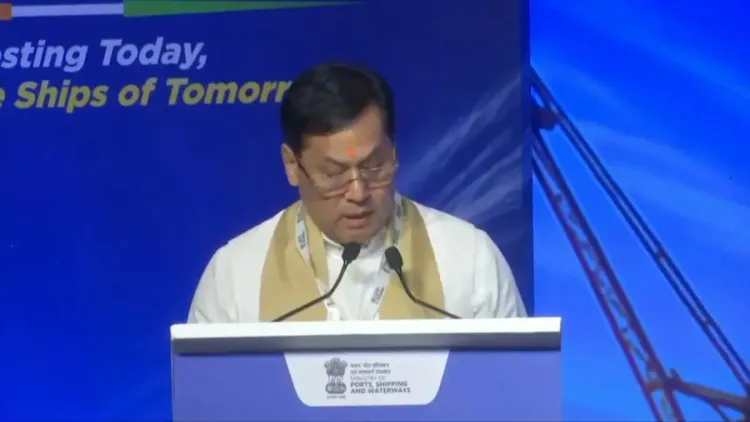
Union Minister Sarbananda Sonowal has called on global investors to manufacture ships in India and make the country a worldwide shipbuilding hub, with the Ministry of Ports, Shipping and Waterways pledging full institutional partnership in the effort.
Key Takeaways
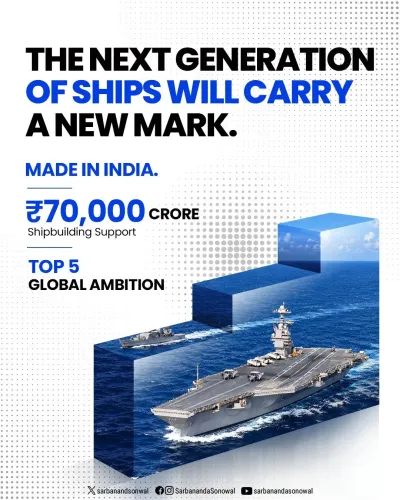
Sarbananda Sonowal , Union Minister of Ports, Shipping and Waterways, on November 16, 2026 called on investors to 'invest in India, manufacture in India and make India a global hub for shipbuilding.' India currently holds less than 1 percent of global shipbuilding output, far behind China, South Korea, and Japan .
The Sagarmala Project (2015) and Shipbuilding Financial Assistance Policy (2016) form the existing policy backbone for domestic shipbuilding growth.
The push is embedded within the Make in India (2014) and Atmanirbhar Bharat frameworks aimed at reducing import dependence for commercial and naval vessels.
Key forward indicators include announcements on shipyard modernisation clusters and revised financial assistance norms in the next Union Budget or maritime summit.
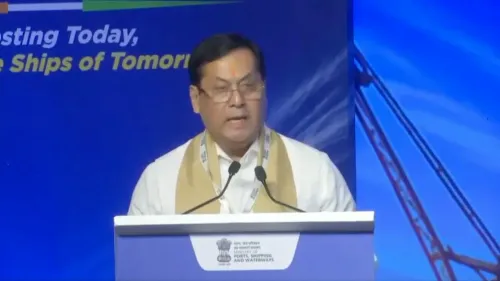
India's maritime ambitions just got a sharper edge. Union Minister of Ports, Shipping and Waterways Sarbananda Sonowal on Monday, November 16, 2026, issued a direct call to global investors: build ships in India, and build them here at scale — with the full institutional weight of the ministry behind every step of that journey.
Posting on X, Sonowal framed the message in three commanding phrases: 'Invest in India, manufacture in India and make India a global hub for shipbuilding.' He added that the Ministry of Ports, Shipping and Waterways and the country's maritime institutions stand 'committed to be partners in this journey' — language that signals active state partnership, not passive regulatory oversight.
A Sector Trying to Punch Its Weight
The ambition is vast — and the gap it must close is equally so. India currently accounts for less than 1 percent of global shipbuilding output, a market dominated overwhelmingly by China, South Korea, and Japan. That is not a rounding error; it is a structural deficit that successive governments have tried to chip away at for over a decade.
The architecture of that effort is already in place. The Sagarmala Project, launched in 2015, was designed to unlock port-led industrial development and grow domestic shipbuilding capacity. A year later, the Shipbuilding Financial Assistance Policy (2016) introduced direct subsidies for Indian-built vessels to close the cost gap with foreign yards. Sonowal's post places today's push squarely within that lineage — and within the broader Atmanirbhar Bharat framework of reducing import dependence for both commercial and naval tonnage.
Make in India Meets the High Seas
Shipbuilding is not just an industrial story — it is a strategic one. A country that cannot build its own commercial fleet at scale remains dependent on foreign yards for vessels that move its trade, supply its islands, and increasingly, support its naval reach. The Make in India initiative, launched in 2014, identified the maritime sector as a priority corridor precisely because the multiplier effects — steel, electronics, engineering, logistics — ripple far beyond the shipyard gate.
Sonowal's choice of words — 'global hub' — sets the ceiling high. It is not merely about meeting domestic demand; the implicit target is capturing a meaningful slice of the international order book, competing on quality and cost where China, South Korea, and Japan have held structural advantages for generations. That is a generational project, and the minister is signalling that the policy scaffolding is ready for private capital to climb.
What Investors Will Watch Next
Words on X become policy through budgets and notifications. The next concrete markers to watch are announcements on shipyard modernisation clusters and any revision to financial assistance norms — either in the next Union Budget or at an upcoming maritime summit. Industry players and foreign shipbuilders scouting India will be reading those signals closely to judge whether the partnership Sonowal promises comes with the fiscal muscle to match.
India has the coastline, the growing trade volume, and now a ministerial mandate stated in the clearest possible terms. The question the market will answer is whether the incentives, the infrastructure, and the skilled workforce can converge fast enough to turn a sub-1-percent share into something the world's shipping industry has to take seriously.
Point of View
The ministry is attempting to shift the sector's perceived risk-reward profile for large foreign shipyards. The sub-1-percent global market share figure, however, underscores that rhetoric must soon convert into revised financial incentives and world-class infrastructure if India is to disrupt an industry where incumbents have multi-decade cost and technology leads. Watch whether the next Budget or a dedicated maritime summit delivers the fiscal and regulatory specifics that investors need to commit capital at scale.
NationPress
16 Nov 2026
Frequently Asked Questions
What did Sarbananda Sonowal say about shipbuilding in India?
On November 16, 2026, Sonowal issued a direct investor call: 'Invest in India, manufacture in India and make India a global hub for shipbuilding,' pledging that the Ministry of Ports, Shipping and Waterways would partner in that journey.
What is India's current share in global shipbuilding?
India accounts for less than 1 percent of global shipbuilding output, with China, South Korea, and Japan dominating the sector.
What is the Sagarmala Project and how does it relate to shipbuilding?
Sagarmala, launched in 2015, is a central government initiative to promote port-led industrial development; growing domestic shipbuilding capacity is one of its core objectives.
What government schemes support shipbuilding in India?
The Shipbuilding Financial Assistance Policy (2016) provides subsidies for Indian-built vessels, and the Make in India initiative (2014) identifies the maritime sector as a priority manufacturing corridor.
What should investors and industry watch for next in India's shipbuilding push?
Key signals to track include announcements on shipyard modernisation clusters and any revisions to financial assistance norms expected in the next Union Budget or at an upcoming maritime summit.