Sonowal Flags USD 8 Bn Maritime Package, 400-Vessel Demand
Synopsis
Union Minister Sarbananda Sonowal has spotlighted India's USD 8 billion maritime package under PM Modi, backed by 400-plus vessels in domestic demand worth USD 24 billion and an active order pipeline where export orders exceed 80% of value.
Key Takeaways
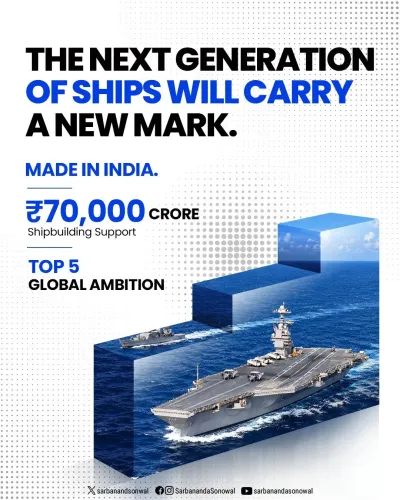
USD 8 billion maritime package announced under PM Modi to accelerate Indian shipbuilding capacity.
Over 400 vessels in identified domestic demand represent an investment opportunity of nearly USD 24 billion .
Active order pipeline holds over 150 vessels valued at more than USD 1.7 billion .
Export orders account for over 80% of the active pipeline's value, signalling a global-market ambition.
Initiative builds on Sagarmala Project (2015) and Maritime India Vision 2030 (2021) policy foundations.
Implementation details — including financial instruments, yard modernisation timelines and order conversions — remain the key watch points.
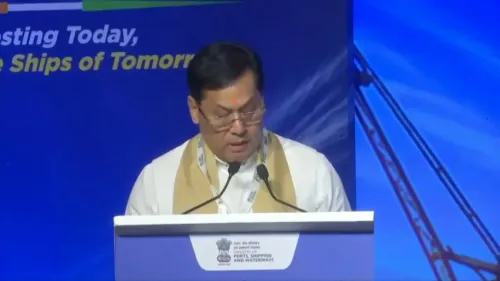
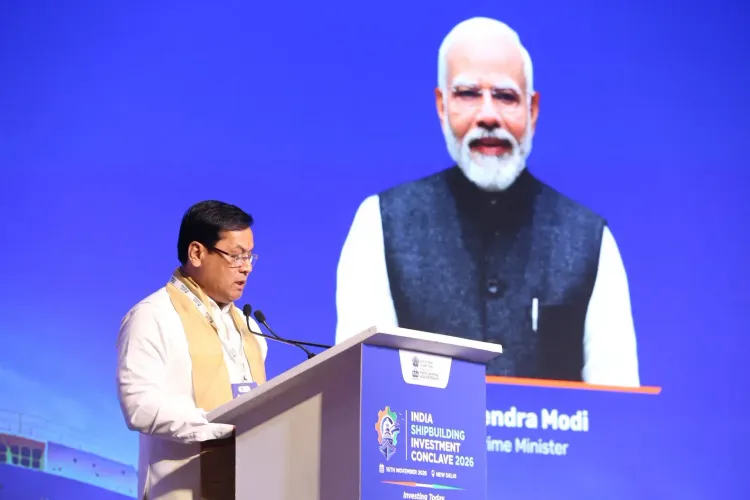
India's shipbuilding ambitions have a price tag — and it is a big one. Union Minister of Ports, Shipping and Waterways Sarbananda Sonowal on Monday, November 16, 2026 highlighted a landmark USD 8 billion maritime package announced under Prime Minister Narendra Modi, framing it as the centrepiece of India's drive to become a credible force in global shipbuilding.
The numbers underpinning the announcement are striking. Sonowal pointed to over 400 vessels in identified domestic demand, representing a combined investment opportunity of nearly USD 24 billion. The active order pipeline holds over 150 vessels valued at more than USD 1.7 billion — with export orders accounting for over 80% of that pipeline's value. That export-heavy skew signals something important: India is no longer positioning its shipyards as captive suppliers for coastal trade alone.
A USD 24 Billion Domestic Demand Waiting to Be Built
The sheer scale of the identified domestic demand — 400-plus vessels at nearly USD 24 billion — reflects years of deferred fleet renewal across government-owned shipping lines, coastal operators and inland waterway fleets. For domestic yards that have long operated below capacity, converting even a fraction of that demand into firm orders would be transformative. The Sagarmala Project, approved in 2015, and the Maritime India Vision 2030, launched in 2021, laid the groundwork by clustering ship repair and building activity around major ports — the USD 8 billion package now arrives as the financial accelerant.
80% Export Pipeline: India Eyes China, South Korea and Japan's Turf
Global shipbuilding is a market ruthlessly dominated by China, South Korea and Japan. India's current share is negligible. The fact that export orders now make up over 80% of the active pipeline's value is a sharp departure from the historically inward-looking posture of Indian yards. It suggests foreign buyers are beginning to test Indian shipbuilding capacity — perhaps attracted by competitive labour costs, Make in India incentives, and a government visibly committed to backing the sector with serious capital.
The road from pipeline to delivery is where ambitions typically meet friction: yard modernisation, skilled-workforce pipelines, steel supply chains and financing structures for buyers will all determine whether these orders convert into launched vessels. The USD 8 billion package will be watched closely for the specific instruments it deploys — whether financial assistance schemes, production-linked incentives or direct equity support for shipyard upgrades.
India's maritime moment is arriving. The package is the bet; the order book will be the scorecard.
Point of View
Which would validate India's cost and quality proposition on a global stage. For the Modi government's Atmanirbhar Bharat framework, a credible shipbuilding export story would be a rare heavy-industry win. The real test will be whether the package's financial instruments are structured to unlock private-yard investment at scale, or whether they remain concentrated in public-sector entities.
NationPress
16 Nov 2026
Frequently Asked Questions
What is India's USD 8 billion maritime package?
It is a government-announced financial package under PM Modi designed to accelerate shipbuilding capacity in India, covering domestic demand and export order pipelines.
How many vessels are in India's identified domestic shipbuilding demand?
Over 400 vessels have been identified in domestic demand, representing an investment opportunity of nearly USD 24 billion.
What is the value of India's active ship order pipeline?
The active order pipeline covers over 150 vessels valued at more than USD 1.7 billion, with export orders making up over 80% of that value.
What is Maritime India Vision 2030?
Maritime India Vision 2030 is a policy framework launched in 2021 to expand India's shipbuilding, port capacity and maritime logistics sector.
How does India compare to China, South Korea and Japan in shipbuilding?
India's current share of global shipbuilding is minimal compared to the dominant triad of China, South Korea and Japan; the USD 8 billion package is part of a long-term strategy to close that gap.