Sonowal pitches India as global shipbuilder at 2026 conclave

Synopsis
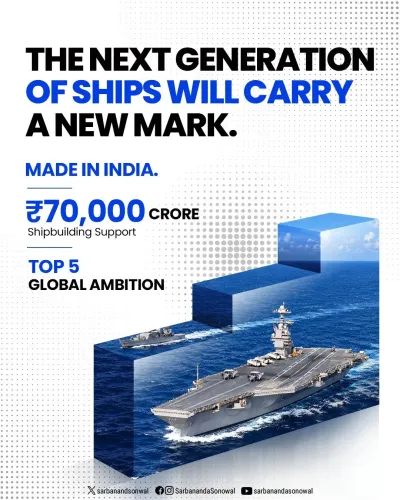
Union Minister Sarbananda Sonowal addressed the India Shipbuilding Investment Conclave 2026 in New Delhi, declaring India 'ready to build the ships of the world' and spotlighting a USD 10 billion investment opportunity to an audience of global shipbuilders and investors.
Key Takeaways
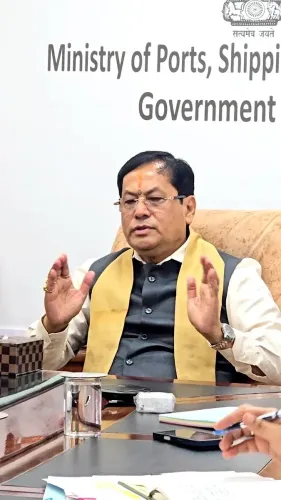
Sarbananda Sonowal , Union Minister of Ports, Shipping and Waterways, addressed the India Shipbuilding Investment Conclave 2026 in New Delhi on November 16, 2026 .
The conclave brought together leading global shipbuilders, shipping companies and investors to explore a USD 10 billion investment opportunity in India's shipbuilding sector.
India's shipbuilding ambitions are anchored in the Sagarmala Project (launched 2015 ) and the Maritime India Vision 2030 framework.
India currently holds a small share of global shipbuilding output, dominated by South Korean, Chinese and Japanese yards.
Policy follow-through — updated financial assistance schemes and firm order pipelines for domestic yards — will determine whether conclave commitments translate into real capacity.
Global supply-chain diversification trends may give India a rare window to establish itself as a credible shipbuilding destination.
India is not just buying ships anymore — it wants to build them for the world. Union Minister of Ports, Shipping and Waterways Sarbananda Sonowal addressed the India Shipbuilding Investment Conclave 2026 in New Delhi on Monday, November 16, calling the gathering a turning-point moment for a sector India has long underperformed in — and putting a headline number on the ambition: a USD 10 billion investment opportunity.
What brought the world's shipbuilders to New Delhi
The conclave drew leading global shipbuilders, shipping conglomerates and institutional investors under one roof — a deliberate signal that India's Ministry of Ports, Shipping and Waterways is now actively courting foreign capital and expertise, not merely announcing domestic targets. Sonowal framed the event with characteristic directness: 'India is ready to build the ships of the world.'
The gathering sits within a longer policy arc. The Sagarmala Project, launched in 2015, first flagged shipbuilding and repair as a pillar of port-led development. Maritime India Vision 2030 pushed that goal further, setting out a roadmap to expand India's share of global shipbuilding output — a share that, by most measures, has remained thin relative to South Korean, Chinese and Japanese yards that dominate world order books.
India's shipbuilding gap — and the strategic bet behind closing it
The arithmetic of India's maritime ambitions makes the urgency clear. India is one of the world's largest importers of goods, yet the vessels carrying that trade are overwhelmingly built and often flagged overseas. That dependency has long been flagged as both an economic drain and a strategic vulnerability — particularly as naval planners and commercial operators compete for the same scarce domestic yard capacity.
Successive governments have tried to change this through financial assistance schemes for domestic shipyards and preferential procurement policies, but scale has remained elusive. A conclave of this profile — global builders, global capital, ministerial-level commitment — represents a step up in ambition and visibility.
What investors and shipbuilders will be watching for next
The real test follows the event itself. Conclaves generate momentum; policy follow-through converts it into steel and contracts. Industry watchers will be tracking whether any of the investment discussions at the event translate into binding commitments, whether shipbuilding financial assistance schemes see enhanced allocations, and whether domestic yards receive a credible pipeline of orders to anchor private investment decisions.
India's window may be better-timed than it looks. Global supply chains are actively diversifying away from concentrated manufacturing hubs, and India's combination of coastline, labour force and existing port infrastructure gives it a credible pitch — if the policy scaffolding is built fast enough to match the ambition on display in New Delhi today.
The minister has set the headline. The shipyard cranes will decide whether it holds.
Point of View
Shipping and Waterways is prosecuting its maritime agenda — moving from domestic policy circulars to active foreign-capital mobilisation. Sonowal's USD 10 billion headline figure is as much a political signal as an investment target, designed to anchor global attention on a sector India has repeatedly identified as strategic but under-delivered on. The timing is shrewd: post-pandemic supply-chain realignments are pushing multinationals to diversify away from East Asian shipbuilding concentration, and India is positioning itself as the credible alternative. Whether the conclave converts into contracts will depend on whether the government upgrades financial assistance schemes and delivers a bankable order pipeline — the two things investors at events like this invariably want before they sign anything.
NationPress
16 Nov 2026
Frequently Asked Questions
What is the India Shipbuilding Investment Conclave 2026?
The India Shipbuilding Investment Conclave 2026 is a New Delhi event organised to bring together global shipbuilders, shipping companies and investors to explore investment opportunities in India's shipbuilding sector, which the Ministry of Ports, Shipping and Waterways has pegged at USD 10 billion.
What is India's current share of global shipbuilding?
India's share of global shipbuilding output is currently small, with world order books dominated by yards in South Korea, China and Japan. Expanding that share is a core goal of both the Sagarmala Project and Maritime India Vision 2030.
What is the Sagarmala Project and how does it relate to shipbuilding?
The Sagarmala Project, launched in 2015, is a central government initiative to promote port-led economic development across India. It identified shipbuilding and ship repair as key pillars of this strategy, aiming to develop domestic yard capacity alongside port infrastructure.
What is Maritime India Vision 2030?
Maritime India Vision 2030 is a government roadmap released to guide the expansion of India's maritime sector, including increasing the country's share of global shipbuilding, improving port efficiency and growing maritime logistics capacity.
What will determine whether the investment conclave leads to real outcomes?
Industry observers will watch for binding investment commitments from global participants, potential enhancements to shipbuilding financial assistance schemes, and whether domestic yards receive a steady pipeline of orders large enough to justify private capital deployment.