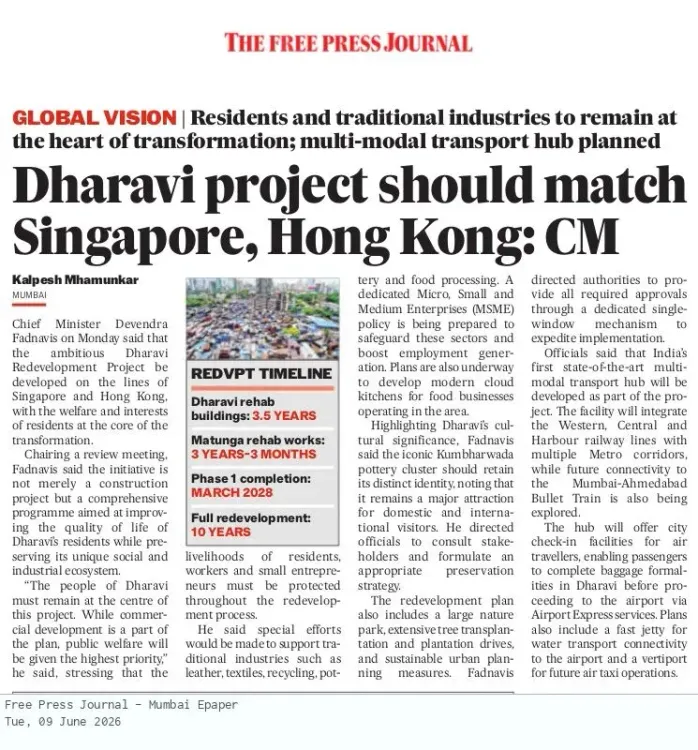
CM Fadnavis sets Singapore, Hong Kong bar for Dharavi project
Synopsis
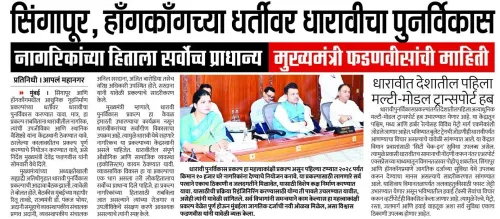
Chief Minister Devendra Fadnavis has set Singapore and Hong Kong as the benchmark for the Dharavi Redevelopment Project, signalling Maharashtra's intent to transform Asia's largest slum into a world-class urban development in the heart of Mumbai.
Key Takeaways
CM Devendra Fadnavis stated the Dharavi Redevelopment Project must match the standards of Singapore and Hong Kong .
Dharavi covers roughly 2.1 sq km in central Mumbai and houses over 500,000 residents .
The Slum Rehabilitation Authority (SRA) , established in 1995 , underpins the legal and institutional framework for the project.
A comprehensive Dharavi master plan was first announced in 2004 , making this a two-decade-long policy effort.
Key milestones to watch include rehabilitation package finalisation, tender awards, and a confirmed ground-breaking date.
The project's outcome could set a national precedent for large-scale informal-settlement redevelopment in India.
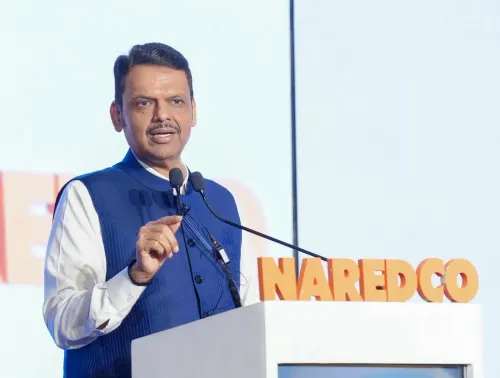
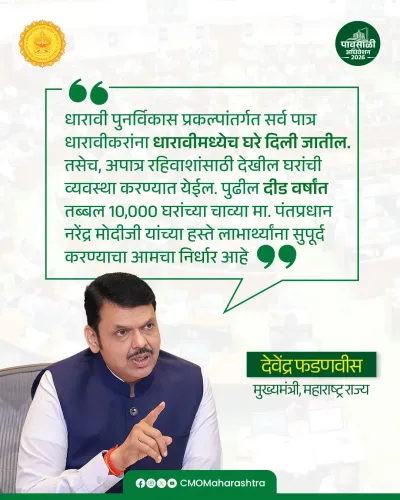
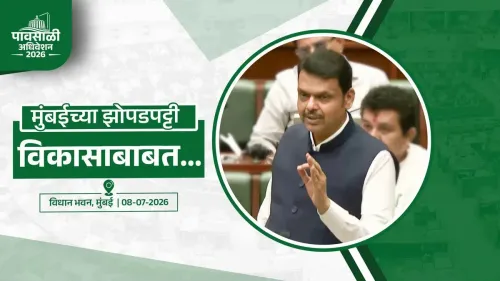
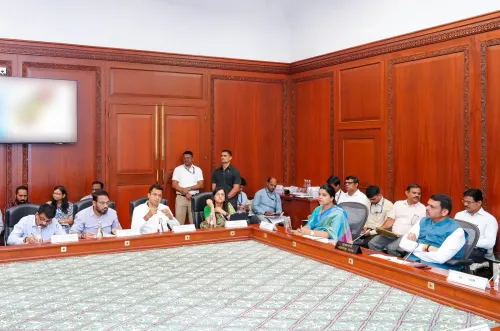
The Chief Minister's Office of Maharashtra shared a statement on Tuesday, 9 June 2026, in which Chief Minister Devendra Fadnavis declared that the Dharavi Redevelopment Project must match the urban standards of Singapore and Hong Kong, signalling the state government's ambition to transform Asia's largest slum into a world-class mixed-use development.
Context
Dharavi, a roughly 2.1 sq km settlement in the heart of Mumbai, is home to over 500,000 residents and has long been a focal point of Maharashtra's urban renewal agenda. CM Fadnavis's latest remarks position the project not merely as a housing exercise but as a benchmark-setting urban transformation. By invoking Singapore and Hong Kong — two of Asia's most cited models for high-density, well-serviced urban planning — the Chief Minister raised the stated ambition considerably above routine slum rehabilitation.
The post, shared from the official @CMOMaharashtra handle and tagging @Dev_Fadnavis, carried the hashtags #DharaviRedevelopment, #Maharashtra, and #DevendraFadnavis, indicating a deliberate push to amplify the message across political and policy audiences.
Policy Backdrop
The institutional foundation for Dharavi's redevelopment stretches back to 1995, when Maharashtra established the Slum Rehabilitation Authority (SRA) to enable private-sector participation in Mumbai's slum redevelopment. A comprehensive master plan for Dharavi was first announced in 2004, making this one of the longest-running urban redevelopment proposals in India. Successive state governments have used special-purpose vehicles and private-developer partnerships to advance the project, though timelines have repeatedly shifted.
The current push aligns with national urban missions — including AMRUT and the Smart Cities Mission — that prioritise infrastructure upgrading in dense informal settlements. Maharashtra governments have historically framed Mumbai's redevelopment as the pathway to global-city status, with Singapore and Hong Kong serving as the recurring reference points in political discourse.
Stakeholders and Impact
The project's primary stakeholders are Dharavi's estimated 500,000-plus residents, who stand to receive in-situ rehabilitation — meaning new housing built on or near the land they currently occupy — alongside modern civic infrastructure. Real estate developers hold a parallel interest: the land value unlocked by redeveloping Dharavi's prime central-Mumbai location is considered among the highest in any Indian slum project.
Community groups within Dharavi have historically raised concerns about the adequacy of rehabilitation packages, the size of tenements offered, and the risk of displacement during construction phases. The Chief Minister's aspiration to match Singapore and Hong Kong standards will be measured, in part, by how those concerns are addressed in the final rehabilitation design.
What's Next
Policy watchers and residents alike will be watching for concrete milestones: finalisation of the rehabilitation package, tender awards to development partners, and a confirmed ground-breaking timeline. CM Fadnavis's public benchmark-setting adds political weight to these deliverables, making the gap between aspiration and execution more visible. If the project advances on the stated global-city model, it could set a precedent for how India's other large informal settlements are redeveloped in the coming decade.
Point of View
Putting the administration's credibility on the line against an internationally legible standard. Maharashtra governments have used this framing repeatedly, yet the project has stalled across multiple terms, so the benchmark also implicitly acknowledges past underperformance. The statement lands at a moment when Mumbai's infrastructure ambitions are under scrutiny, and it will sharpen accountability: every delay or diluted rehabilitation package will now be measured against a world-class yardstick the Chief Minister himself set. Whether this signals a genuine acceleration or a fresh round of aspirational positioning will become clear once tender and ground-breaking timelines are made public.
NationPress
23 Oct 2026
Frequently Asked Questions
What is the Dharavi Redevelopment Project?
The Dharavi Redevelopment Project is a Maharashtra government initiative to replace the slum housing of Dharavi — Asia's largest slum, located in central Mumbai — with modern mixed-use development while rehabilitating its 500,000-plus residents in-situ.
What did CM Devendra Fadnavis say about Dharavi in June 2026?
CM Devendra Fadnavis stated that the Dharavi Redevelopment Project should match the urban standards of Singapore and Hong Kong, setting a global benchmark for the project's design and quality.
How big is Dharavi and how many people live there?
Dharavi covers roughly 2.1 sq km in Mumbai and is home to an estimated 500,000 or more residents, making it one of the most densely populated urban settlements in Asia.
What is the Slum Rehabilitation Authority (SRA)?
The Slum Rehabilitation Authority is a Maharashtra government body established in 1995 to facilitate private-sector participation in Mumbai slum redevelopment, including the Dharavi project.
When did Maharashtra first announce a Dharavi redevelopment plan?
A comprehensive master plan for Dharavi was first announced in 2004, making the redevelopment effort a more than two-decade-long policy initiative that has seen multiple phases and administrations.