CM Fadnavis flags rail safety, Dharavi revamp, value education
Synopsis
Chief Minister Devendra Fadnavis on 8 June 2026 approved 65 railway infrastructure works to eliminate level crossings, ordered Dharavi's redevelopment on Singapore-Hong Kong lines with citizen welfare as top priority, and directed broad rollout of value-based education under Mulya Vardhan 2.0 across Maharashtra's schools.
Key Takeaways
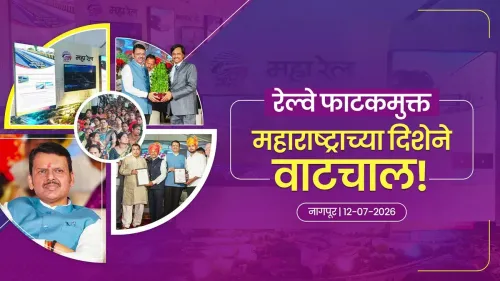
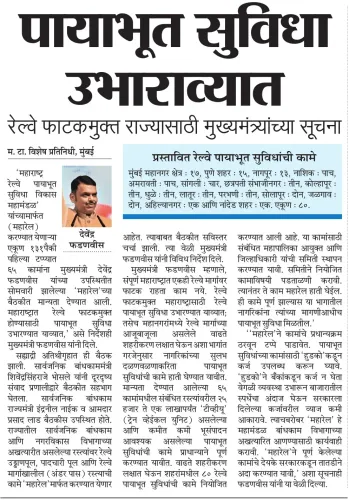
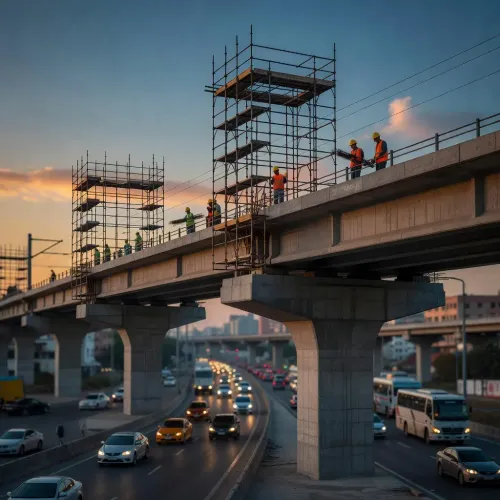
65 railway infrastructure works approved by CM Fadnavis to make Maharashtra free of railway level crossings.
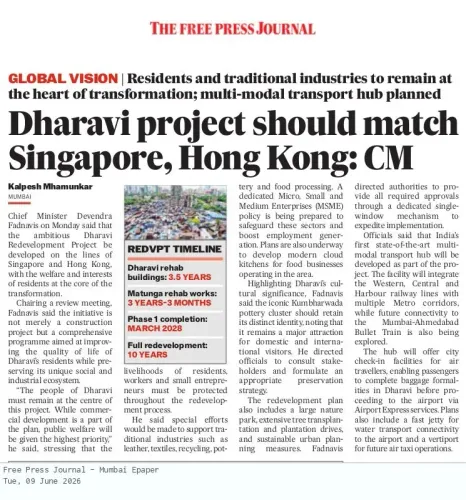
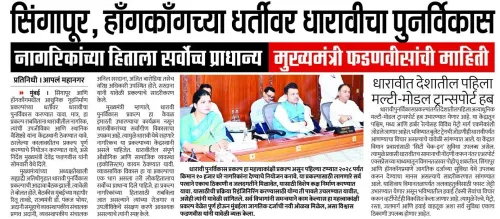
Dharavi redevelopment to be modelled on Singapore and Hong Kong , with a directive to complete the project within the planned timeline.
Citizens' interests declared the highest priority in the Dharavi project.
Mulya Vardhan 2.0 , the second phase of Maharashtra's value-based education programme, ordered for wide-scale implementation across state schools.
All three announcements were made under CM Devendra Fadnavis and consolidated in the CMO's daily governance summary for Monday, 8 June 2026 .
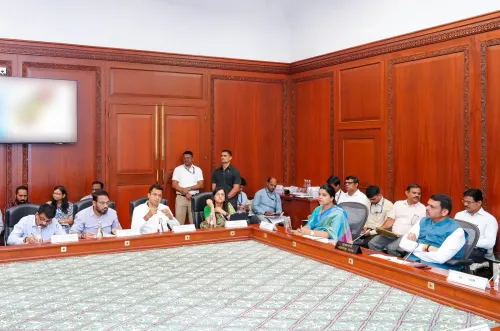
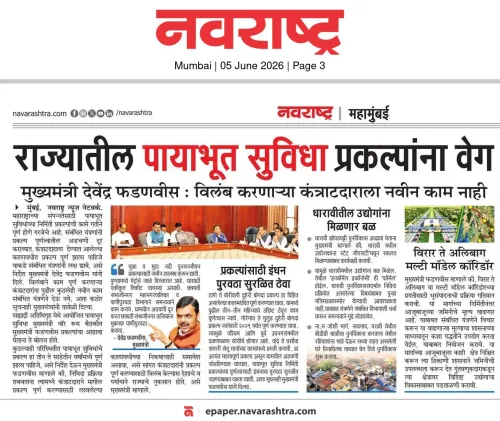
The Chief Minister's Office of Maharashtra, in its daily summary for Monday, 8 June 2026, outlined three major governance priorities announced by Chief Minister Devendra Fadnavis: eliminating railway level crossings across the state, redeveloping Dharavi on the lines of Singapore and Hong Kong, and expanding value-based education under a second phase of the state's Mulya Vardhan programme.
Context
The CMO's post, shared late on the night of 8 June 2026, consolidates the day's key announcements in Marathi. CM Fadnavis directed officials to build infrastructure to make Maharashtra 'रेल्वे फाटकमुक्त' (free of railway level crossings), with approvals granted for 65 railway infrastructure works. He also set a clear mandate for the Dharavi project: complete it within the planned timeline, keeping citizens' interests as the highest priority.
Policy Backdrop
The push to eliminate unmanned and manned level crossings has been a long-running safety objective for both the state and Indian Railways, pursued through road-over-bridges and underpasses funded under central and state schemes. The approval of 65 works in a single day signals a significant acceleration of that agenda. On Dharavi, successive Maharashtra governments have attempted redevelopment since the mid-2000s, cycling through multiple master plans and tender revisions. Fadnavis's invocation of Singapore and Hong Kong as benchmarks signals an ambition to transform the settlement into a high-density, mixed-use urban precinct rather than a simple slum-rehabilitation exercise.
The third announcement — 'मूल्य आधारित शिक्षण' (value-based education) — calls for wide-scale implementation of Mulya Vardhan 2.0, the second phase of a programme designed to build 'alert and responsible citizens.' CM Fadnavis directed that this phase be rolled out at a broader scale than its predecessor, embedding civic values alongside the standard curriculum in state schools.
Stakeholders and Impact
Railway commuters and road users across Maharashtra stand to benefit most immediately from the level-crossing elimination drive, which addresses one of the most persistent sources of rail-road accidents in the state. Residents of Dharavi — one of Asia's largest informal settlements, located in the heart of Mumbai — remain the central stakeholders in the redevelopment, which promises improved housing and civic amenities while raising questions about rehabilitation timelines. School students across Maharashtra's government school network are the primary audience for Mulya Vardhan 2.0, with the programme targeting character formation alongside academic learning.
What's Next
Observers will watch for the release of detailed project lists for the 65 approved rail infrastructure works, fresh tenders or revised timelines for Dharavi redevelopment phases, and rollout metrics for the value-education programme in state schools. The bundling of physical infrastructure with a social programme under a single daily summary reflects the Fadnavis administration's approach of projecting governance breadth — but delivery benchmarks on all three fronts will determine whether Monday's announcements translate into measurable change on the ground.
Point of View
Urban redevelopment — with softer social programmes to project comprehensive governance. Benchmarking Dharavi against Singapore and Hong Kong raises the political stakes considerably; it sets an internationally visible standard against which delays will be measured. The simultaneous push on value education suggests the government is also investing in a longer-term narrative around civic identity, not just physical assets. Whether the 65 rail approvals and the Dharavi timeline directive translate into ground-level progress will be the real test of this bundled governance strategy.
NationPress
23 Oct 2026
Frequently Asked Questions
What did CM Devendra Fadnavis announce about railway level crossings in Maharashtra?
CM Fadnavis directed officials to build infrastructure to make Maharashtra free of railway level crossings and approved 65 railway infrastructure works on 8 June 2026.
What is the plan for Dharavi redevelopment in 2026?
CM Fadnavis ordered that Dharavi be redeveloped on the lines of Singapore and Hong Kong , with citizens' interests as the highest priority and a directive to complete the project within the planned timeline.
What is Mulya Vardhan 2.0 in Maharashtra?
Mulya Vardhan 2.0 is the second phase of Maharashtra's value-based education programme, aimed at building alert and responsible citizens. CM Fadnavis directed its wide-scale implementation across state schools.
When did CM Fadnavis make these governance announcements?
The announcements were made on Monday, 8 June 2026 and consolidated in the Chief Minister's Office's official daily summary posted on X.
How many railway infrastructure works were approved in Maharashtra?
65 railway infrastructure works were approved as part of the state's drive to eliminate level crossings and upgrade rail safety infrastructure.