CM Fadnavis Directs Maharashtra to Go Level-Crossing-Free
Synopsis
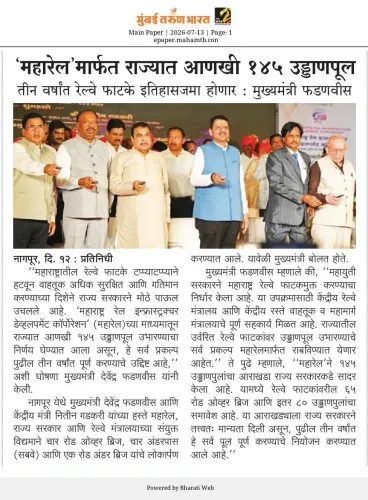
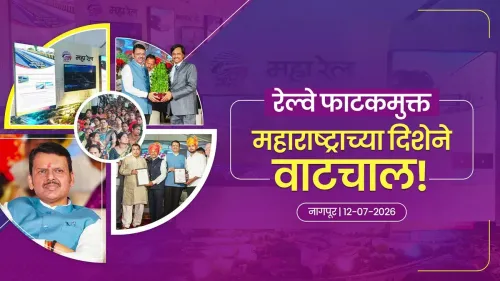
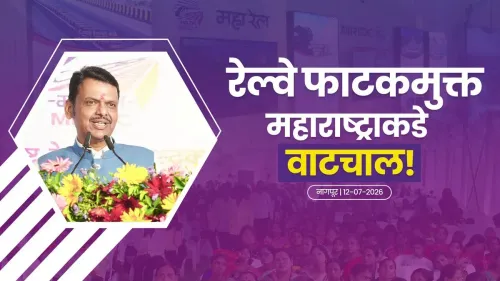
Chief Minister Devendra Fadnavis has directed Maharashtra to develop infrastructure for eliminating all railway level crossings, aligning the state with the national rail-safety drive and the Setu Bharatam scheme. The directive signals a statewide policy push on road-rail safety.
Key Takeaways
The Chief Minister's Office of Maharashtra on 9 June 2026 shared CM Devendra Fadnavis 's directive to build infrastructure for a railway-level-crossing-free state.
The instruction targets elimination of at-grade road-rail intersections, a persistent source of fatal accidents across Maharashtra .
The push aligns with the central government's Setu Bharatam scheme, launched in 2016 , which funds overbridges and underbridges on national highways.
Indian Railways — including Central Railway and Western Railway — will be key coordination partners for execution in the state.
Commuters, freight operators, and road users across Maharashtra stand to benefit from reduced accidents and shorter waiting times at crossings.
Budget allocations and project timelines from the state government will be the next critical indicators of implementation progress.
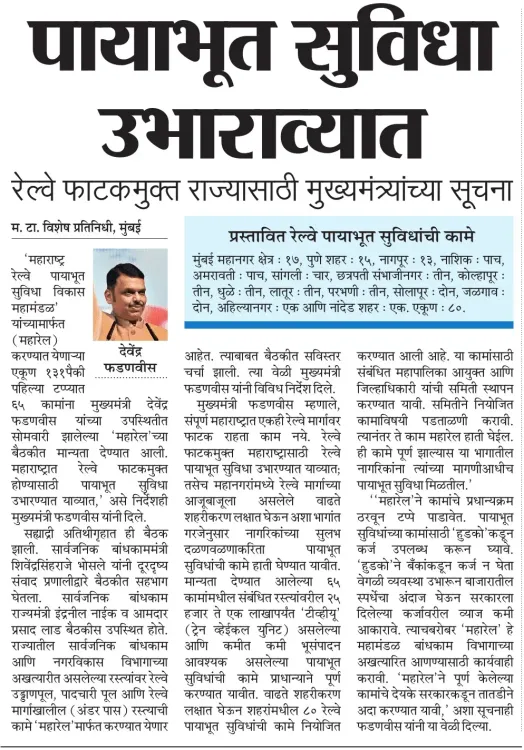
The Chief Minister's Office of Maharashtra on Tuesday, 9 June 2026 issued a directive from Chief Minister Devendra Fadnavis calling for the development of infrastructure to make the state free of railway level crossings, signalling a renewed push on rail safety and road connectivity.
The official post, shared in Marathi, stated: 'पायाभूत सुविधा उभाराव्यात — रेल्वे फाटकमुक्त राज्यासाठी मुख्यमंत्री देवेंद्र फडणवीस यांच्या सूचना' ['Build infrastructure — Chief Minister Devendra Fadnavis's instructions for a railway-level-crossing-free state']. The message places elimination of unmanned and manned level crossings at the centre of the state's infrastructure agenda.
Context
Railway level crossings — points where roads and rail tracks intersect at the same grade — have long been a source of fatal accidents across Maharashtra and India at large. Collisions at these crossings claim hundreds of lives nationally every year, making their replacement with overbridges or underpasses a persistent safety priority. CM Fadnavis's instruction signals that the state government intends to accelerate this process through dedicated infrastructure construction.
The directive comes as Maharashtra continues to expand its road and rail network, with several urban and semi-urban corridors experiencing heavier traffic loads that make at-grade crossings increasingly dangerous.
Policy Backdrop
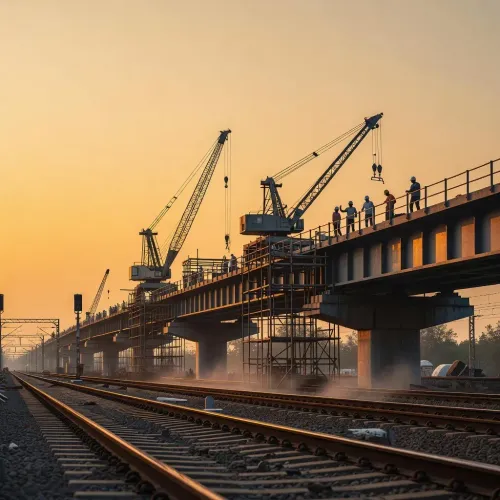
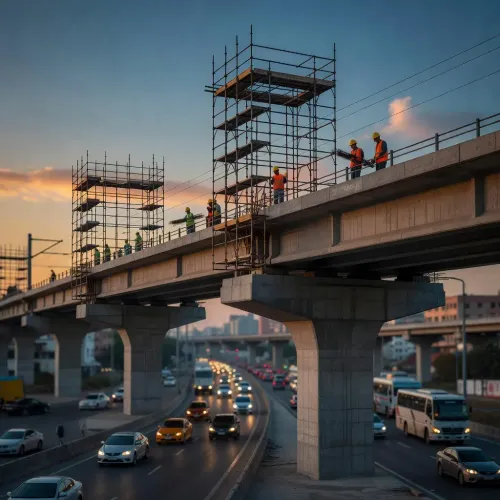
The push aligns with the Setu Bharatam scheme, a central government programme launched in 2016 to eliminate railway level crossings on national highways by replacing them with road overbridges and underbridges. Maharashtra has participated in joint planning with Indian Railways under multiple administrations to execute such projects across the state.
Devendra Fadnavis, a BJP leader who previously served as Chief Minister from 2014 to 2019, has consistently placed infrastructure development at the core of his governance agenda. His current instruction extends that emphasis, framing the removal of railway level crossings as a statewide goal rather than a project-by-project measure.
Indian Railways runs its own parallel programme to replace level crossings with bridges, and coordination between the state government and the national carrier is essential for funding, land acquisition, and timely execution of such projects.
Stakeholders and Impact
The most direct beneficiaries of a level-crossing-free Maharashtra would be daily commuters, freight transporters, and residents of areas where rail tracks bisect busy roads. Elimination of crossings reduces waiting time, fuel consumption, and — most critically — the risk of road-rail collisions.
Local bodies, the Maharashtra Public Works Department, and Indian Railways zones operating in the state — including Central Railway and Western Railway — will all be key implementation partners. The directive is expected to prompt coordination meetings and revised project timelines across districts.
What's Next
Attention will now turn to how the state translates CM Fadnavis's instruction into budgetary commitments and project schedules. Observers will watch for announcements on the number of crossings targeted, funding arrangements between the state and Indian Railways, and district-wise rollout plans.
A credible timeline and ring-fenced budget allocation will be the clearest indicators of whether this directive moves from policy intent to on-ground infrastructure delivery across Maharashtra.
Point of View
And it strategically dovetails with the central government's Setu Bharatam programme — reinforcing BJP's narrative of centre-state coordination on development. The instruction, however, remains at the directive stage; Maharashtra has a mixed record of completing road-rail bridge projects on schedule, and the real test will be whether this translates into ring-fenced budgets and binding timelines. Politically, the move allows the state government to claim ownership of a safety agenda that resonates with commuters across urban and rural Maharashtra alike. Analysts will watch whether the directive is followed by a formal project list and funding agreement with Indian Railways in the months ahead.
NationPress
23 Oct 2026
Frequently Asked Questions
What did CM Devendra Fadnavis say about railway level crossings in Maharashtra?
CM Devendra Fadnavis directed the Maharashtra government to build infrastructure to make the state completely free of railway level crossings, as announced by the Chief Minister's Office on 9 June 2026.
What is the Setu Bharatam scheme and how does it relate to Maharashtra?
Setu Bharatam is a central government scheme launched in 2016 to replace railway level crossings on national highways with overbridges and underbridges. Maharashtra has participated in joint planning with Indian Railways under this programme across multiple administrations.
Why are railway level crossings dangerous?
Railway level crossings are points where roads and rail tracks meet at the same grade, creating a risk of collisions between vehicles and trains. They are a leading cause of road-rail accidents and fatalities in India.
Which railway zones operate in Maharashtra and would be involved in this plan?
Central Railway and Western Railway are the primary Indian Railways zones operating in Maharashtra and would be key coordination partners for any statewide level-crossing elimination programme.
What should we watch for next on Maharashtra's level-crossing-free plan?
The key indicators will be state budget allocations for railway overbridges and underpasses, a district-wise project list, and formal coordination announcements between the Maharashtra government and Indian Railways.