CM Fadnavis clears 145 rail overbridges for Maharashtra in 3 years
Synopsis
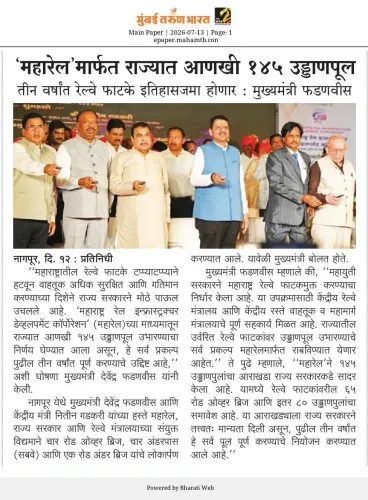
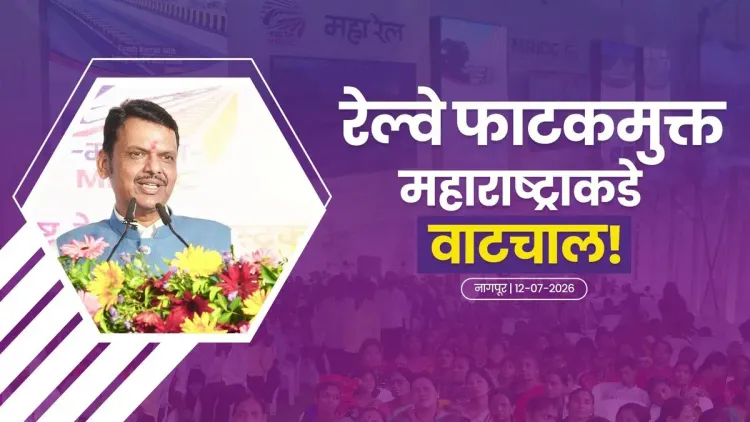
Maharashtra CM Devendra Fadnavis announced approval of a plan for 145 rail overbridges under MahaRail, aimed at eliminating all railway level crossings in the state within three years. The announcement was made at a Nagpur inauguration event on 12 July 2026.
Key Takeaways
145 rail overbridges have been approved under MahaRail to eliminate railway level crossings across Maharashtra .
Construction is targeted for completion within the next three years .
The plan was announced by CM Devendra Fadnavis at an inauguration event in Nagpur on 12 July 2026 .
MahaRail — the joint venture between the Government of Maharashtra and Indian Railways — is the executing agency.
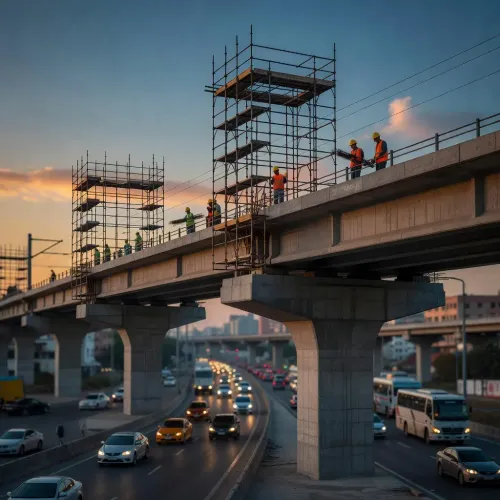
The programme covers ROBs (rail overbridges), underpasses, and RUBs (rail underbridges), improving both road safety and rail punctuality.
Maharashtra joins a national drive accelerated after 2014 to achieve grade-separation at all level crossings through central-state cost-sharing.
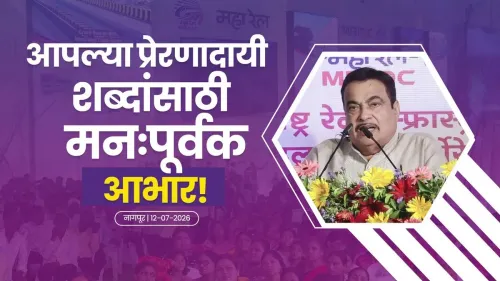
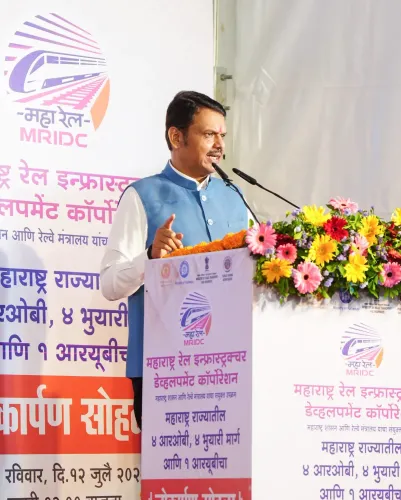
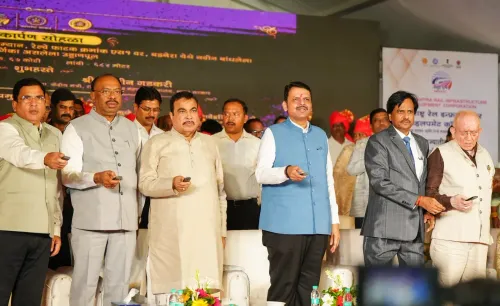
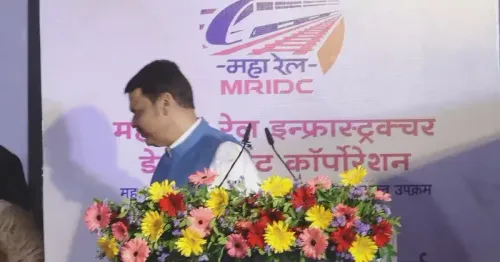
Maharashtra Chief Minister Devendra Fadnavis announced on Sunday, 12 July 2026, that plans for 145 rail overbridges have been approved under MahaRail to make the state free of railway level crossings, with construction to be completed within the next three years. The announcement was made at an event in Nagpur marking the inauguration of ROBs, underpasses, and RUBs.
Context
Posting on X, CM Fadnavis stated — in Marathi and Hindi — that the blueprint for 145 rail overbridges has been approved through Maharashtra Rail Infrastructure Development Corporation Limited (MahaRail) as part of a mission to create a 'relvey phatak-mukt Maharashtra' (railway level-crossing-free Maharashtra). The structures are to be built over the next three years. The post was tagged to the event at Nagpur on 12 July 2026, where several such structures were also formally inaugurated.
Policy Backdrop
MahaRail, the joint venture between the Government of Maharashtra and Indian Railways, is the nodal body executing grade-separation projects across the state. India has pursued the elimination of level crossings — both manned and unmanned — since the early 2000s, accelerating the programme after 2014 through central-state cost-sharing arrangements. Rail overbridges (ROBs) and rail underbridges (RUBs) are the primary instruments of this policy, replacing crossings that are a leading cause of road fatalities and rail delays.
Maharashtra has been among the more active states in this programme, advancing grade-separation works in high-traffic corridors around Mumbai, Pune, and Nagpur. The approval of 145 structures in a single plan represents a significant scaling up of that effort, consolidating multiple projects under a unified three-year construction calendar.
Stakeholders and Impact
Road users at level crossings and rail passengers on affected corridors stand to benefit most directly. Level crossings are a persistent source of accidents, traffic congestion, and train delays; their elimination through grade separation improves both road safety and rail punctuality simultaneously. Nagpur, as a major rail junction in eastern Maharashtra, is among the key beneficiary zones, though the 145-bridge plan is state-wide in scope.
For the state government, the programme also carries visible political weight: infrastructure inaugurations in Nagpur — CM Fadnavis's home constituency — underscore the administration's development narrative ahead of future electoral cycles. Contractors, construction firms, and local employment ecosystems in affected districts are also direct stakeholders in the execution phase.
What's Next
The immediate focus will shift to financial closure and tendering for the 145 approved structures. Funding releases in successive state and railway budgets will be closely watched as indicators of whether the three-year construction timeline holds. Progress on the first tranche of structures — particularly those in high-traffic urban corridors — will serve as an early benchmark for the programme's execution capacity. Civil society groups and road-safety advocates are likely to track whether the completion pace matches the stated deadline.
Point of View
CM Fadnavis's political home base, reinforces a pattern where infrastructure milestones are strategically showcased in constituencies with electoral significance. The three-year timeline is ambitious by Indian infrastructure standards and will test MahaRail's execution bandwidth. If delivered on schedule, the programme would meaningfully advance Maharashtra's standing in India's grade-separation league table and strengthen the BJP administration's development record ahead of the next assembly cycle.
NationPress
11 Oct 2026
Frequently Asked Questions
What is the MahaRail 145 overbridge plan announced by CM Fadnavis?
CM Devendra Fadnavis announced that plans for 145 rail overbridges (ROBs), underpasses, and rail underbridges (RUBs) have been approved under MahaRail to eliminate all railway level crossings in Maharashtra, with construction scheduled over the next three years.
What is MahaRail and what does it do?
MahaRail, or Maharashtra Rail Infrastructure Development Corporation Limited, is a joint venture between the Government of Maharashtra and Indian Railways. It plans, funds, and executes rail infrastructure projects in the state, including grade-separation works at level crossings.
Why are railway level crossings being replaced with overbridges in Maharashtra?
Level crossings are a major cause of road accidents and train delays. Replacing them with rail overbridges (ROBs) and underbridges (RUBs) eliminates the conflict between road and rail traffic, improving safety and reducing congestion on both networks.
Where was the overbridge inauguration event held on 12 July 2026?
The event was held in Nagpur, a major rail junction in eastern Maharashtra, where CM Devendra Fadnavis inaugurated several ROBs, underpasses, and RUBs and announced the broader 145-structure plan.
When will the 145 rail overbridges in Maharashtra be completed?
According to CM Fadnavis's announcement, all 145 approved structures are targeted for completion within three years of the plan's approval in July 2026.