CM Fadnavis clears 65 rail crossing works for level-crossing-free Maharashtra
Synopsis
Chief Minister Devendra Fadnavis on 8 June 2026 approved 65 first-phase railway overbridge and underpass works under MahRail in Mumbai, directing Maharashtra to become fully free of level crossings. Works spanning 80 urban sites across 15 cities will be financed via HUDCO, with district-level committees overseeing verification.
Key Takeaways
CM Devendra Fadnavis approved 65 works in Phase 1 of a total 131 railway infrastructure projects under MahRail at a review meeting in Mumbai on 8 June 2026 .
Fadnavis directed that not a single level crossing should remain on any railway line across Maharashtra.
80 urban railway infrastructure works are planned across 15 cities , led by Mumbai Metropolitan Region ( 17 ), Pune ( 15 ), and Nagpur ( 13 ).
Priority will be given to roads with 25,000 to 1,00,000 TVU and minimal land acquisition requirements.
HUDCO has been directed to provide low-interest financing through a separate market-based mechanism, avoiding conventional bank borrowings.
MahRail is to be brought under the administrative control of the PWD , and pending bills for completed works are to be cleared immediately.
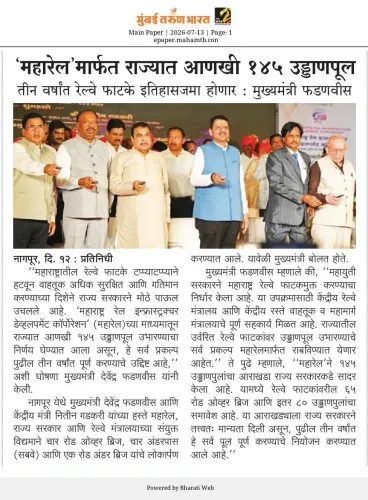
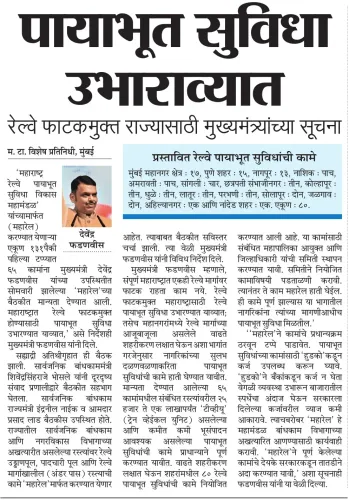
The Chief Minister's Office of Maharashtra announced on Monday, 8 June 2026 that Chief Minister Devendra Fadnavis chaired a high-level review meeting in Mumbai to accelerate the construction of railway overbridges and underpasses at level crossings across the state. Fadnavis approved 65 works in the first phase out of a total 131 projects identified under the Maharashtra Railway Infrastructure Development Corporation (MahRail), and directed that Maharashtra become completely free of railway level crossings.
Context
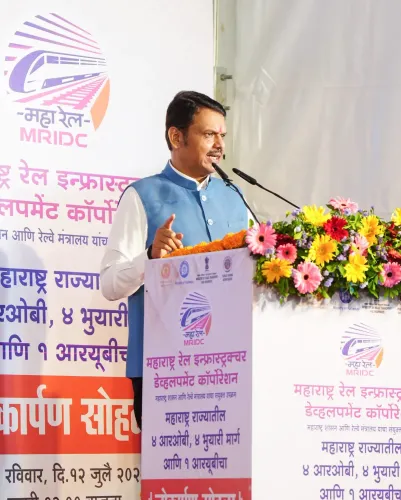
The post, shared by the Chief Minister's Office, quotes Fadnavis as stating: 'संपूर्ण महाराष्ट्रात एकाही रेल्वे मार्गावर फाटक राहता कामा नये' ('Not a single level crossing should remain on any railway line in the entire state of Maharashtra'). He further directed that infrastructure be built through the railways to achieve a level-crossing-free Maharashtra, and that in metropolitan areas, connectivity infrastructure be taken up proactively keeping in mind rapid urbanisation around rail corridors.
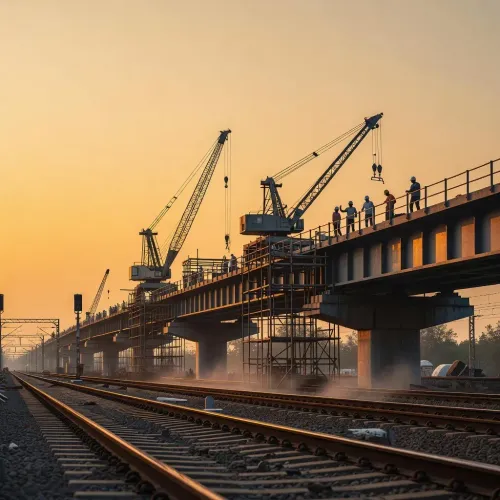
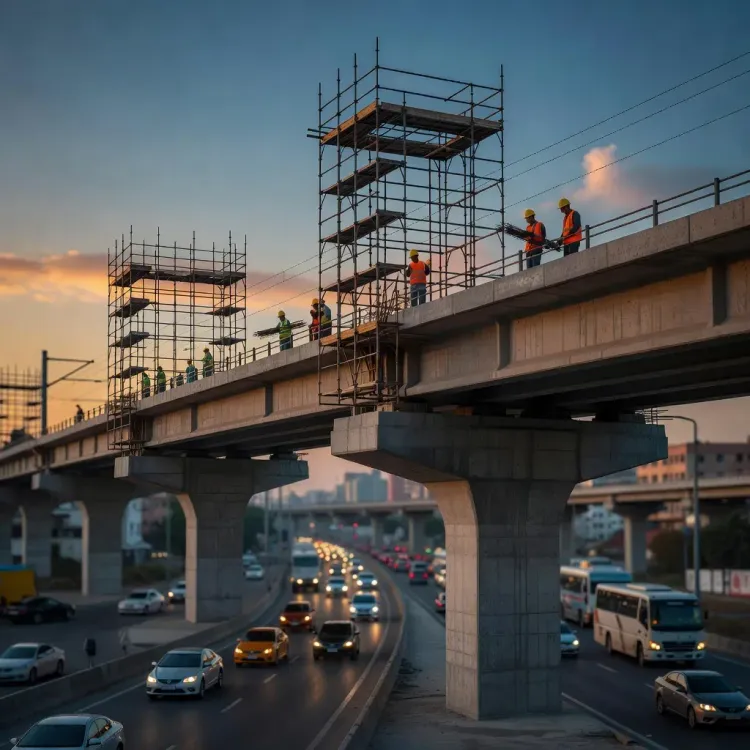
The approved 65 first-phase works will be executed by MahRail on roads under the jurisdiction of the Public Works Department (PWD) and the Urban Development Department. These works include railway overbridges, pedestrian bridges, and underpasses beneath railway lines.
Policy Backdrop
MahRail was established by the Maharashtra government in 2019 as the state nodal agency to fast-track rail-road separation works and reduce dependence on central railway timelines. The current push aligns with Indian Railways' national safety programme to eliminate unmanned and manned level crossings through grade separators.
Fadnavis directed that priority be given to works on roads with 25,000 to 1,00,000 Train Vehicle Units (TVU) and requiring minimum land acquisition. He also instructed MahRail to phase works by priority order and to secure loans from the Housing and Urban Development Corporation (HUDCO) for financing. Notably, he asked HUDCO to explore a separate funding mechanism — avoiding bank borrowings — so that interest charged to the state government on infrastructure loans remains competitive.
Fadnavis additionally directed that the process of bringing MahRail under the administrative control of the PWD be completed swiftly, and that the state government clear all pending bills of completed MahRail works without delay.
Stakeholders and Impact
A city-wise breakdown of the 80 urban railway infrastructure works planned across Maharashtra was presented at the meeting: Mumbai Metropolitan Region — 17, Pune — 15, Nagpur — 13, Nashik — 5, Amravati — 5, Sangli — 4, Chhatrapati Sambhajinagar — 3, Kolhapur — 3, Dhule — 3, Latur — 3, Parbhani — 3, Solapur — 2, Jalgaon — 2, Ahilyanagar — 1, and Nanded — 1.
For each city, a committee of the concerned Municipal Commissioner and District Collector will be constituted to verify planned works before MahRail proceeds with execution. Fadnavis stated that once completed, citizens in these areas will receive infrastructure even before they formally demand it. He also specifically directed action to prevent traffic congestion at intersections on overbridges in Nagpur, and called for a new railway overbridge on the Amravati-Badnera route to replace the existing ageing structure.
The meeting was attended by Minister Shivendra Sinharaj Bhosale, Minister of State Indranil Naik, MLA Prasad Lad, and senior officials.
What's Next
The immediate next steps involve formation of district-level verification committees by municipal commissioners and collectors, followed by MahRail drawing up phased timelines for the 65 sanctioned works. Securing HUDCO financing on favourable terms and completing the administrative transfer of MahRail to the PWD are the two institutional milestones to watch.
With 80 urban infrastructure works planned and a government commitment to proactive delivery, Maharashtra's level-crossing elimination drive is set to reshape daily commutes across its major cities — and the pace of HUDCO loan sanctions and land acquisition will determine whether first-phase deadlines hold.
Point of View
Led by Mumbai, Pune, and Nagpur, also reflects a deliberate prioritisation of high-density urban corridors where grade separation yields the greatest commuter dividend. The HUDCO financing directive, if executed at below-market rates, could prove a meaningful fiscal lever — but the real test will be land acquisition speed and committee-level coordination in smaller cities like Latur, Parbhani, and Nanded.
NationPress
23 Oct 2026
Frequently Asked Questions
What is MahRail and what is its role in Maharashtra?
MahRail , or the Maharashtra Railway Infrastructure Development Corporation , is the state nodal agency established in 2019 to execute railway overbridges, underpasses, and grade separators on PWD and urban roads across Maharashtra, reducing dependence on central railway timelines.
How many railway overbridge and underpass works did CM Fadnavis approve?
CM Devendra Fadnavis approved 65 works in the first phase at a review meeting in Mumbai on 8 June 2026 , out of a total 131 projects identified under MahRail.
Which cities will get the most railway infrastructure works under this plan?
The Mumbai Metropolitan Region leads with 17 works , followed by Pune (15) and Nagpur (13) , as part of 80 urban railway infrastructure works planned across 15 cities in Maharashtra.
How will Maharashtra fund these railway overbridge projects?
CM Fadnavis directed that HUDCO provide financing for these infrastructure works through a separate mechanism that avoids conventional bank borrowings, keeping interest rates competitive and low for the state government.
What is Maharashtra's goal for railway level crossings?
CM Fadnavis has set a clear goal: not a single level crossing should remain on any railway line across the entire state of Maharashtra, with MahRail tasked to execute the required overbridges and underpasses in phased order.