CM Fadnavis receives Dharavi panel's first interim report
Synopsis
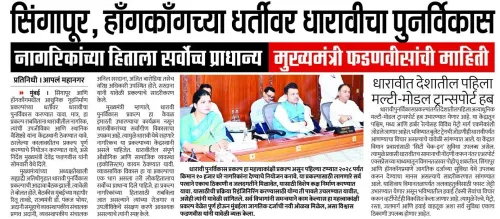
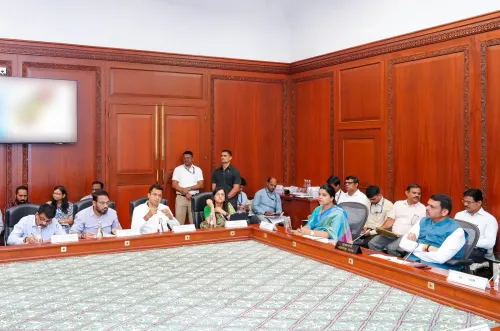
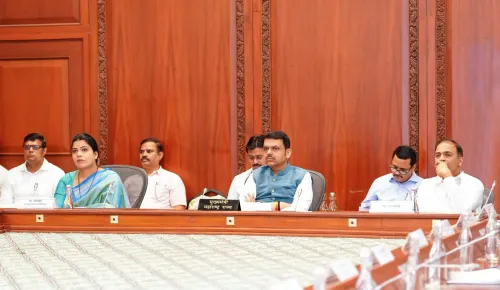
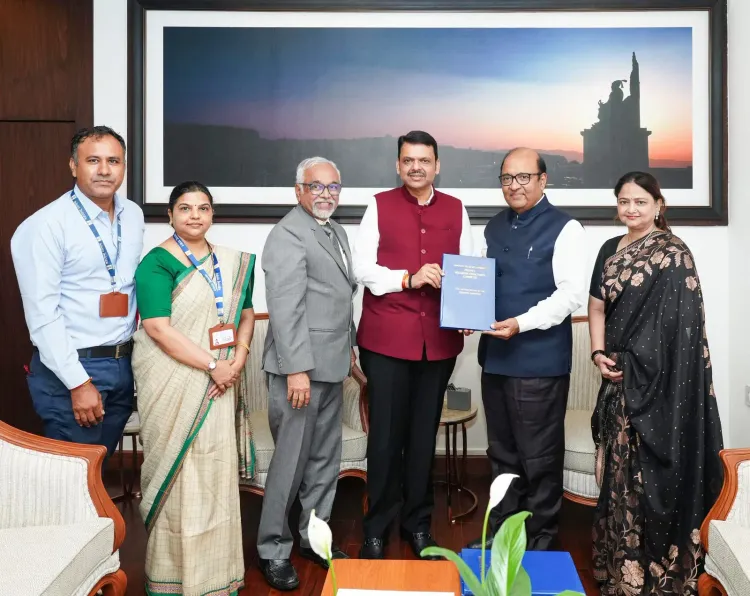
A committee chaired by retired Justice Dilip Bhosale submitted the first interim report of the Religious Structure Committee for the Dharavi Redevelopment Project to Maharashtra Chief Minister Devendra Fadnavis at Varsha Bungalow, Mumbai, on 6 June 2026, marking a key milestone in resolving places-of-worship disputes within Asia's largest informal urban settlement.
Key Takeaways
Retired Justice Dilip Bhosale chairs the Religious Structure Committee formed for the Dharavi Redevelopment Project .
The committee submitted its first interim report to Chief Minister Devendra Fadnavis on 6 June 2026 at 10:30 am .
The handover took place at Varsha Bungalow , the Chief Minister's official residence in Mumbai .
The committee's mandate covers religious structures — temples, mosques, churches and dargahs — that fall within or near the redevelopment zone.
Maharashtra has a precedent of using judicially-led panels to resolve land-use and religious-structure disputes in large slum redevelopment projects.
Further interim reports and eventual final recommendations are expected before the project advances to its next statutory phase.
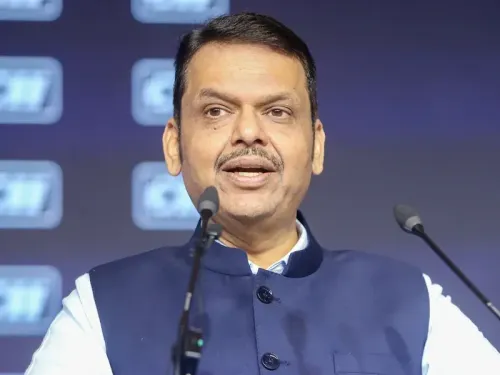
The Chief Minister's Office of Maharashtra announced on Saturday, 6 June 2026 that a committee chaired by retired judge Justice Dilip Bhosale submitted the first interim report of the Religious Structure Committee for the Dharavi Redevelopment Project to Chief Minister Devendra Fadnavis at 10:30 am at Varsha Bungalow, Mumbai.
Context
The submission marks a formal milestone in the Dharavi Redevelopment Project's effort to address places of worship within the project's footprint. The committee, constituted under the chairmanship of Justice Dilip Bhosale — a retired judge of the Bombay High Court — was tasked with examining religious structures that fall within or adjacent to the redevelopment zone. The handover of the first interim report at Varsha Bungalow, the official residence of the Chief Minister, signals that the panel has completed an initial round of site assessments and deliberations.
Policy Backdrop
The Dharavi Redevelopment Project is one of India's most ambitious urban renewal initiatives, targeting the dense settlement in central Mumbai that is widely described as Asia's largest informal urban cluster. The project traces its origins to early-2000s state government plans under the Slum Rehabilitation Authority framework, and has undergone multiple tender revisions and administrative reviews across successive Maharashtra administrations.
Maharashtra governments have historically constituted judicially-led committees to resolve land-use disputes during large-scale slum redevelopment, particularly where places of worship are involved. Such mechanisms are designed to balance the competing claims of long-standing residents, religious communities and project developers, while keeping the state's urban renewal agenda on track.
Stakeholders and Impact
The Religious Structure Committee's work directly concerns Dharavi's diverse communities, whose mosques, temples, churches and dargahs are interspersed throughout the settlement. Any recommendations the committee makes on the treatment, relocation or preservation of these structures will have a direct bearing on community consent and the project's social acceptability. Developers and the state's urban planning machinery will be required to align their plans with the committee's eventual final findings.
Chief Minister Devendra Fadnavis, who has made urban infrastructure and Mumbai redevelopment a central plank of his administration, received the report personally — underscoring the political weight attached to resolving the religious-structures question before the project advances to its next phase.
What's Next
The committee's mandate envisages further rounds of review, making this first interim report one of several expected submissions. Observers will watch for subsequent interim reports, any statutory notifications altering project boundaries, and contract or tender milestones that the state may issue once the committee's recommendations are incorporated into the project's master plan. The pace at which the government acts on Justice Bhosale's findings is likely to set the tone for community negotiations and the broader redevelopment timeline in the months ahead.
Point of View
The government lends judicial credibility to what are inherently political decisions about places of worship — a playbook Maharashtra has used in earlier slum redevelopment disputes. The report's arrival also gives the Chief Minister a tangible deliverable to present to religious communities as evidence of due process. How swiftly the government translates the committee's findings into policy notifications will determine whether this mechanism builds genuine trust or remains a procedural formality.
NationPress
23 Oct 2026
Frequently Asked Questions
What is the Religious Structure Committee for the Dharavi Redevelopment Project?
It is a committee constituted by the Maharashtra government, chaired by retired Justice Dilip Bhosale, to examine and make recommendations on mosques, temples, churches, dargahs and other places of worship that fall within or adjacent to the Dharavi Redevelopment Project zone in Mumbai.
Who is Justice Dilip Bhosale?
Justice Dilip Bhosale is a retired judge of the Bombay High Court who has been appointed to chair the Religious Structure Committee overseeing the treatment of places of worship in the Dharavi Redevelopment Project.
What is the Dharavi Redevelopment Project?
The Dharavi Redevelopment Project is a large-scale urban renewal initiative by the Maharashtra government aimed at redeveloping Dharavi in central Mumbai — widely described as Asia's largest informal urban settlement — into planned housing, infrastructure and commercial spaces under the Slum Rehabilitation Authority framework.
What did the committee submit to CM Devendra Fadnavis on 6 June 2026?
The committee submitted the first interim report of the Religious Structure Committee, covering its initial findings on religious structures within the Dharavi Redevelopment Project's footprint, at Varsha Bungalow in Mumbai at 10:30 am on 6 June 2026.
What happens after the interim report is submitted?
The committee is expected to submit further interim reports before a final set of recommendations. The Maharashtra government will then need to incorporate those findings into the project's master plan, potentially issuing statutory notifications and proceeding with contractor and tender milestones.