Rajasthan first state to sign ISA clean energy framework, targets 125 GW capacity
Synopsis
Rajasthan has become the first Indian state to formally partner with the 128-nation International Solar Alliance, committing to an AI-powered grid overhaul and a 125 GW clean energy target. With 42 GW of solar already installed — the most in India — the state is now setting a national template for how subnational governments can plug into global clean energy frameworks.
Key Takeaways
Rajasthan is the first Indian state to sign the ISA's 'Framework for Action – Advanced Clean Energy, Driven Sustainable Development' on 8 July .
The state leads India with an installed solar capacity of more than 42 GW and total clean energy capacity of nearly 48 GW .
The government targets 125 GW of clean energy under the Rajasthan Integrated Clean Energy Policy .
An AI-enabled digital twin pilot will be launched at Ajmer Vidyut Vitran Nigam for demand forecasting and grid planning.
More than 4 GW of solar capacity under PM-KUSUM already serves farmers in 26 districts .
The framework will guide the state's energy transition for the 2030–35 period, covering storage, smart grids, and policy reforms.
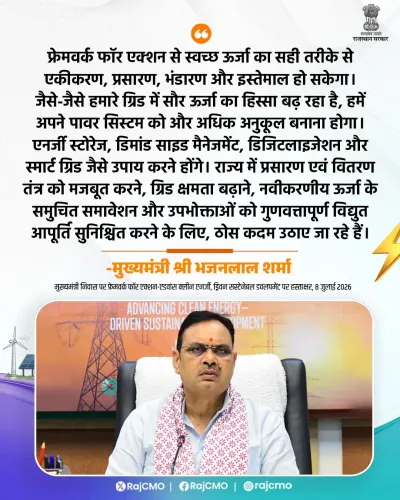
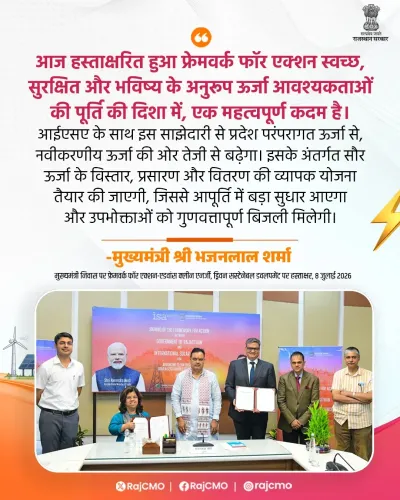
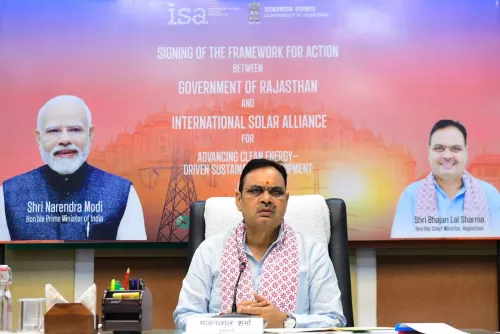
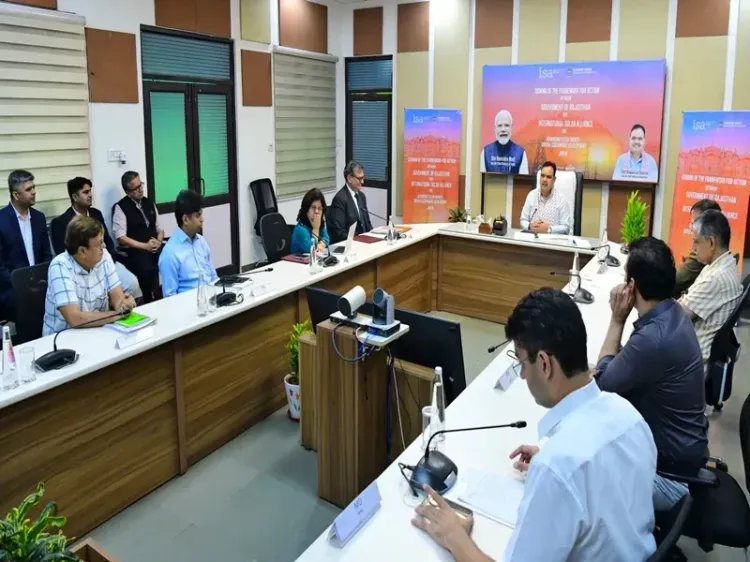
Rajasthan has become the first state in India to sign the 'Framework for Action – Advanced Clean Energy, Driven Sustainable Development' with the International Solar Alliance (ISA), a coalition of 128 countries advancing solar energy globally. The agreement was formalised on 8 July at the Chief Minister's residence in Jaipur, in the presence of Chief Minister Bhajan Lal Sharma, marking a significant milestone in the state's clean energy journey.
What the Framework Covers
The agreement was signed by Energy Secretary Aarti Dogra and ISA Director General Ashish Khanna. It lays out a comprehensive strategy spanning solar power generation, transmission, storage, and distribution, and will guide Rajasthan's energy transition plan for the 2030–35 period.
Key focus areas include renewable energy expansion, grid modernisation, transmission upgrades, energy storage, energy efficiency, demand management, institutional capacity building, and policy reforms. Notably, one of the flagship initiatives under the partnership will be an AI-enabled digital twin pilot project at Ajmer Vidyut Vitran Nigam, which will enable accurate electricity demand forecasting and improved reliability of power supply.
Rajasthan's Solar Credentials
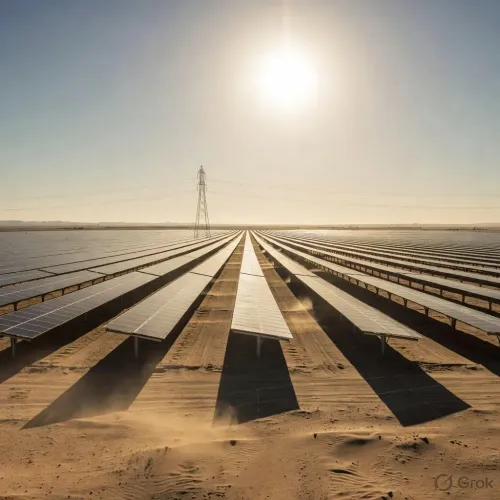
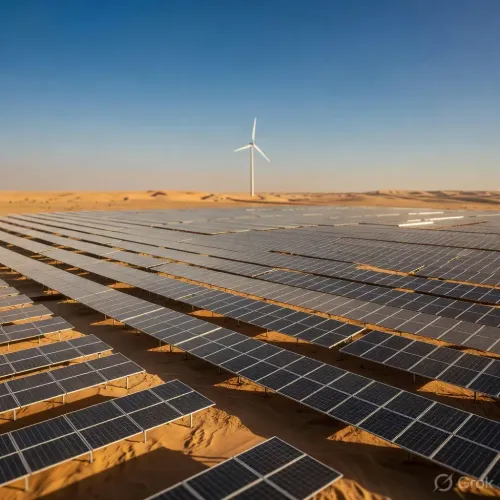
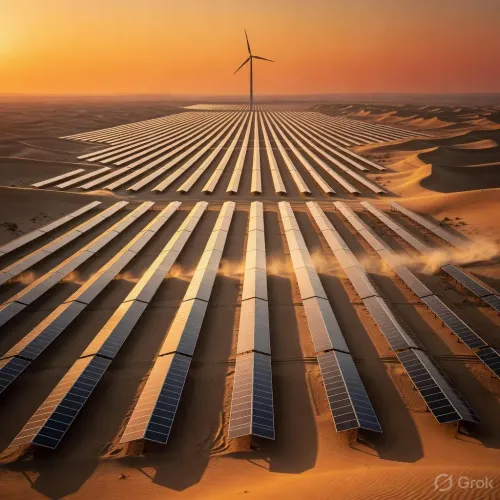
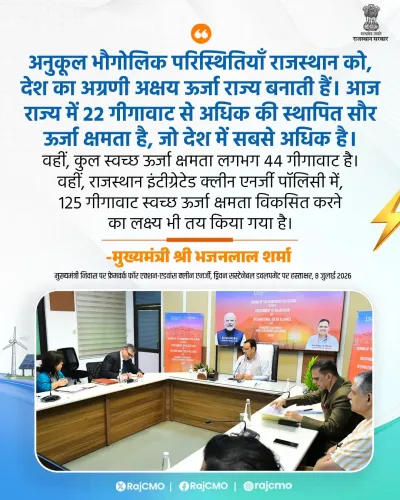
Rajasthan's geographical advantages have long made it the country's frontrunner in solar energy. The state currently holds an installed solar power capacity of more than 42 GW — the highest in India — with total clean energy capacity reaching nearly 48 GW. Under the Rajasthan Integrated Clean Energy Policy, the government has set an ambitious target of achieving 125 GW of clean energy capacity in the coming years.
Under the PM-KUSUM Scheme, more than 4 GW of solar capacity is already supplying daytime electricity to farmers across 26 districts, reducing dependence on conventional power sources.
What the Government Said
Chief Minister Sharma described the agreement as a milestone, saying the partnership would strengthen Rajasthan's position as India's leading renewable energy state while ensuring affordable, reliable, and high-quality electricity for consumers. He added that the initiative aligns with Prime Minister Narendra Modi's vision of making solar energy a global movement through the ISA.
Minister of State for Energy (Independent Charge) Hiralal Nagar said the agreement would introduce artificial intelligence (AI)-based solutions to modernise electricity services, improve power distribution, planning, and consumer services.
ISA Director General Ashish Khanna described Rajasthan as 'a model for other states pursuing clean energy transitions,' noting it is the first Indian state to sign such a framework with the alliance.
Broader Push on Rooftop Solar
During a review meeting of the Energy Department held alongside the signing, Chief Minister Sharma directed officials to accelerate implementation of the PM Surya Ghar-Muft Bijli Yojana. He asked the Chief Secretary to regularly monitor the scheme to ensure timely achievement of targets and faster adoption of rooftop solar systems across the state.
The collaboration will also provide engineers and government officials access to international training, technical expertise, and knowledge-sharing programmes through the ISA. With Rajasthan now setting a template, other states are likely to face pressure to formalise similar frameworks as India's clean energy ambitions intensify ahead of 2030.
Point of View
The state is not starting from scratch — it is formalising an acceleration. The real test will be execution: India's renewable capacity announcements have historically outpaced grid readiness, and the AI digital twin pilot at Ajmer is a modest beginning for a state of Rajasthan's scale. The ISA's involvement also raises an underreported question — whether subnational partnerships with multilateral bodies can unlock financing and technical transfer that bilateral Centre-state channels cannot. If Rajasthan delivers, it becomes a proof of concept that could reshape how other large states approach their own clean energy transitions.
NationPress
7 Oct 2026
Frequently Asked Questions
What is the ISA clean energy framework that Rajasthan has signed?
It is the 'Framework for Action – Advanced Clean Energy, Driven Sustainable Development,' an agreement between Rajasthan and the International Solar Alliance (ISA), a coalition of 128 countries. Signed on 8 July in Jaipur, it outlines a roadmap for the state's energy transition covering solar generation, storage, grid modernisation, and AI-based solutions through 2030–35.
Why is Rajasthan's ISA agreement significant?
Rajasthan is the first Indian state — and the first subnational government — to sign such a framework with the ISA, making it a potential model for other states. The state already has India's highest installed solar capacity at over 42 GW, lending credibility to its clean energy commitments.
What is Rajasthan's clean energy target under this framework?
Under the Rajasthan Integrated Clean Energy Policy, the state aims to achieve 125 GW of clean energy capacity in the coming years. The ISA framework will guide the transition plan specifically for the 2030–35 period.
What is the AI digital twin project announced under the partnership?
An AI-enabled digital twin pilot project will be launched at Ajmer Vidyut Vitran Nigam. It will enable accurate electricity demand forecasting, better network planning, efficient integration of renewable energy, and improved reliability of power supply.
How does the PM-KUSUM Scheme fit into Rajasthan's clean energy push?
Under the PM-KUSUM Scheme, more than 4 GW of solar capacity is already supplying daytime electricity to farmers across 26 districts in Rajasthan, reducing their dependence on conventional power. Chief Minister Sharma highlighted the scheme as a key component of the state's rural clean energy outreach.