CM Dhami Meets Shankaracharya Swami Rajrajeshwarashram in Haridwar
Synopsis
Uttarakhand Chief Minister Pushkar Singh Dhami met Jagadguru Shankaracharya Swami Rajrajeshwarashram Maharaj in Haridwar on 8 July 2026, receiving his blessings. The visit reflects the state government's sustained engagement with Hindu religious institutions in a state that markets itself as Devbhoomi.
Key Takeaways
CM Pushkar Singh Dhami met Jagadguru Shankaracharya Swami Rajrajeshwarashram Maharaj in Haridwar on 8 July 2026 .
Dhami described the meeting as 'aatmiy' (heartfelt) and said he received the Shankaracharya's 'snehil aashirvaad' (affectionate blessings).
Haridwar is a major Hindu pilgrimage centre in Uttarakhand and a cornerstone of the state's religious tourism economy.
Uttarakhand promotes its identity as Devbhoomi and has consistently supported pilgrimage infrastructure under the Dhami administration.
Meetings between senior political leaders and Shankaracharyas are a longstanding feature of Indian political culture, signalling respect for religious authority.
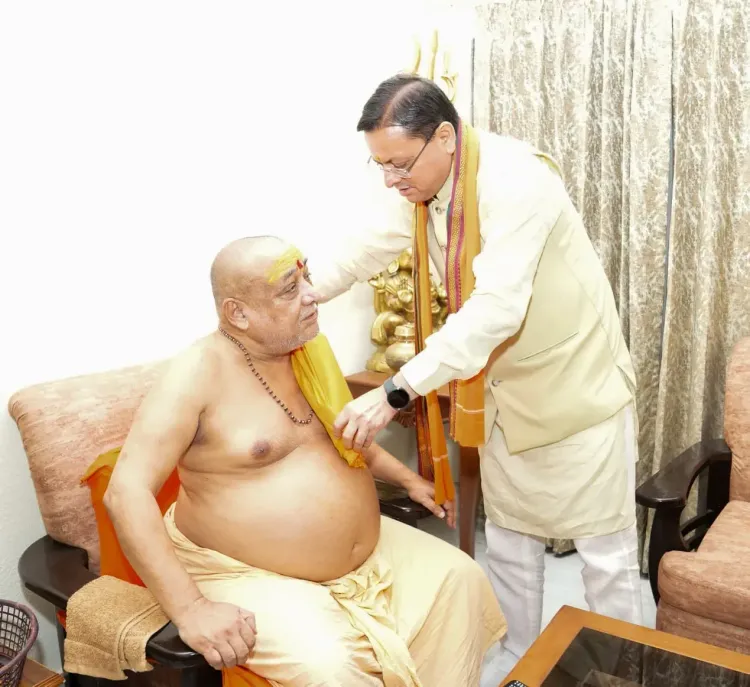
Uttarakhand Chief Minister Pushkar Singh Dhami on Wednesday, 8 July 2026, called on Jagadguru Shankaracharya Swami Rajrajeshwarashram Maharaj at Haridwar, receiving the spiritual leader's blessings during what the Chief Minister described as a warm and personal meeting.
Context
Dhami shared the visit on social media, writing in Hindi: 'Aaj Haridwar mein Jagadguru Shankaracharya Swami Rajrajeshwarashram Maharaj ji se aatmiy bhet kar unka snehil aashirvaad prapt kiya' — ('Today in Haridwar, I had a warm, heartfelt meeting with Jagadguru Shankaracharya Swami Rajrajeshwarashram Maharaj and received his affectionate blessings.'). The post was accompanied by an image from the meeting.
Haridwar, one of Hinduism's most sacred cities situated on the banks of the Ganga in Uttarakhand, is home to numerous religious institutions and regularly hosts senior political figures seeking audiences with spiritual leaders. The city is a perennial centre of the state's pilgrimage economy.
Policy Backdrop
Uttarakhand has long promoted its identity as Devbhoomi — the 'Land of the Gods' — and successive state governments have invested in pilgrimage infrastructure and religious tourism circuits. Under CM Dhami, this emphasis has continued, with the state government supporting upgrades to the Char Dham pilgrimage corridor and related facilities.
In 2020-21, the Uttarakhand government enacted the Prohibition of Unlawful Conversion of Religion Act, signalling a broader legislative focus on religious identity. Meetings with Shankaracharyas and other mathadhipatis (heads of monastic institutions) fit within this pattern of engagement with prominent Hindu religious authorities.
Shankaracharyas and Political Engagement
The Jagadguru Shankaracharya title belongs to the heads of the Advaita Vedanta monastic lineages established by the philosopher-saint Adi Shankaracharya. These figures command deep reverence among Hindu devotees across India and carry significant moral authority within religious discourse.
Indian political leaders across parties routinely seek audiences with Shankaracharyas, particularly ahead of major religious festivals or policy announcements touching on pilgrimage and temple administration. Such meetings are widely understood as a means of maintaining cultural legitimacy and demonstrating respect for religious institutions.
Stakeholders and Impact
The meeting is of direct symbolic significance to Hindu devotees and pilgrims who visit Haridwar in large numbers throughout the year. For the state's pilgrimage economy — which draws millions of visitors annually — visible engagement between the Chief Minister and senior religious figures reinforces Uttarakhand's positioning as a spiritually significant destination.
Local religious institutions, ashrams, and the broader network of priests and service providers in Haridwar and the Char Dham belt are key stakeholders in any policy decisions that may follow from such high-level interactions.
What's Next
Observers will watch for follow-up announcements relating to state budget allocations for religious tourism infrastructure or any policy consultations with religious leaders ahead of major upcoming festivals. CM Dhami's continued outreach to prominent spiritual authorities suggests that engagement with Uttarakhand's religious establishment will remain a consistent feature of his administration's public posture.
Point of View
Maintaining close ties with prominent Hindu spiritual authorities serves both cultural and electoral purposes. The visit also signals that religious institution-building will remain central to Uttarakhand's policy identity as the state approaches the next assembly election cycle. While the meeting carries no immediate legislative weight, it reinforces the symbolic architecture the government has constructed around pilgrimage, faith, and governance.
NationPress
8 Jul 2026
Frequently Asked Questions
Why did CM Dhami visit Haridwar on 8 July 2026?
CM Pushkar Singh Dhami visited Haridwar on 8 July 2026 to meet Jagadguru Shankaracharya Swami Rajrajeshwarashram Maharaj and receive his blessings, describing it as a warm personal meeting.
Who is Jagadguru Shankaracharya Swami Rajrajeshwarashram Maharaj?
Jagadguru Shankaracharya Swami Rajrajeshwarashram Maharaj is a traditional Shankaracharya and head of an Advaita Vedanta monastic lineage, one of the recognised Hindu spiritual authorities in India.
What is Uttarakhand's connection to Hindu religious institutions?
Uttarakhand is known as Devbhoomi, or the 'Land of the Gods', and is home to major pilgrimage sites including Haridwar and the Char Dham circuit. The state government actively supports pilgrimage infrastructure and religious tourism.
Do Indian politicians often meet Shankaracharyas?
Yes, Indian political leaders across parties regularly seek audiences with Shankaracharyas and other senior religious figures, a practice seen as demonstrating respect for religious institutions and maintaining cultural legitimacy.
What policies has CM Dhami pursued related to religion in Uttarakhand?
Under CM Dhami, Uttarakhand enacted the Prohibition of Unlawful Conversion of Religion Act in 2020-21 and has continued investing in pilgrimage infrastructure, including the Char Dham corridor, reflecting a sustained focus on the state's religious identity.