CM Sai Hails 'Om Namah Shivaya' at Prambanan as India's Cultural Reach
Synopsis
Chhattisgarh CM Vishnu Deo Sai invoked the chanting of 'Om Namah Shivaya' at Indonesia's 9th-century Prambanan Temple Complex — a UNESCO World Heritage Site — as evidence of India's Sanatan civilisational reach under PM Modi's leadership, linking cultural diplomacy to universal brotherhood.
Key Takeaways
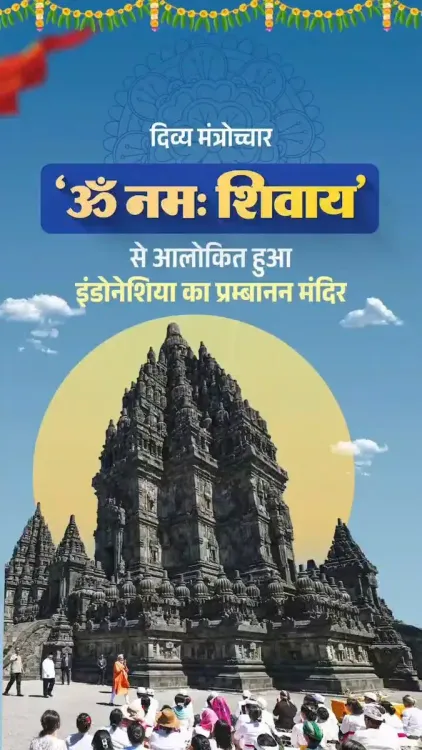
Chhattisgarh CM Vishnu Deo Sai posted on 8 July 2026 hailing the resonance of 'Om Namah Shivaya' at Indonesia's Prambanan Temple Complex .
Prambanan is a 9th-century Hindu temple complex in Central Java dedicated to Lord Shiva , designated a UNESCO World Heritage Site in 1991 .
Sai credited PM Narendra Modi with steering India's global cultural leadership alongside its geopolitical influence.
The post frames the Prambanan moment as a message of Vishwabandhutha — universal brotherhood — transcending national borders.
India's Act East Policy (2014) explicitly incorporates civilisational and cultural diplomacy with ASEAN nations including Indonesia.
India-Indonesia heritage cooperation is expected to feature in upcoming ASEAN-India Summit discussions in 2026 .
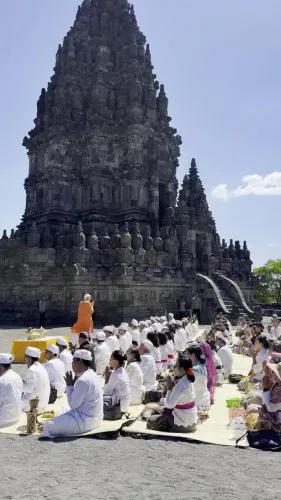
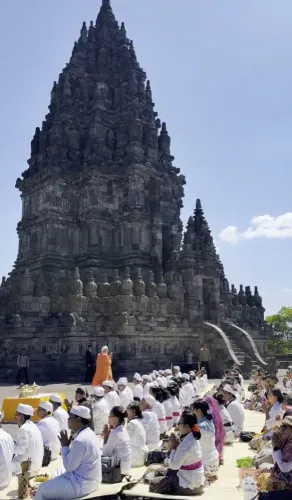
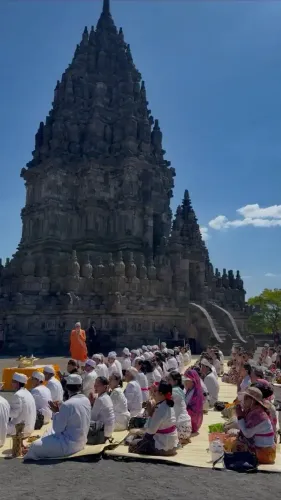
Chhattisgarh Chief Minister Vishnu Deo Sai on Wednesday, 8 July 2026, invoked the chanting of 'Om Namah Shivaya' at Indonesia's Prambanan Temple Complex as a symbol of India's enduring civilisational reach, attributing the moment to the global cultural leadership of Prime Minister Narendra Modi.
Posting on X, Sai wrote that under Modi's leadership, India is offering the world a new direction not only through its global leadership capacity but also through its 'Sanatan Sanskritik Chetna' — its eternal Sanatan cultural consciousness. He described the resonance of 'Om Namah Shivaya' at the UNESCO World Heritage Site as a proclamation of a timeless awareness that transcends borders and carries a message of 'Vishwabandhutha, Shraddha aur Sadbhav' — universal brotherhood, reverence, and harmony — to all of humanity.
Context
The Prambanan Temple Complex, located in Central Java, Indonesia, is a 9th-century Hindu temple compound dedicated primarily to Lord Shiva and inscribed as a UNESCO World Heritage Site in 1991. It stands as one of the most prominent physical markers of the deep historical spread of Indic civilisation across Southeast Asia. The chanting of Vedic mantras at such a site carries layered significance — both as a religious act and as a statement about the geographic and temporal reach of Sanatan traditions.
Chief Minister Sai's post tagged Prime Minister Modi directly, framing the cultural moment as an outcome of Modi's foreign policy orientation rather than a standalone religious event. This reflects a broader pattern in which BJP leaders connect overseas Indic heritage sites to the current government's diplomatic and civilisational narrative.
Policy Backdrop
India's Act East Policy, launched in 2014 as an upgrade to the earlier Look East Policy, explicitly incorporates cultural diplomacy and civilisational linkages with ASEAN nations, including Indonesia. The policy recognises that shared heritage — Ramayana traditions, temple architecture, Sanskrit-derived place names — constitutes a form of soft power distinct from economic or security ties.
Prime Minister Modi visited Indonesia in May 2018 during the ASEAN-India Commemorative Summit cycle and publicly highlighted the shared Ramayana and Shiva heritage connecting the two nations. Since 2014, Indian leaders have consistently invoked Sanatan symbols during ASEAN and Indo-Pacific engagements to distinguish India's civilisational approach from purely transactional diplomacy. References to Vasudhaiva Kutumbakam — the world is one family — have appeared in official statements across G20, ASEAN summits, and bilateral visits to countries with historic Indic temple architecture.
Stakeholders and Impact
The statement resonates with Hindu communities in India and across the Indian diaspora in Southeast Asia, for whom sites like Prambanan represent living proof of Sanatan culture's historical universality. It also speaks to ASEAN cultural bodies and heritage conservationists who track India's engagement with shared archaeological and religious patrimony in the region.
For Indonesia, which maintains a significant Hindu minority — particularly in Bali — and a broader population with deep cultural memory of its Hindu-Buddhist past, India's symbolic embrace of Prambanan carries diplomatic warmth. Such gestures reinforce people-to-people ties that complement the formal strategic and economic relationship between the two countries within ASEAN frameworks.
What's Next
India-Indonesia cultural cooperation agreements and heritage conservation projects are expected to feature in discussions at the next ASEAN-India Summit and in any planned 2026 bilateral engagements. As India continues to position itself as a leading voice in the Indo-Pacific, the invocation of shared Sanatan heritage at sites like Prambanan is likely to remain a recurring diplomatic and cultural instrument. CM Sai's post signals that this narrative enjoys active amplification at the state leadership level as well, broadening its political resonance within India.
Point of View
Extending its reach beyond formal foreign policy channels into domestic political discourse. By anchoring a cultural moment in Indonesia to PM Modi's personal leadership, the statement fuses soft power messaging with electoral identity politics — a pattern that has intensified since India's G20 presidency in 2023. The invocation of Prambanan is strategically significant: it presents India's cultural influence as historically organic and geographically boundless, countering any perception that Hindu nationalism is inward-looking or exclusionary. Whether this translates into concrete bilateral heritage initiatives will be the real measure of the policy's depth beyond rhetoric.
NationPress
6 Oct 2026
Frequently Asked Questions
What is the Prambanan Temple Complex and why is it significant for India?
The Prambanan Temple Complex is a 9th-century Hindu temple compound in Central Java, Indonesia , dedicated primarily to Lord Shiva and recognised as a UNESCO World Heritage Site since 1991 . For India, it represents historical evidence of the spread of Sanatan and Indic civilisation across Southeast Asia, making it a key reference point in cultural diplomacy.
Why did Chhattisgarh CM Vishnu Deo Sai post about Prambanan Temple?
CM Vishnu Deo Sai used the occasion of 'Om Namah Shivaya' being chanted at Prambanan to highlight India's Sanatan cultural consciousness and to credit PM Narendra Modi with giving the world new direction through civilisational as well as geopolitical leadership.
What is India's Act East Policy and how does it relate to cultural diplomacy?
India's Act East Policy , launched in 2014 , upgraded the earlier Look East Policy and explicitly includes cultural diplomacy and civilisational linkages with ASEAN nations. It recognises shared Indic heritage — including temple architecture and Ramayana traditions — as a form of soft power in Southeast Asia.
What is the meaning of 'Om Namah Shivaya' and its significance at Prambanan?
'Om Namah Shivaya' is a sacred Sanskrit mantra in Sanatan tradition, meaning an offering of reverence to Lord Shiva . Its chanting at Prambanan — a Shiva-dedicated temple outside India — is seen as a living expression of the cross-border continuity of Hindu religious practice and cultural memory.
What are India and Indonesia expected to cooperate on culturally in 2026?
India-Indonesia cultural cooperation agreements and heritage conservation projects at shared Indic sites are expected to be discussed at the upcoming ASEAN-India Summit and during any planned 2026 bilateral engagements between the two countries.