CM Dhami Receives Blessings of Swami Harichaitanya Puri at Official Residence
Synopsis
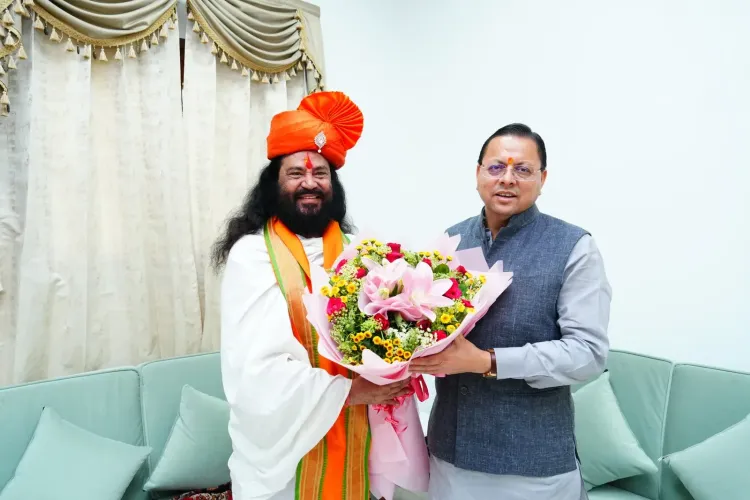
Uttarakhand Chief Minister Pushkar Singh Dhami welcomed Swami Harichaitanya Puri Ji Maharaj at his official Dehradun residence on 23 May 2026, receiving the saint's blessings in a meeting reflecting the BJP-led state government's sustained engagement with religious figures.
Key Takeaways
CM Pushkar Singh Dhami received Swami Harichaitanya Puri Ji Maharaj at his official residence in Dehradun on 23 May 2026 .
Dhami welcomed and honoured the spiritual leader and received his blessings during the visit.
Uttarakhand, home to the Char Dham pilgrimage circuit, has deep institutional ties between state governance and religious leadership.
BJP -led state governments maintain regular and visible engagement with Hindu spiritual figures as part of cultural governance.
Any follow-up state events involving religious institutions or cultural programmes in Uttarakhand will be worth monitoring.
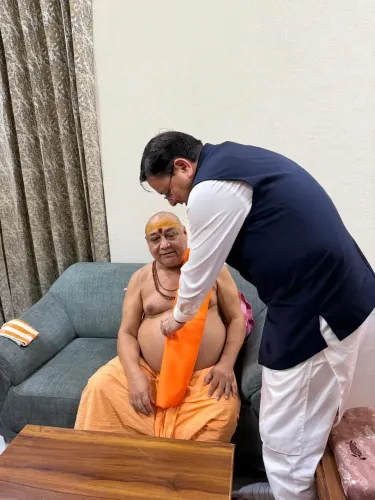
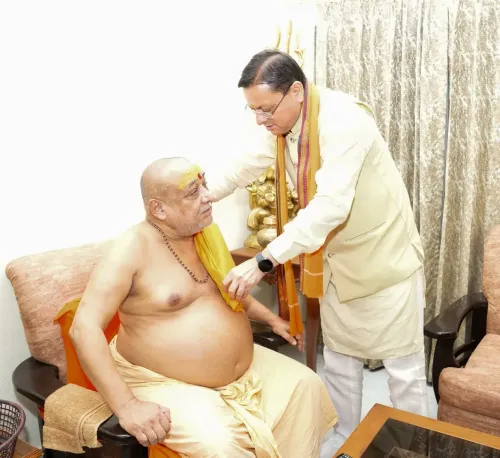
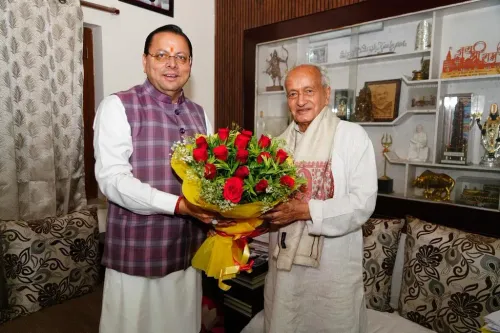
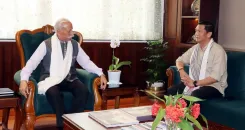
Uttarakhand Chief Minister Pushkar Singh Dhami welcomed and honoured Pujya Swami Harichaitanya Puri Ji Maharaj at his official residence in Dehradun on Saturday, 23 May 2026, receiving the spiritual leader's blessings during the visit.
Context
Dhami shared the occasion on X, writing in Hindi: 'Shaskiya avas par Pujya Swami Harichaitanya Puri Ji Maharaj ka swagat aur abhinandan kar unka aashish prapt kiya' — meaning, 'Welcomed and honoured Pujya Swami Harichaitanya Puri Ji Maharaj at the official residence and received his blessings.' The post was accompanied by an image from the meeting.
Such visits by revered spiritual figures to the official residences of state chief ministers are a recurring feature of public life in states with significant pilgrimage heritage, and Uttarakhand — home to the Char Dham pilgrimage circuit — is among the most prominent of these.
Policy Backdrop
BJP-led state governments across India have maintained consistent and visible engagement with Hindu religious leaders, treating such interactions as part of cultural governance rather than formal policy. For Uttarakhand, a state whose identity is deeply intertwined with temples, ashrams, and pilgrimage, such meetings carry both symbolic and administrative significance.
Chief Minister Dhami, who was first sworn in during 2021 and leads the state from Dehradun, has frequently engaged with saints and religious institutions as part of his public outreach. These engagements are viewed as cultural protocol consistent with the state's spiritual heritage.
Stakeholders and Impact
The meeting is of significance to the large community of devotees associated with Swami Harichaitanya Puri Ji Maharaj and to the broader network of religious institutions active in Uttarakhand. For the state government, such interactions reinforce its commitment to preserving and promoting the region's spiritual and cultural traditions.
Uttarakhand's economy and social fabric are closely linked to religious tourism and pilgrimage activity, making the relationship between state leadership and religious figures a matter of broad public interest beyond ceremonial optics.
What's Next
Observers will watch for any follow-up cultural programmes, state-sponsored religious events, or institutional collaborations that may emerge from this engagement. Meetings of this nature occasionally precede announcements related to the development of pilgrimage infrastructure or support for religious and cultural organisations in the state.
Point of View
Particularly in states with strong pilgrimage identities. For Uttarakhand, where religious tourism underpins the economy, such gestures carry weight beyond symbolism — they signal the state's positioning as a guardian of Hindu cultural heritage. This form of soft governance, blending spiritual outreach with administrative identity, has become a recurring feature of Dhami's public persona since he assumed office in 2021. It also serves to consolidate the government's standing among the large constituency of devotees and religious institutions active across the state.
NationPress
6 Oct 2026
Frequently Asked Questions
Who is Swami Harichaitanya Puri Ji Maharaj?
Swami Harichaitanya Puri Ji Maharaj is a revered Hindu spiritual leader who was received by Uttarakhand Chief Minister Pushkar Singh Dhami at his official residence in Dehradun on 23 May 2026. Detailed public records about the swami are limited in widely available sources.
Why did CM Dhami meet a religious leader at his official residence?
Chief Minister Dhami welcomed Swami Harichaitanya Puri Ji Maharaj as part of a cultural and spiritual courtesy visit, receiving the saint's blessings. Such meetings are a routine feature of governance in Uttarakhand, a state with a strong pilgrimage and religious heritage.
What did CM Pushkar Singh Dhami post on X on 23 May 2026?
CM Dhami posted in Hindi that he welcomed and honoured Pujya Swami Harichaitanya Puri Ji Maharaj at his official residence and received his blessings, sharing an image from the occasion.
Is this visit related to any government policy or scheme?
The visit appears to be a cultural and spiritual courtesy meeting rather than a formal policy announcement. However, such engagements in Uttarakhand occasionally precede developments related to pilgrimage infrastructure or support for religious institutions.
How often does the Uttarakhand CM meet religious leaders?
Chief ministers of Uttarakhand regularly receive spiritual figures at official residences as part of cultural protocol, given the state's status as a major pilgrimage destination housing the Char Dham circuit and numerous ashrams.