PM Modi at Quad Summit in Manila: Indo-Pacific focus sharpened
Synopsis
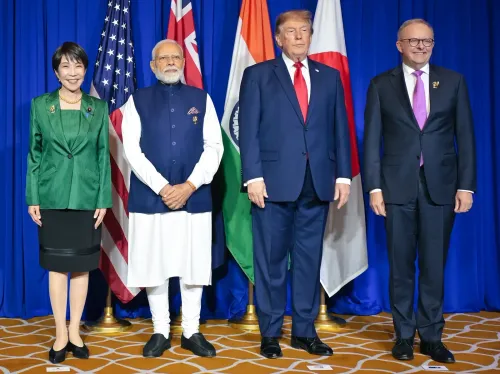
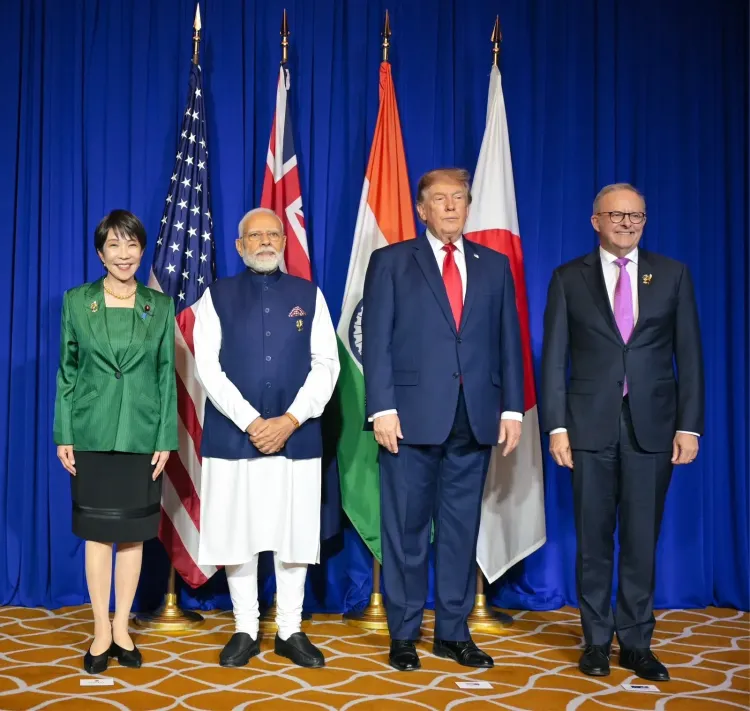
Prime Minister Narendra Modi met Quad leaders in Manila on 17 November 2026, pledging 'concrete goals' on maritime security, trusted supply chains, emerging technologies and disaster response — deepening the grouping's shift from dialogue to deliverable-driven Indo-Pacific cooperation.
Key Takeaways
PM Narendra Modi attended a Quad leaders' summit in Manila on 17 November 2026 .
Agenda covered maritime security , trusted supply chains, emerging technologies and disaster response.
Modi described the meeting as giving 'fresh momentum' to the vision of a free, open, peaceful and prosperous Indo-Pacific.
The Quad groups India, the United States, Japan and Australia — not a formal alliance, but an increasingly institutionalised coordination platform.
The grouping has held leader-level summits since March 2021 , progressively adding concrete workstreams beyond strategic signalling.
Modi signalled 'concrete goals for the next phase,' pointing to follow-up deliverables expected in coming weeks.
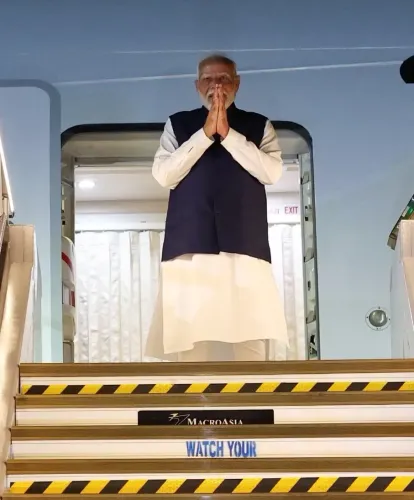
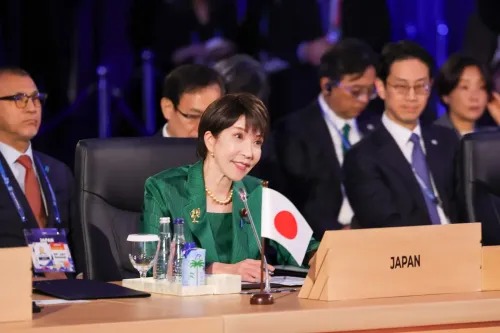
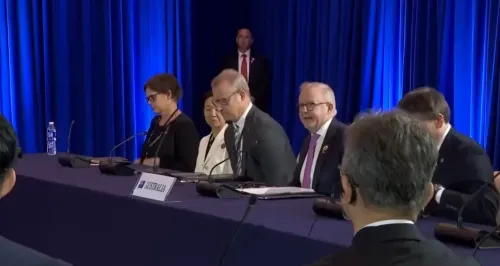
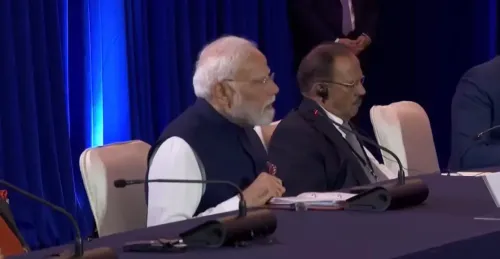
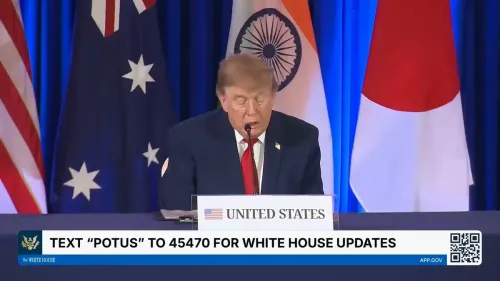
In the Philippine capital on Tuesday, 17 November 2026, Prime Minister Narendra Modi sat down with fellow Quad leaders for what he called a 'productive discussion' — and walked away declaring fresh momentum on some of the most consequential agenda items in Indo-Pacific diplomacy: maritime security, trusted technology supply chains, and disaster response.
What was on the table in Manila
Modi described the meeting as covering a wide arc of shared priorities — from keeping sea lanes free and open to building resilient, trusted supply chains for emerging technologies, and coordinating faster disaster response across a region perpetually exposed to cyclones, earthquakes, and tsunamis. The language of 'concrete goals for the next phase' signals the Quad is moving beyond aspirational statements toward deliverable-driven cooperation.
The Quadrilateral Security Dialogue — grouping India, the United States, Japan, and Australia — has long insisted it is not a formal military alliance. What it is, increasingly, is a coordination platform with real workstreams: joint maritime domain awareness, standards-setting on critical technologies, and infrastructure financing that offers Indo-Pacific nations an alternative to debt-laden models.
From virtual calls to leader-level summits: how the Quad got here
The Quad's first leaders' summit was a virtual one in March 2021. By September 2021, the four heads of government met in person in Washington; Tokyo hosted the next round in 2022. Each iteration has deepened the working-group architecture — adding maritime security, vaccine distribution, clean energy, and supply-chain resilience to an agenda that once focused almost exclusively on strategic signalling. Manila, as a venue, carries its own symbolism: the Philippines sits at the heart of the most contested stretches of the South China Sea, making the choice of location a quiet but pointed message about the grouping's geographic seriousness.
Quad foreign ministers have met regularly since 2019, laying the bureaucratic groundwork that makes leader-level summits operationally productive rather than merely ceremonial. The shift — from ad-hoc dialogue to institutionalised engagement — is itself the story.
Why 'trusted' is the operative word
Modi's post uses the word 'trusted' twice — once for supply chains, once for solutions. That framing is deliberate. The Quad's supply-chain agenda is fundamentally about reducing dependence on single-source critical inputs — semiconductors, rare earths, pharmaceuticals — by building verified, allied-nation alternatives. 'Trusted' is both a technical standard and a geopolitical statement: these are networks built among partners who share rules, not just interests.
Disaster response, the quieter item on the agenda, is no less strategic. The Indo-Pacific accounts for a disproportionate share of global natural disasters, and the Quad's humanitarian cooperation framework — pre-positioning assets, sharing early-warning data, coordinating relief logistics — builds the kind of day-to-day interoperability that deepens strategic ties without triggering alliance optics.
What the 'next phase' could mean
The phrase 'concrete goals for the next phase' is the line to watch. Previous Quad summits have produced specific commitments — vaccine doses, undersea cable projects, maritime surveillance aircraft, scholarship programmes. If this Manila meeting follows the pattern, follow-up joint statements and ministerial-level announcements in coming weeks will fill in the specifics. The Quad has made a habit of scheduling its leader summits alongside broader regional calendars — ASEAN and East Asia Summit cycles — to synchronise messaging with the wider Indo-Pacific architecture. Manila fits that logic precisely.
For India, sustained Quad engagement is a pillar of its broader Act East and Indo-Pacific policies — a signal to neighbours and partners alike that New Delhi is invested in the region's rules-based order, not merely its bilateral trade corridors. The question now is what the deliverables list looks like when the joint communiqué lands.
Point of View
Not an anti-China coalition. Hosting the meeting in Manila — ground zero for South China Sea tensions — quietly reinforces the grouping's geographic commitment without requiring India to adopt overt alliance rhetoric. The 'concrete goals for the next phase' formulation will be the real test: whether the Quad translates summit energy into verifiable project timelines or retreats to communiqué diplomacy.
NationPress
17 Nov 2026
Frequently Asked Questions
What is the Quad and which countries are members?
The Quad, or Quadrilateral Security Dialogue, is a strategic grouping of India, the United States, Japan and Australia . It focuses on maritime security, critical technology standards, supply-chain resilience, and humanitarian cooperation across the Indo-Pacific, without forming a formal military alliance.
Why was the Quad summit held in Manila?
Manila , the Philippine capital, sits at the edge of the contested South China Sea, making it a symbolically significant venue for a grouping committed to a free and open Indo-Pacific. Quad summits are frequently scheduled alongside regional diplomatic calendars to coordinate messaging with the broader Indo-Pacific community.
What did PM Modi say at the Quad summit in Manila?
PM Modi said the meeting was 'productive' and covered maritime security, trusted supply chains, emerging technologies and disaster response. He stated the summit gave 'fresh momentum' to the shared vision of a free, open, peaceful and prosperous Indo-Pacific, with 'concrete goals for the next phase' of cooperation.
What are trusted supply chains in the context of the Quad?
'Trusted supply chains' refer to networks for critical goods — such as semiconductors, rare earths and pharmaceuticals — built among verified partner nations to reduce dependence on single-source suppliers. The Quad promotes these as resilient, rules-based alternatives for Indo-Pacific countries.
When did the Quad hold its first leaders' summit?
The first Quad leaders' summit was held virtually in March 2021 , followed by an in-person meeting in Washington in September 2021 and another in Tokyo in 2022. Each summit has deepened the grouping's working-group architecture and expanded its agenda.