Trump Hosts Quad Summit With Modi, Takaichi, Albanese
Synopsis
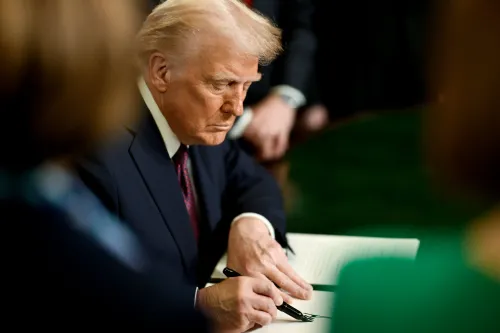
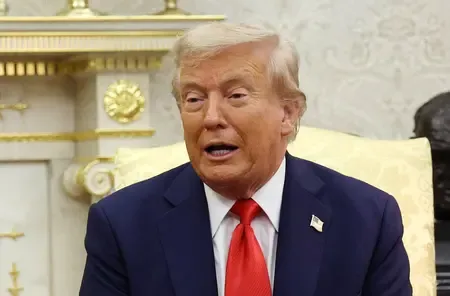
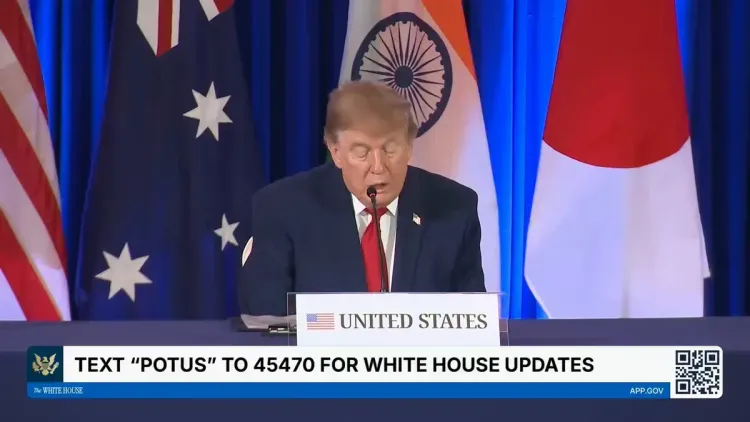
President Trump hosted Quad leaders PM Modi of India, PM Takaichi of Japan, and PM Albanese of Australia at the White House on 17 November 2026, calling the four nations 'some of the most important partnerships in the entire world' and reinforcing US commitment to the Indo-Pacific grouping.
Key Takeaways
President Donald Trump hosted a Quad leaders' summit at the White House on 17 November 2026 .
The meeting included PM Narendra Modi (India), PM Sanae Takaichi (Japan), and PM Anthony Albanese (Australia).
Trump described the four nations as representing 'some of the most important partnerships in the entire world.' The Quad was revived at senior official level in 2017 during Trump's first term after nearly a decade of dormancy.
The grouping covers coordination on maritime security, critical minerals, and technology supply chains across the Indo-Pacific.
No formal alliance treaty underpins the Quad — its strength lies in strategic coordination among four major democracies.
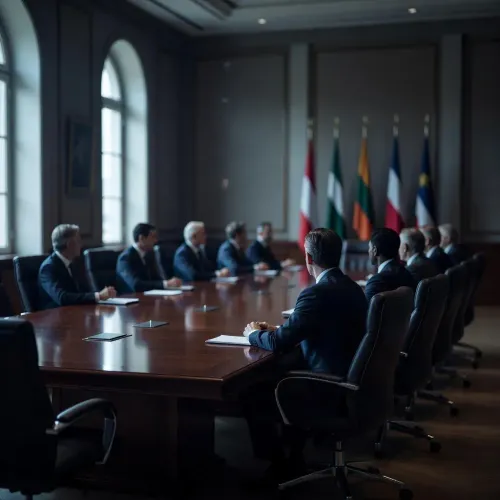
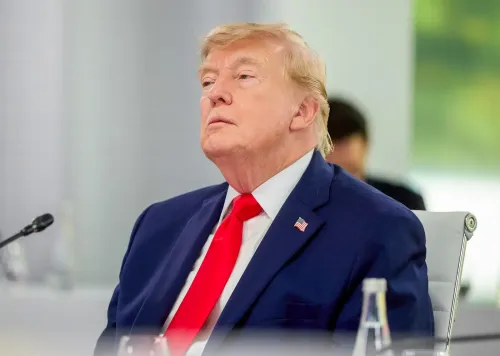
Washington DC — When four leaders of the world's largest democracies sit down together, the message is as much about geography as it is about geopolitics. President Donald Trump hosted a Quad leaders' meeting on Tuesday, 17 November 2026, welcoming Prime Minister Narendra Modi of India, Prime Minister Sanae Takaichi of Japan, and Prime Minister Anthony Albanese of Australia to the White House — reaffirming that the Indo-Pacific remains at the centre of American strategic thinking.
Trump's framing: 'Most important partnerships in the entire world'
The White House did not leave the significance understated. Quoting President Trump directly, the official post declared: 'These nations represent some of the most important partnerships in the entire world.' That framing — personal, declarative, unqualified — signals that the Quad retains its political salience well into the second Trump term, not as a bureaucratic forum but as a headline-level relationship the administration wants the world to notice.
It is a posture consistent with Trump's first term: it was his administration that revived the Quadrilateral Security Dialogue at senior official level in 2017, ending nearly a decade of dormancy for the grouping.
What the Quad is — and why it keeps growing in weight
The Quad comprises the United States, India, Japan, and Australia — four democracies whose combined economic and military footprint spans the Indo-Pacific from the Indian Ocean to the Pacific Rim. It carries no mutual-defence treaty, no formal alliance structure. Its power lies in coordination: on maritime domain awareness, critical minerals supply chains, semiconductor technology, and infrastructure financing across the region.
The first Quad leaders' summit was held virtually in March 2021, institutionalising what had been a working-level dialogue into a head-of-government conversation. Since then, every US administration has treated the summit as a primary vehicle for signalling sustained commitment to the region — without the entangling obligations of a formal pact.
Modi, Takaichi, Albanese — the three partners at the table
Prime Minister Narendra Modi, in office since 2014, has been a consistent Quad summit participant, threading India's traditional strategic autonomy through a framework that leans clearly toward the democratic Indo-Pacific. For New Delhi, the Quad offers security engagement with Washington, Tokyo, and Canberra while keeping formal alliance commitments off the table — a balance that suits India's foreign policy doctrine.
Prime Minister Anthony Albanese of Australia, in office since 2022, represents a Canberra that has dramatically deepened its Indo-Pacific posture, including through the separate AUKUS submarine partnership with the US and UK. Prime Minister Sanae Takaichi of Japan brings Tokyo's perspective — a nation that has significantly expanded its defence spending and strategic engagement across the region in recent years.
What comes next from Washington
The meeting now sets up a watch on joint deliverables: a shared statement on maritime security, fresh commitments on critical minerals, or a new technology-cooperation initiative would each signal whether this summit moved beyond symbolism. The Quad's most consequential outputs have historically come not in the room, but in the working groups and bilateral follow-ons that flow from it.
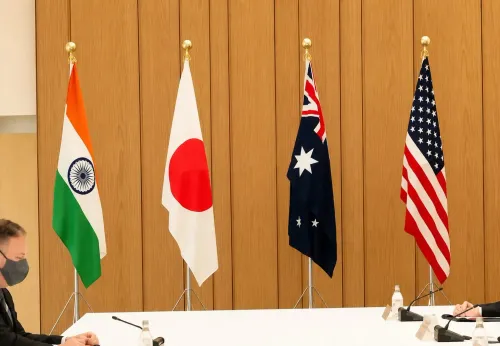
Four flags, one room, one clear strategic direction. The Indo-Pacific's defining democratic coalition just met again — and the administration wants every capital in the region to know it.
Point of View
Deepened under Biden, and has now been visibly re-endorsed. For India, the meeting reinforces New Delhi's growing centrality in Washington's strategic calculus without demanding formal alliance commitments — a configuration New Delhi has long preferred. The fact that Trump chose to publicly quote himself praising these partnerships is itself a signal: the administration is consciously messaging the region's other capitals, particularly Beijing, that US engagement here is durable and personal. Watch the follow-on deliverables to judge whether this summit was a photo opportunity or a policy inflection point.
NationPress
17 Nov 2026
Frequently Asked Questions
What is the Quad summit and which countries are part of it?
The Quad, or Quadrilateral Security Dialogue, is a strategic forum comprising the United States, India, Japan, and Australia. It focuses on maritime security, technology, and supply-chain cooperation across the Indo-Pacific, without a formal alliance treaty.
When did Trump host the Quad leaders' meeting in 2026?
President Trump hosted the Quad leaders' summit at the White House on Tuesday, 17 November 2026 , meeting with the prime ministers of India, Japan, and Australia.
What did Trump say about the Quad nations?
President Trump said: 'These nations represent some of the most important partnerships in the entire world,' signalling strong personal endorsement of the Quad grouping.
Who represented India, Japan, and Australia at the 2026 Quad summit?
Prime Minister Narendra Modi represented India, Prime Minister Sanae Takaichi represented Japan, and Prime Minister Anthony Albanese represented Australia at the White House meeting.
When was the Quad first revived and who revived it?
The Quad was revived at senior official level in 2017 during Donald Trump's first term, ending nearly a decade of dormancy. The first Quad leaders' summit was held virtually in March 2021 under President Biden.