CM Sawant Launches BHASHASNAP, New Labs at Goa University
Synopsis
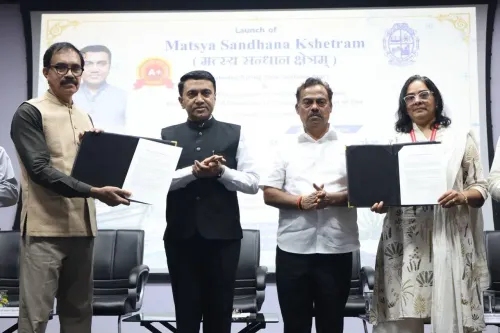
Goa CM Pramod Sawant launched BHASHASNAP, a bilingual web app covering 22 Indian languages including Konkani, inaugurated new CS and research labs, and signed an Indo-Portugal TwinLab MoU at Goa University under a ₹28.55 crore PM-USHA investment on November 17, 2026.
Key Takeaways
BHASHASNAP web app launched at Goa University to deliver bilingual learning content in 22 scheduled Indian languages , including Konkani .
Total investment of approximately ₹28.55 crore channelled through the PM-USHA / RUSA 2.0 scheme.
New Computer Science and Technology building inaugurated at Goa Business School ; Robotics and IoT Lab and Machine Learning Lab dedicated at the School of Chemical Sciences.
MoU signed between Goa University and BIOPOLIS-CIBIO, University of Porto, Portugal for an Indo-Portugal TwinLab on biodiversity and sustainability.
Electric buses inaugurated for the campus, alongside the release of the university's e-magazine .
The launches align with National Education Policy 2020 mandates on mother-tongue instruction and multilingual digital access.
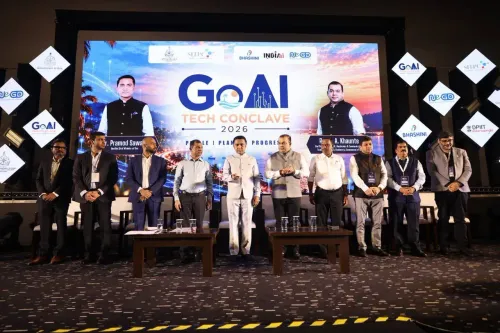
Goa University, Taleigao got a significant infrastructure and technology boost on Tuesday, November 17, as Goa Chief Minister Pramod Sawant unveiled a cluster of academic upgrades anchored in a ₹28.55 crore investment under the central government's PM-USHA / RUSA 2.0 scheme — topped by the launch of BHASHASNAP, a bilingual web app designed to bring learning content in 22 scheduled Indian languages, including Konkani, to students across the country.
What BHASHASNAP actually does — and why Konkani matters here
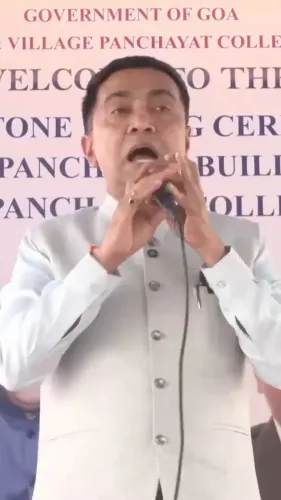
BHASHASNAP is not a translation tool. It is a full-stack learning platform that delivers bilingual academic content in all 22 scheduled Indian languages, enabling students to access course material in the language they think and dream in. For Goa, the inclusion of Konkani — the state's official language and one India's smallest-by-speakers scheduled tongues — carries particular weight. CM Sawant called it 'a significant step towards making education more inclusive and accessible,' and framed Goa's role as a pioneer in this national push.
The app lands squarely inside the mandate of the National Education Policy 2020, which directs institutions to promote mother-tongue and regional-language instruction at every level. For years, that mandate sat largely on paper for smaller language communities. BHASHASNAP is one of the first state-driven digital tools to operationalise it at scale.
New buildings, new labs — the physical side of the upgrade
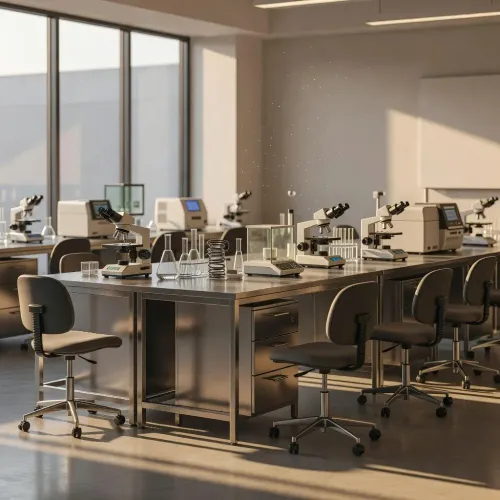
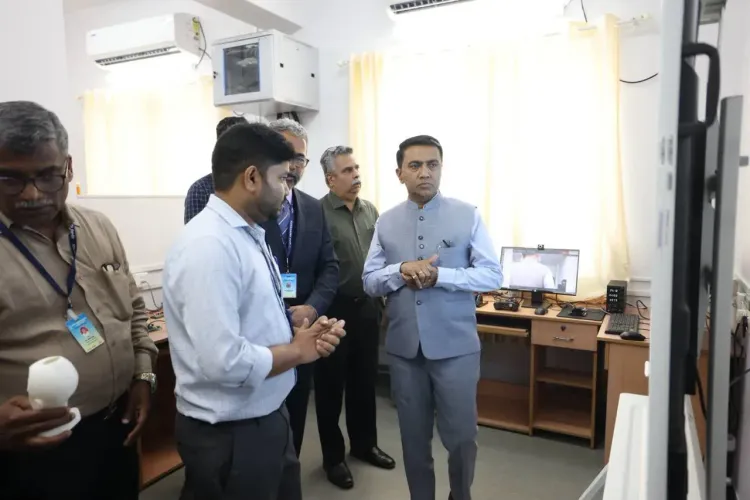
Alongside the digital launch, CM Sawant inaugurated the new Computer Science and Technology building at Goa Business School and dedicated two specialised research facilities at the School of Chemical Sciences: a Robotics and IoT Lab and a Machine Learning Lab. These are not token additions. Robotics-IoT integration and applied machine learning represent exactly the skill stack that industry across India is scrambling to hire — and Goa University now has the physical space to train for it.
The combined investment of approximately ₹28.55 crore flows from PM-USHA, the successor to the Rashtriya Uchchatar Shiksha Abhiyan (RUSA) launched in 2013 to systematically upgrade infrastructure in state universities. The upgrade at Taleigao is part of that longer arc of central funding reshaping campuses that had long been under-resourced.
The Indo-Portugal TwinLab: biodiversity science meets colonial history
Perhaps the most geopolitically textured moment of the day was the exchange of a Memorandum of Understanding between Goa University and BIOPOLIS-CIBIO, the biodiversity and conservation research centre at the University of Porto, Portugal. The partnership establishes an Indo-Portugal TwinLab focused on biodiversity documentation, ecosystem monitoring, conservation, and environmental sustainability.
Goa's decades-long effort to leverage its Portuguese colonial legacy for targeted research diplomacy finds its clearest expression here. BIOPOLIS-CIBIO is one of Europe's leading biodiversity institutes, and pairing it with Goa University's researchers — who sit at the edge of the Western Ghats, one of the world's eight biodiversity hotspots — creates genuine scientific logic, not just ceremonial goodwill. The TwinLab model, if it generates joint grants and publications, could become a template for other Indian universities with historical European links.
Electric buses and an e-magazine round out a green-campus signal
The event also featured the inauguration of electric buses for the university campus and the release of Goa University's e-magazine. The buses are modest in scale but pointed in symbolism — a state-level adoption of green-campus infrastructure that mirrors India's broader push to electrify public transport. The e-magazine reflects the university's parallel push toward digital-first communication.
Taken together, Tuesday's launches at Taleigao drew a straight line from central education funding to campus construction to digital language inclusion to international research partnerships. The question now is whether BHASHASNAP's rollout extends beyond Goa to the other state universities the NEP 2020 is meant to reach — and whether the TwinLab produces the joint publications that would justify its ambition.
Point of View
NEP 2020 multilingual mandates, and India's science-diplomacy push with Europe. BHASHASNAP is the most politically resonant of the three — if it scales beyond Goa, it becomes a deliverable the BJP can cite as tangible NEP implementation ahead of multiple state election cycles. The Indo-Portugal TwinLab, meanwhile, signals that Goa's unique colonial history is being systematically converted into research capital rather than left as heritage tourism symbolism. The metric to watch is straightforward: joint publications and grant receipts from the TwinLab within the next 24 months will determine whether this MoU has substance or merely ceremony.
NationPress
17 Nov 2026
Frequently Asked Questions
What is BHASHASNAP and how does it work?
BHASHASNAP is a web application that provides bilingual academic learning content in all 22 scheduled Indian languages, including Konkani, allowing students to access study material in their preferred language. It was developed to advance the multilingual education goals of the National Education Policy 2020.
How much money has been invested in Goa University under PM-USHA?
Approximately ₹28.55 crore has been invested through the PM-USHA / RUSA 2.0 scheme to fund the new buildings, research labs, and digital initiatives launched at Goa University on November 17, 2026.
What is the Indo-Portugal TwinLab MoU signed at Goa University?
Goa University signed an MoU with BIOPOLIS-CIBIO at the University of Porto, Portugal, to establish an Indo-Portugal TwinLab. The partnership focuses on biodiversity documentation, ecosystem monitoring, conservation, and environmental sustainability through joint research and scientific exchange.
What is PM-USHA and how is it different from RUSA?
PM-USHA (Pradhan Mantri Uchchatar Shiksha Abhiyan) is the central government scheme for upgrading state universities and colleges. It is the successor and upgraded version of RUSA (Rashtriya Uchchatar Shiksha Abhiyan), which was originally launched in 2013 to improve access, equity, and infrastructure in higher education.
Which new labs were inaugurated at Goa University in November 2026?
CM Pramod Sawant dedicated a Robotics and IoT Lab and a Machine Learning Lab at the School of Chemical Sciences, and inaugurated a new Computer Science and Technology building at Goa Business School, all funded under PM-USHA.