CM Sawant Launches Goa AI Policy and Tech Conclave 2026
Synopsis
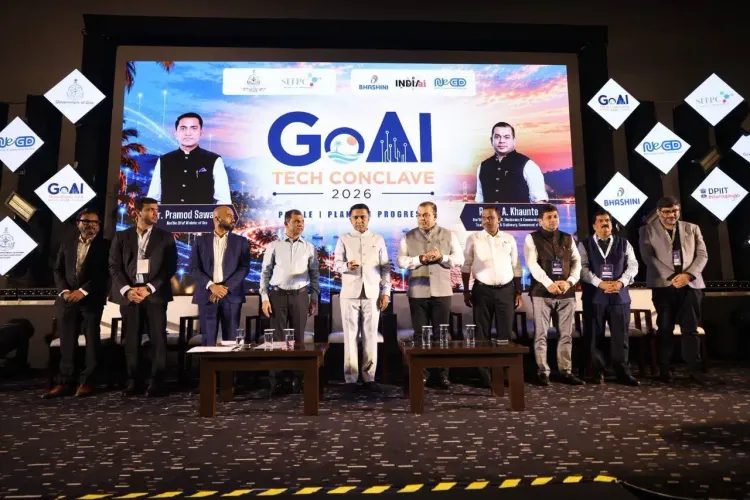
Goa Chief Minister Pramod Sawant inaugurated the Goa AI Tech Conclave 2026 at INOX Panaji on 22 October, launching the Goa AI Policy, Bhashini LLM, a state hackathon and an AI Centre of Excellence via a BITS Pilani MoU — moving the state from AI strategy to institutional action in a single afternoon.
Key Takeaways
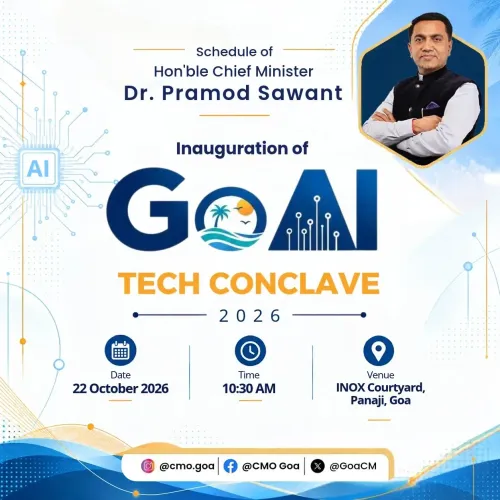
Goa AI Tech Conclave 2026 was inaugurated by Chief Minister Pramod Sawant at INOX, Panaji on 22 October 2026 .
The Goa AI Policy , Goa AI Hackathon and Bhashini LLM were all launched at the same event.
An MoU between BITS Pilani and Goa's Directorate of IT, Electronics and Communications will establish an AI Centre of Excellence in the state.
The conclave featured the ' Living Library of Goa Rural AI ' report by Hyprloc and felicitation of women drone trainees, the ' Drone Didis '.
The government aims to convert Goa colleges into AI learning labs through IT-Education Department collaboration.
Bhashini , India's multilingual AI platform, was deployed at state level to support language-inclusive digital access.
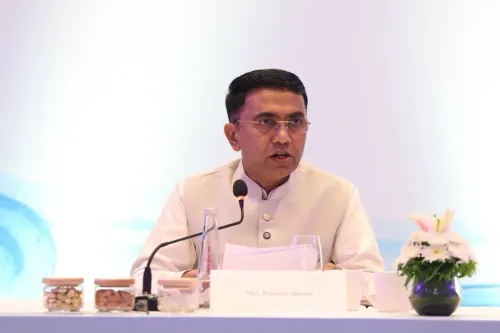
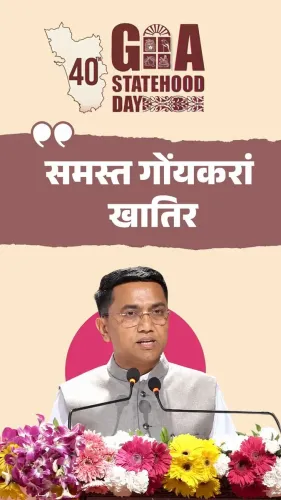
Goa just put its AI ambitions on paper — and then went further. Goa Chief Minister Pramod Sawant on Thursday, 22 October 2026, inaugurated the Goa AI Tech Conclave 2026 at INOX, Panaji, simultaneously launching the Goa AI Policy, a Goa AI Hackathon, and the Bhashini Large Language Model — all in one afternoon that moved the state decisively from strategy to action.
Four launches in one afternoon at INOX Panaji
The centrepiece of the conclave was a Memorandum of Understanding between BITS Pilani — one of India's most respected technology institutions — and the Directorate of Information Technology, Electronics and Communications, Goa, to establish an AI Centre of Excellence in the state. It is exactly the kind of institutional anchor that separates a policy document from a functioning ecosystem. IT Minister Rohan Khaunte and ITG Chairman Dr Chandrakant Shetye were present alongside other dignitaries.
Sawant publicly congratulated Khaunte and his team 'for advancing Goa's AI vision from policy to action' — a phrase that signals the government's own awareness that the credibility gap between announcement and delivery is real, and that this conclave is meant to close it.
Bhashini, Drone Didis and a Rural AI Report
The conclave was not just about infrastructure deals. Bhashini, the Government of India's multilingual AI platform launched in 2022 to make digital services accessible across language barriers, got a state-level deployment push with the unveiling of its LLM at the event. That is a significant inclusion: it signals that Goa's AI vision is explicitly multilingual and aimed at communities beyond English-speaking urban users.
The conclave also showcased the 'Living Library of Goa Rural AI' report by Hyprloc, featuring real experiences of AI trainees from across the state. Perhaps the most striking moment: the felicitation of women drone trainees — the 'Drone Didis' — whose stories illustrate the ground-level impact that the policy is designed to scale. These are not footnotes. They are the argument for why this matters.
Colleges as AI learning labs — the education bet
Sawant emphasised collaboration between the IT Department and the Education Department to transform colleges into AI learning labs. The logic is straightforward: Goa has a young population and a small geography — both advantages for rapid skilling if the institutional pipeline is right. The National Education Policy 2020 had already flagged technology integration as a priority; Goa is now building the state-level infrastructure to actually execute it.
The Goa AI Hackathon provides the competitive proving ground. Hackathons at this scale typically surface talent, generate deployable prototypes, and create the kind of visible momentum that sustains political will beyond a single event. Whether this one delivers on that promise will be visible in the months ahead.
Where Goa fits in India's state-level AI race
India released its National Strategy for Artificial Intelligence — the '#AIforAll' framework — back in 2018. In the years since, states have moved at very different speeds. Goa's combination of a formal policy, an institutional MoU, a multilingual AI deployment and rural-community storytelling in a single event puts it firmly in the cohort of states treating AI governance as a live priority — not a future aspiration.
The conclave's stated theme, 'AI for People, Planet and Progress', is deliberately broad. But the specifics announced — rural AI documentation, women drone pilots, Bhashini's language inclusion, a BITS Pilani partnership — give the slogan teeth. The real test will be whether the AI Centre of Excellence gets funded, staffed and operational on a timeline that keeps pace with the ambition on display today.
Goa's AI moment has arrived. The question now is whether the conclave's energy outlasts the event itself.
Point of View
An institutional MoU and a multilingual AI deployment in a single event reflects a broader pattern among Indian states competing to translate the Centre's 2018 '#AIforAll' framework into visible, ground-level action. The BITS Pilani partnership is the most structurally significant element: a credible academic anchor for the proposed Centre of Excellence gives the initiative institutional depth that most state-level tech announcements lack. The focus on Bhashini and rural AI is politically astute — it aligns Goa's ambitions with national priorities on inclusion while giving the government a compelling human-interest narrative through the Drone Didis. The real policy test arrives when college AI labs must be budgeted, the hackathon outcomes tracked, and the Centre of Excellence staffed — milestones that will reveal whether today's conclave energy translates into durable infrastructure.
NationPress
22 Oct 2026
Frequently Asked Questions
What is the Goa AI Policy 2026?
The Goa AI Policy 2026 is a state-level framework launched by Chief Minister Pramod Sawant at the Goa AI Tech Conclave on 22 October 2026 to guide responsible AI adoption, skilling and public-service delivery across the state. Specific provisions and timelines have not yet been disclosed.
What is the BITS Pilani MoU for Goa?
BITS Pilani and Goa's Directorate of IT, Electronics and Communications signed an MoU at the Goa AI Tech Conclave 2026 to establish an AI Centre of Excellence in the state, providing an institutional base for AI research and capacity building.
What is Bhashini and why was it launched in Goa?
Bhashini is the Government of India's multilingual AI platform, launched in 2022, designed to make digital services accessible across India's many languages. Its LLM was deployed at the state level in Goa to support language-inclusive AI applications for communities beyond English-speaking urban users.
Who are the Drone Didis felicitated at the Goa AI Tech Conclave?
The 'Drone Didis' are women drone trainees from Goa who were felicitated at the conclave for completing drone training programmes. They represent the government's effort to extend emerging technology skills to women at the grassroots level.
What is the Goa AI Hackathon?
The Goa AI Hackathon is a competitive initiative launched alongside the Goa AI Policy 2026 to identify talent and generate deployable AI solutions. It is intended to create practical momentum behind the state's broader AI skilling and innovation agenda.