India biscuit exports hit ₹3,642 crore; first Varanasi-Madagascar shipment flagged off

Synopsis
For the first time, biscuits from Varanasi have been shipped to Madagascar — a small but symbolically significant move that pushes India's food-processing exports beyond traditional hubs. With overall biscuit exports at ₹3,642 crore in FY 2025-26 and bilateral India-Madagascar APEDA trade at ₹990 crore, APEDA is using regional clusters to diversify India's processed food export footprint.
Key Takeaways
APEDA facilitated the first-ever biscuit export consignment from Varanasi to Madagascar on 17 November 2026 .
India's biscuit exports reached approximately ₹3,642 crore under the cereal preparations category in FY 2025-26 .
India's biscuit exports to Madagascar in FY 2025-26 stood at around ₹7.60 crore .
The shipment was handled by Shree Tirupati Balaji Industries Private Limited , routed via JNPT, Nhava Sheva to Tamatave Port .
India-Madagascar bilateral trade in APEDA-scheduled products currently stands at around ₹990 crore .
APEDA supported the exporter through trade fairs including AAHAR 2026 and Gulfood 2026 .
India's Agricultural and Processed Food Products Export Development Authority (APEDA) on Tuesday, 17 November 2026, facilitated the first-ever export consignment of biscuits from Varanasi, Uttar Pradesh to Madagascar, as government data showed India's overall biscuit exports reached approximately ₹3,642 crore under the cereal preparations category in FY 2025-26. The milestone signals a concerted push to link India's emerging regional food-processing clusters to global supply chains.
The Historic Consignment
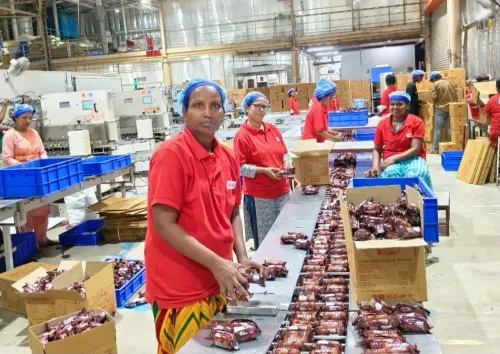
The consignment was shipped by Varanasi-based manufacturer-exporter Shree Tirupati Balaji Industries Private Limited. The cargo moved by road from Varanasi to Jawaharlal Nehru Port (JNPT) at Nhava Sheva, Maharashtra, before being dispatched by sea to Tamatave Port in Madagascar. Officials described the shipment as a reflection of Uttar Pradesh's growing food-processing export potential and an opening for other regional manufacturers to explore overseas markets.
India-Madagascar Trade Context
Bilateral trade in APEDA-scheduled products between India and Madagascar currently stands at around ₹990 crore. India's biscuit exports to Madagascar in FY 2025-26 stood at approximately ₹7.60 crore. While the bilateral figure remains modest, the first direct biscuit consignment from Varanasi is intended to build on existing trade ties and diversify the product mix.
APEDA's Role and Export-Promotion Push
APEDA, which operates under the Ministry of Commerce and Industry, has been supporting the exporter through targeted export-promotion measures. These include facilitating participation in prominent domestic and international trade exhibitions such as AAHAR 2026 and Gulfood 2026, aimed at enhancing the visibility of products made in the Varanasi region and generating international business partnerships. The authority said it remains focused on expanding market access through trade facilitation, exporter outreach, and international marketing efforts.
Broader Significance for Regional Manufacturing
This comes amid India's wider strategy to integrate Tier-2 and Tier-3 manufacturing clusters — beyond traditional export hubs — into global food trade networks. Notably, Uttar Pradesh has been receiving targeted government attention to develop its food-processing sector, and the Varanasi-to-Madagascar route is seen as a template for replication across other emerging clusters. Officials indicated that such initiatives are designed to strengthen the global presence of Indian processed food products while enabling smaller regional enterprises to tap new export destinations.
With APEDA looking to deepen market access across Africa and other emerging regions, further consignments from Varanasi and similar clusters are expected to follow in the coming quarters.
Point of View
642 crore biscuit export figure is respectable, but India's share in global processed biscuit trade remains limited. The real test is whether single-milestone shipments like this translate into sustained commercial volumes, or whether they remain largely symbolic without deeper supply-chain investment and consistent market development in Africa.
NationPress
17 Nov 2026
Frequently Asked Questions
What is the significance of the Varanasi-to-Madagascar biscuit export?
It marks the first-ever export of biscuits from Varanasi, Uttar Pradesh to Madagascar, facilitated by APEDA on 17 November 2026. The consignment is seen as a template for integrating India's regional food-processing clusters with African and other emerging markets.
How large are India's biscuit exports?
According to government data, India exported biscuits worth approximately ₹3,642 crore under the cereal preparations category during FY 2025-26. Exports to Madagascar specifically stood at around ₹7.60 crore during the same period.
Who shipped the biscuits from Varanasi to Madagascar?
The consignment was shipped by Varanasi-based manufacturer-exporter Shree Tirupati Balaji Industries Private Limited. The cargo was transported by road to JNPT at Nhava Sheva, Maharashtra, before being shipped by sea to Tamatave Port in Madagascar.
What is APEDA's role in this export?
APEDA, functioning under the Ministry of Commerce and Industry, facilitated the shipment and provided export-promotion support including participation in trade events such as AAHAR 2026 and Gulfood 2026. The authority focuses on expanding market access for Indian processed food exporters.
What is the current trade volume between India and Madagascar?
Bilateral trade in APEDA-scheduled products between India and Madagascar currently stands at around ₹990 crore. The new biscuit consignment from Varanasi is intended to diversify and grow this trade relationship further.