APEDA BHARATI programme: 100 startups complete agri-food export push across 22 states

Synopsis
India's agri-food export ambition got a measurable push: 100 startups from 22 states have completed APEDA's BHARATI acceleration programme, with early results including the first-ever sea shipment of millet functional foods to New Zealand and a repeat export order for GI-tagged fig juice from the US and UK — all within three months of launch.
Key Takeaways
100 startups from 22 states and two Union Territories completed APEDA's inaugural BHARATI cohort, selected from over 700 applications .
The programme delivered a structured 120-hour export-focused curriculum covering compliance, branding, market access, and investor readiness.
Top eight startups represented India at Gulfood 2026 in Dubai , generating more than 100 B2B meetings with international buyers.
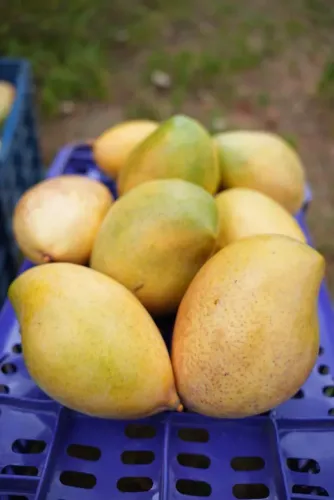
Early export wins include 37 MT of GI-tagged Jardalu mangoes to Dubai, the first-ever sea shipment of millet functional foods to New Zealand , and a repeat order of 1.25 MT of GI-tagged juices from the US and UK.
A Karnataka -based startup backed by over 1,600 farmers across 12 states exported 40 MT of organic pulses, heritage grains, and native rice varieties.
APEDA will soon launch the next edition of BHARATI, targeting India's $50 billion agri-export goal by 2030 .
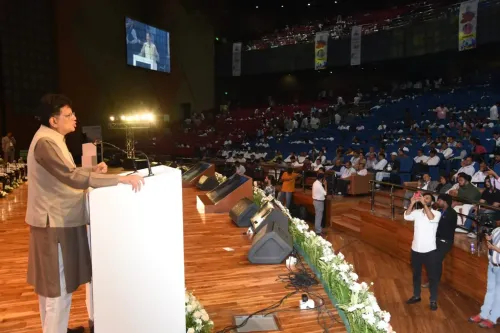
The Agricultural and Processed Food Products Export Development Authority (APEDA) has announced that 100 startups drawn from 22 states and two Union Territories have successfully completed the inaugural cohort of its BHARATI (Bharat's Hub for Agritech, Resilience, Advancement and Incubation for Export Innovation) programme, according to a statement issued by the Commerce and Industry Ministry on 25 June 2026. The flagship export enablement initiative is designed to build an innovation-led ecosystem aligned with India's target of achieving $50 billion in APEDA-scheduled product exports by 2030.
Programme Structure and Selection
The inaugural cohort was chosen through a rigorous multi-stage evaluation from a pool of more than 700 applications received from across the country. The selected startups reflect the breadth of India's entrepreneurial landscape, with founders ranging in age from 17 to 75 years.
Participants underwent a structured 120-hour export-focused acceleration curriculum covering export preparedness, market access, business scaling, regulatory compliance, packaging, branding, and investor readiness. The programme also facilitated one-to-one mentorship, masterclasses by industry experts, and direct engagement with government institutions, industry bodies, financial institutions, exporters, and investors — enabling startups to build commercial partnerships and strengthen market linkages.
Global Market Exposure at Gulfood 2026
As part of its international outreach, APEDA facilitated the participation of the top eight BHARATI startups at Gulfood 2026 in Dubai, one of the world's largest food and beverage trade exhibitions. The event generated more than 100 B2B meetings between participating startups and international traders and importers, with product samples showcased to prospective global buyers.
Early Export Achievements
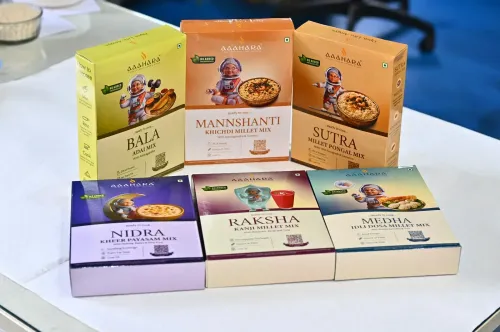
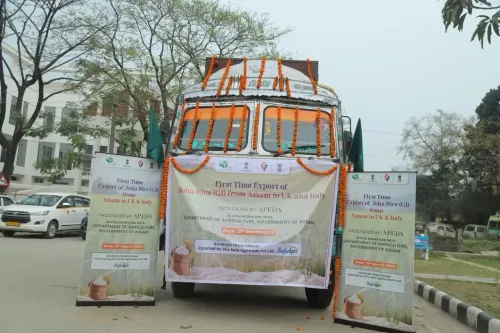
Within three months of the programme's commencement, several startups reported concrete export milestones. Two agri-tech startups collaborated to export nearly 37 metric tonnes of GI-tagged Jardalu mangoes to Dubai. Another startup recorded the first-ever sea shipment of nutraceutical-based and botanically infused ready-to-cook millet functional food products to New Zealand, using millet sourced from Karnataka-based Farmer Producer Organisations (FPOs).
A Maharashtra-based Farmer Producer Company (FPC) exported nearly 850 kg of GI-tagged fig juice and jamun-based juice to the United States and the United Kingdom, subsequently receiving a repeat order of nearly 1.25 metric tonnes from the same markets. Separately, a Karnataka-based startup supported by a network of more than 1,600 farmers across 12 states exported 40 metric tonnes of organic products, including pulses, heritage grains, and GI-tagged native rice varieties.
What APEDA Said
APEDA Chairman Abhishek Dev said the BHARATI programme 'reflects the organisation's commitment to building a future-ready export ecosystem driven by innovation, entrepreneurship and global competitiveness.'
What Comes Next
Building on the results of the first cohort, APEDA has indicated it will soon launch the next edition of the BHARATI Programme to further expand support for startups developing innovative agri-food export solutions. The initiative represents a structural push to move India's agricultural export profile from commodity volumes toward higher-value, innovation-driven products — a shift that analysts argue is critical to reaching the $50 billion target by 2030.
Point of View
Not yet proof-of-scale. The early export numbers — 37 MT of mangoes, 40 MT of organic products — are commercially meaningful for individual startups but negligible against a $50 billion national target. The real signal to watch is whether APEDA can sustain the pipeline: converting 100 graduates into consistent exporters requires market linkage infrastructure that a single 120-hour programme cannot guarantee. India's agri-exports have historically been dominated by a handful of commodities; shifting to GI-tagged, value-added, and nutraceutical products demands sustained institutional support well beyond the incubation window. The repeat order from the US and UK for fig and jamun juice is the most encouraging data point — it suggests genuine buyer pull, not just trade-show optics.
NationPress
23 Sept 2026
Frequently Asked Questions
What is APEDA's BHARATI programme?
BHARATI — Bharat's Hub for Agritech, Resilience, Advancement and Incubation for Export Innovation — is APEDA's flagship startup acceleration programme designed to identify and support high-potential agri-food startups. The inaugural cohort of 100 startups completed a 120-hour export-focused curriculum covering market access, regulatory compliance, branding, and investor readiness.
How were the 100 startups selected for the BHARATI programme?
The startups were chosen through a rigorous multi-stage evaluation process from more than 700 applications received from across India. The final cohort represented entrepreneurs from 22 states and two Union Territories, with founders aged between 17 and 75 years.
What exports did BHARATI startups achieve in their first three months?
Within three months, participating startups exported nearly 37 MT of GI-tagged Jardalu mangoes to Dubai, completed the first-ever sea shipment of millet functional food products to New Zealand, and shipped GI-tagged fig and jamun-based juices to the US and UK — with the latter market placing a repeat order of 1.25 MT.
What is India's agri-food export target and how does BHARATI support it?
India has set a target of $50 billion in APEDA-scheduled product exports by 2030. The BHARATI programme supports this goal by nurturing startups developing innovative, value-added agricultural and processed food products with strong export potential, helping shift India's export profile beyond traditional commodity volumes.
When will the next BHARATI cohort launch?
APEDA has announced that the next edition of the BHARATI Programme will launch soon, building on the results of the inaugural cohort. Specific dates and application timelines have not yet been disclosed.