Quad leaders condemn cross-border terrorism at Manila summit, Modi says Indo-Pacific vision gains fresh momentum
Synopsis
At the 2026 Quad Leaders' Summit in Manila — marking a decade of the bloc's revival — four democracies produced their strongest collective statement yet on cross-border terrorism, while unveiling a maritime surveillance pact, an AI accelerator, and an inaugural business leaders' forum. The scope signals the Quad is evolving well beyond its security origins into a full-spectrum Indo-Pacific architecture.
Key Takeaways
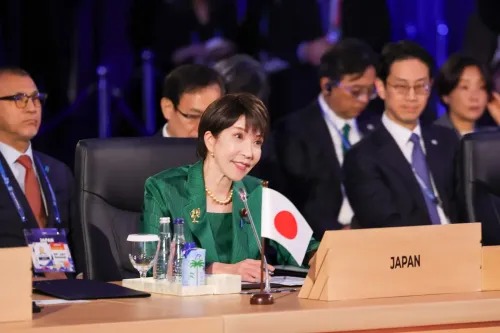
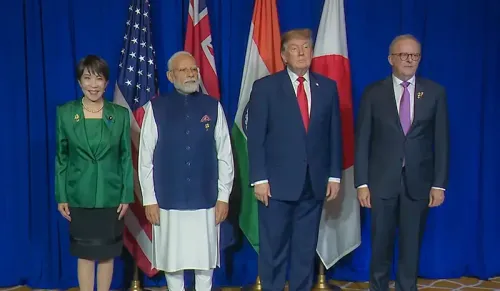
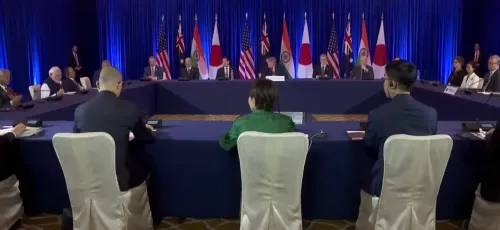
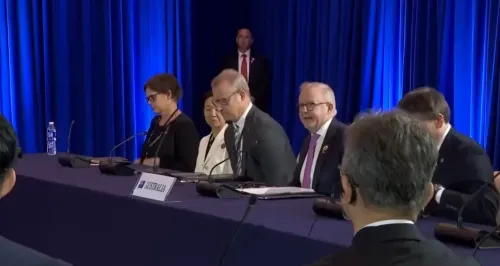
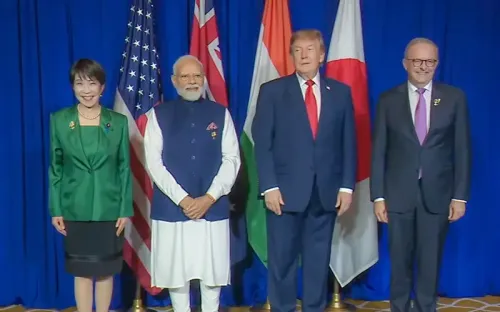
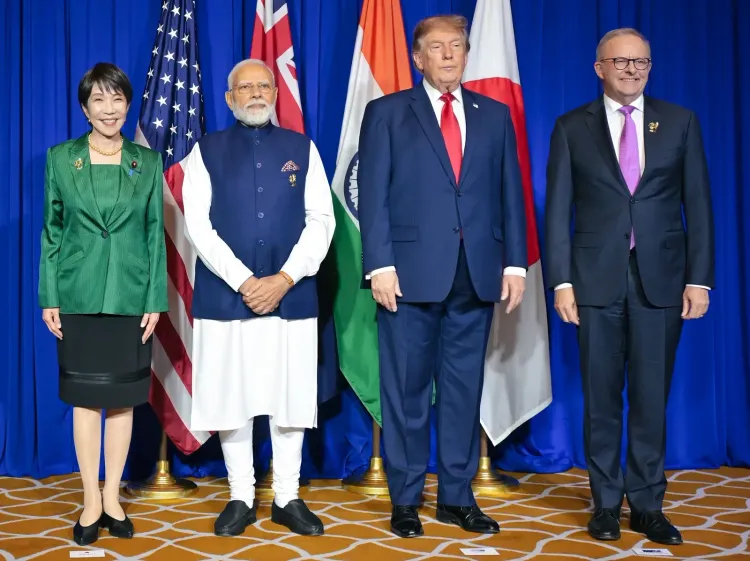
Quad Leaders' Summit held in Manila on 17 November 2026 , attended by Modi , Trump , Albanese , and Takaichi .
Joint statement unequivocally condemned cross-border terrorism and violent extremism in all forms.
Leaders opposed unilateral or coercive actions to change the regional status quo, including through force.
New Indo-Pacific Maritime Surveillance Collaboration launched; Quad patrol aircraft to conduct joint exercise in 2027 .
AI Accelerator reaffirmed and enhanced Quad Cybersecurity Cooperation announced.
Inaugural Quad Business Leaders' Forum scheduled for early 2027 to promote commercial ties across the Indo-Pacific.
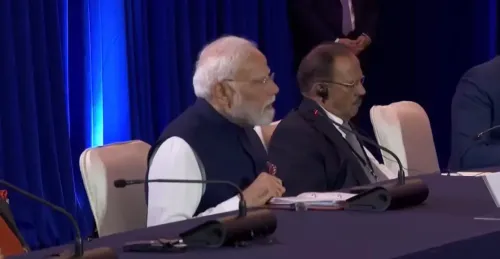
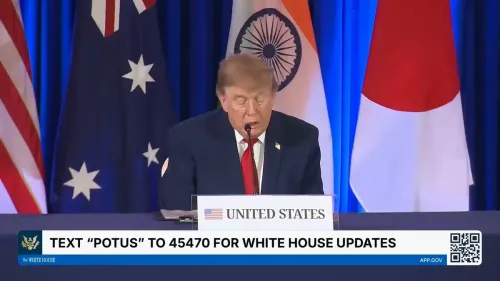
Prime Minister Narendra Modi on Tuesday, 17 November 2026, said the Quad Leaders' Summit in Manila has given fresh momentum to the bloc's shared vision for a free, open, peaceful, and prosperous Indo-Pacific. The summit, attended by US President Donald Trump, Australian Prime Minister Anthony Albanese, and Japanese Prime Minister Sanae Takaichi, produced a joint statement unequivocally condemning terrorism — including cross-border terrorism — in all its forms and manifestations.
Key Declarations from the Joint Statement
The four leaders strongly opposed any destabilising or unilateral actions aimed at changing the status quo, including through force or coercion. The joint media release also expressed grave concern over economic coercion, specifically citing arbitrary export restrictions as a threat to regional stability.
'We unequivocally condemn terrorism and violent extremism in all its forms and manifestations, including cross-border terrorism, and commit to strengthening the Quad's ongoing cooperation on counterterrorism,' the joint statement read.
This language carries particular significance given ongoing concerns about state-sponsored militancy in the Indo-Pacific region, and marks one of the strongest collective Quad statements on the subject to date.
What PM Modi Said
In a post on X following the summit, Modi wrote: 'Had a productive discussion with Quad leaders in Manila today. From maritime security and trusted supply chains to emerging technologies and disaster response, the Quad remains committed to delivering trusted solutions for the Indo-Pacific.'
He further noted that the meeting 'set concrete goals for the next phase of cooperation,' adding that it had given 'fresh momentum to our shared vision for a free, open, peaceful and prosperous Indo-Pacific.'
Maritime Security and AI Initiatives Announced
On maritime cooperation, the leaders welcomed the new Indo-Pacific Maritime Surveillance Collaboration, a multilateral information-sharing and maritime domain awareness initiative. Notably, Quad P-8 and P-3C patrol aircraft are scheduled to fly a joint maritime exercise for the first time in a Quad context in 2027, a development that signals deepening defence interoperability among the four nations.
On technology, the leaders reaffirmed the importance of the AI Accelerator — a coordinated effort to fund trusted AI access, deployment, and technical assistance across the Indo-Pacific — and announced enhanced Quad Cybersecurity Cooperation.
Economic Ties: Inaugural Business Forum Announced
In a significant economic push, the Quad announced the inaugural Quad Business Leaders' Forum, scheduled for early 2027. The forum is designed to bring together business leaders, government officials, and policy experts from all four Quad countries to foster commercial deals and partnerships critical to Indo-Pacific prosperity.
Context and Significance
The 2026 summit holds symbolic weight: it marks nearly a decade since the Quad was revived and the 10th anniversary of the vision of a Free and Open Indo-Pacific, first articulated by the late Japanese Prime Minister Shinzo Abe in 2016. This comes amid sustained Chinese maritime assertiveness in the South China Sea and economic pressure tactics that several Indo-Pacific nations have faced in recent years. The Quad's expanded agenda — from counterterrorism to AI governance to business collaboration — reflects a bloc increasingly functioning as a comprehensive regional framework rather than a narrow security grouping.
Point of View
A cybersecurity pact, and now a business leaders' forum, it is building the institutional density of a regional alliance without calling itself one. The real test will come when any of these commitments — particularly on maritime surveillance — is stress-tested by an actual incident in contested waters. Whether the bloc's consensus holds under that pressure is the question the joint statement cannot answer.
NationPress
17 Nov 2026
Frequently Asked Questions
What was decided at the 2026 Quad Leaders' Summit in Manila?
The Quad leaders condemned cross-border terrorism, opposed coercive changes to the regional status quo, launched a new Indo-Pacific Maritime Surveillance Collaboration, reaffirmed the AI Accelerator, and announced an inaugural Quad Business Leaders' Forum for early 2027. The summit marked nearly a decade since the Quad's revival and the 10th anniversary of the Free and Open Indo-Pacific vision.
What did PM Modi say after the Quad summit?
PM Modi said the Manila meeting gave 'fresh momentum' to the Quad's shared vision for a free, open, peaceful, and prosperous Indo-Pacific, with concrete goals set for the next phase of cooperation. He also highlighted progress on maritime security, trusted supply chains, emerging technologies, and disaster response.
What is the Indo-Pacific Maritime Surveillance Collaboration?
It is a new Quad initiative to enhance information sharing and maritime domain awareness across the Indo-Pacific. As part of this effort, Quad P-8 and P-3C patrol aircraft are scheduled to conduct a joint maritime exercise for the first time in a Quad context in 2027.
What is the Quad Business Leaders' Forum?
The inaugural Quad Business Leaders' Forum is scheduled for early 2027 and will bring together business leaders, government officials, and policy experts from the US, India, Australia, and Japan. Its aim is to foster commercial deals and partnerships critical to Indo-Pacific economic prosperity.
Why is the 2026 Quad summit historically significant?
The 2026 summit marks nearly a decade since the Quad was revived and the 10th anniversary of the Free and Open Indo-Pacific vision first articulated by late Japanese Prime Minister Shinzo Abe in 2016. It is also the most comprehensive Quad summit to date, expanding the bloc's agenda to include AI governance, cybersecurity, business collaboration, and an explicit counterterrorism commitment.