Smriti Irani backs PM Modi on Tiranga dignity in Philippines
Synopsis
BJP leader Smriti Irani invoked the pride of 1.4 billion Indians to defend PM Modi's insistence that the Tricolour not be used as a floor marker during his Philippines visit, framing a protocol decision as a statement of national sovereignty.
Key Takeaways
Smriti Irani posted on 17 November 2026 backing PM Modi's protocol stand on the Tricolour during his Philippines state visit.
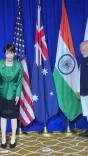
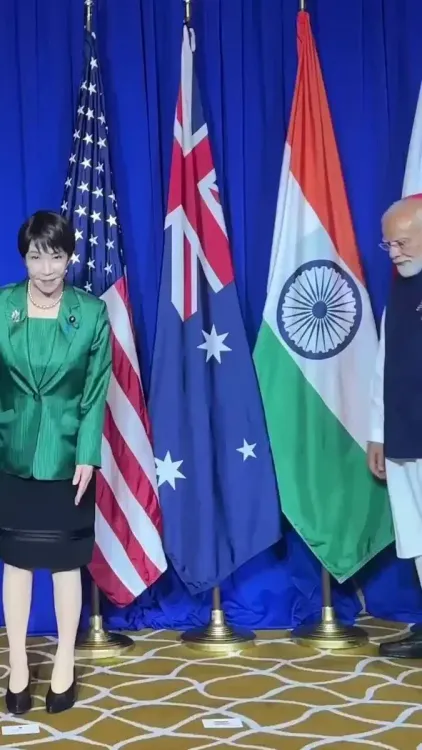
The post states that PM Modi ensured the Tiranga was not used as a floor marker at any event during the visit.
India's Flag Code of India, 2002 , explicitly prohibits the national flag from touching the ground or being used as floor covering.
The Har Ghar Tiranga campaign ( 2022 ) cemented the Modi government's pairing of mass flag pride with strict code observance.
The Philippines is a key ASEAN partner under India's Act East Policy , with expanded defence and maritime cooperation in recent years.
Modi's first significant engagement with Manila dates to the ASEAN-India Commemorative Summit in 2017 .
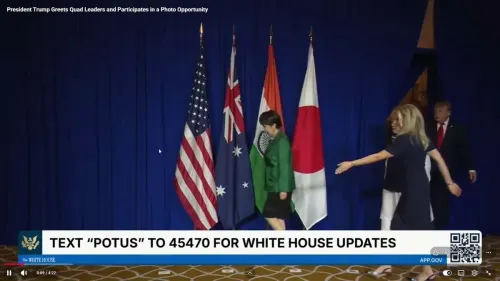
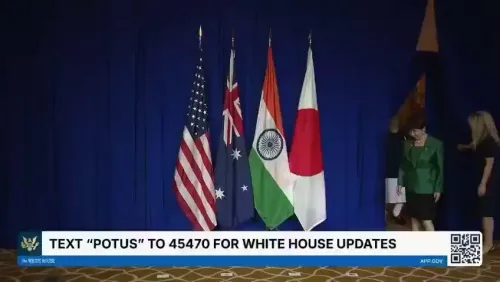
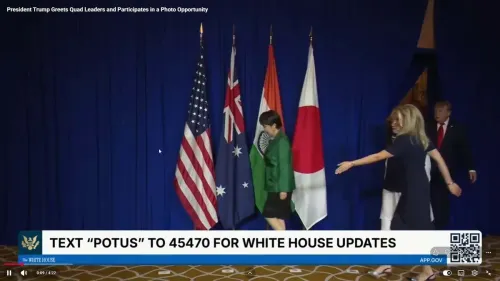
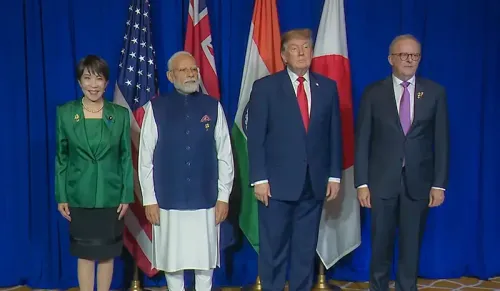
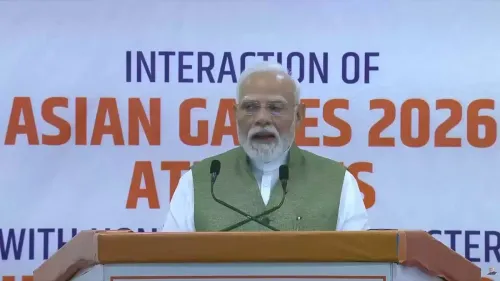
When a national flag becomes a floor marker, it stops being a symbol and starts being a slight — and BJP leader Smriti Irani is making sure that point lands loud, posting on X on Tuesday, 17 November 2026 to defend Prime Minister Narendra Modi's insistence that the Tricolour never be used as ground décor during his ongoing state visit to the Philippines.
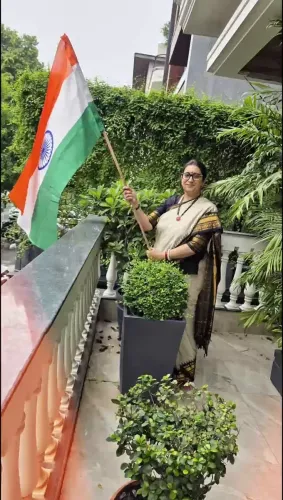
Irani's post reads: 'The Tiranga is the pride of 1.4 billion Indians... and PM Modi ensures it never touches the ground, not even as a floor marker.' The reference is sharp and specific — not a vague salute to patriotism, but a pointed defence of a protocol decision reportedly taken during the Philippines leg of the visit, where the flag's use in event staging was corrected at India's insistence.
What the Flag Code actually says about ground placement
India's Flag Code of India, 2002, and the Prevention of Insults to National Honour Act, 1971, are both unambiguous: the national flag shall not be allowed to touch the ground or trail in water, and it may not be used as a drapery, floor covering, or festoon without specific authorisation. The rules apply regardless of venue — including overseas diplomatic settings — and protocol officers accompanying a visiting head of government are responsible for ensuring compliance.
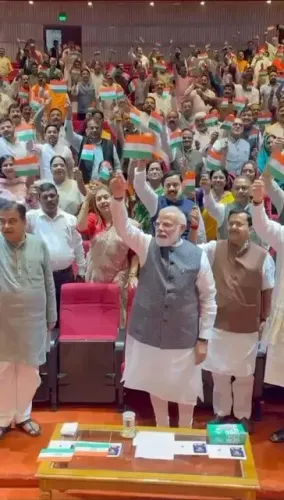
The Modi government has repeatedly foregrounded flag dignity as a visible pillar of its cultural diplomacy. The Har Ghar Tiranga campaign, launched as part of the Azadi Ka Amrit Mahotsav in 2022, brought the flag into 200 million homes while simultaneously re-emphasising correct handling protocols — a pairing of mass pride with rigorous code observance that has since become a recognisable brand signature of overseas visits.
Modi in the Philippines: Act East, optics and sovereignty signalling
The Philippines sits at the pressure point of the South China Sea, making it one of India's most strategically significant ASEAN partners as both nations push back — diplomatically, if not militarily — against maritime coercion. India and the Philippines have expanded defence and maritime cooperation in recent years, and a Modi visit carries weight well beyond ceremonial photo-ops.
Modi's first high-profile engagement with Manila came at the ASEAN-India Commemorative Summit in 2017, a foundational moment in the Act East Policy's Indo-Pacific pivot. The current November 2026 visit builds on that lineage, with joint statements on maritime security, trade, and cultural connectivity expected to anchor the bilateral agenda.
In that context, the flag episode — small in logistical terms, significant in symbolic ones — fits a pattern the Modi administration has cultivated consistently: sovereignty is non-negotiable, and national symbols are its most visible expression, even 4,000 kilometres from home.
Irani, a senior BJP leader and former Union Minister for Women and Child Development and Minority Affairs, has long amplified the government's cultural-nationalist messaging with precision. Her post is fewer than twenty words, but every one of them is load-bearing — framing a protocol call as a statement of civilisational self-respect on behalf of 1.4 billion people.
When a Prime Minister corrects a floor marker thousands of miles from home, the message travels further than the visit itself.
Point of View
Targeted squarely at a domestic audience during a high-visibility overseas visit. The Modi government has consistently used flag symbolism as a unifying, above-the-fray narrative tool, and senior BJP figures amplifying that signal on social media during state visits is now a recognisable pattern. The Philippines visit itself carries strategic weight on South China Sea security and Indo-Pacific alignment, and projecting dignified national symbolism alongside hard-security cooperation reinforces the administration's broader argument that India's global rise is as cultural as it is geopolitical. The post's brevity is its strength — it needs no policy detail to land, because the image of a floor marker bearing the Tricolour is viscerally legible to any Indian voter.
NationPress
17 Nov 2026
Frequently Asked Questions
Why did Smriti Irani post about the Tiranga and PM Modi in the Philippines?
Irani posted to defend a protocol decision reportedly taken during PM Modi's Philippines visit, in which the Tricolour was prevented from being used as a floor marker at an event, citing the flag's status as the pride of 1.4 billion Indians.
Is it illegal to use the Indian flag as a floor marker?
Yes. The Flag Code of India, 2002, and the Prevention of Insults to National Honour Act, 1971, both prohibit the national flag from touching the ground or being used as a floor covering or drapery in any setting.
Why is PM Modi visiting the Philippines in November 2026?
The visit is part of India's Act East Policy engagement with ASEAN nations. India and the Philippines have deepened defence and maritime cooperation in recent years, and the visit is expected to include joint statements on maritime security and trade.
What is India's flag code and what does it say about flag handling?
The Flag Code of India, 2002, consolidates rules on the display and use of the national flag. It explicitly states the flag must not touch the ground, trail in water, or be used as a floor covering, and these rules apply in India and during official overseas engagements.
What is the Har Ghar Tiranga campaign?
Har Ghar Tiranga was launched in 2022 as part of the Azadi Ka Amrit Mahotsav to encourage every household to hoist the national flag, while simultaneously re-emphasising correct flag-handling protocols — a campaign closely associated with the Modi government's cultural diplomacy.