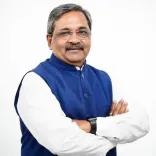
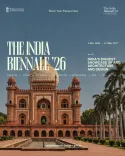
Anil Kapoor backs India Biennale 2026, Delhi as cultural stage
Synopsis
Actor Anil Kapoor has endorsed the India Biennale 2026, organised by the Ministry of Culture, praising its unprecedented format that transforms Delhi's historic monuments, museums and urban precincts into a single cultural ecosystem and acknowledging organiser Trina Salve's global outreach efforts.
Key Takeaways
India Biennale 2026 is organised by the Ministry of Culture, Government of India and billed as India's largest platform for art, architecture, design and cultural exchange.
For the first time, the entire city of Delhi — its historic monuments, museums, galleries and urban precincts — forms one integrated cultural ecosystem for the event.
Actor Anil Kapoor publicly backed the initiative on 17 November 2026 , amplifying its reach to his large social-media following.
Trina Salve of the India Biennale Organising Committee was acknowledged for her work in building global cultural connections and promoting Indian art internationally.
Design studio #monoarchitectureconnect was credited for the Biennale's visual creatives.
Official details on venue schedules, curatorial themes and international partnerships are still to be announced.
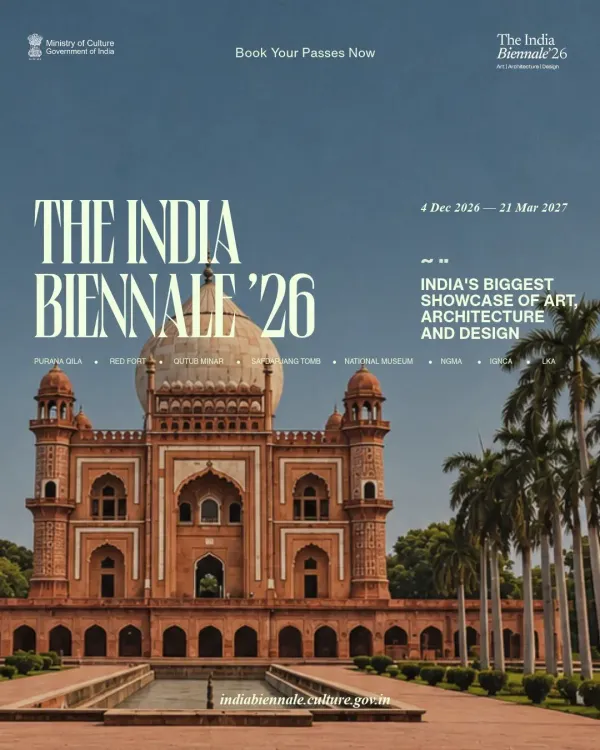
Delhi is not just hosting a biennale — Delhi is the biennale. That is the striking premise behind the India Biennale 2026, organised by the Ministry of Culture, Government of India, which actor Anil Kapoor has publicly championed in a post on Tuesday, 17 November 2026, calling it India's largest platform for art, architecture, design and cultural exchange.
A city turned into a canvas
For the first time, the Biennale breaks out of a single venue and spreads across the capital's entire cultural geography. Historic monuments, museums, galleries, urban precincts and cultural hubs are designed to function as one integrated ecosystem — a living, city-scale exhibition space unlike any previous edition. The model echoes global biennale formats in cities like Venice and São Paulo, but grounds itself specifically in Delhi's layered monumental and civic heritage.
The Ministry of Culture has long used large-scale cultural events to combine heritage conservation mandates with public-facing programming and international collaboration. India Biennale 2026 appears to push that ambition to its furthest point yet — turning the capital itself into the curatorial framework.
Trina Salve and the organising vision
Kapoor singled out Mrs. Trina Salve of the India Biennale Organising Committee for a direct acknowledgement, crediting her with 'bringing India to the forefront, building global cultural connections, and highlighting our country brilliantly in the realm of art and culture.' The shout-out underscores how much the success of a Ministry-backed initiative of this scale depends on the institutional effort of individuals who stitch together curatorial intent, diplomatic reach and logistical execution.
Kapoor also gave a nod to #monoarchitectureconnect for the visual creatives associated with the event — a detail that signals how design and architecture communication are being treated as integral to the Biennale's identity, not an afterthought.
India's soft-power play in the global art circuit
The timing matters. India's cultural diplomacy has grown more deliberate over the past decade, with Ministry-led platforms increasingly positioned to compete for visibility alongside established international biennales. Using Delhi's protected monuments and cultural hubs as venue infrastructure — rather than a purpose-built convention space — is both a conservation statement and a spectacle strategy. It tells the world that India's history is itself the exhibition.
For artists, designers, architects and cultural practitioners, the Biennale's city-wide format opens possibilities for site-specific work at a scale rarely available on the subcontinent. Official announcements on venue schedules, curatorial themes and international partnerships are still awaited — but the foundations of ambition are clearly set.
When a veteran of four decades in Indian cinema lends his public platform to a Ministry of Culture initiative, it carries reach that institutional press releases rarely match. India Biennale 2026 now has both a stage the size of a capital city — and an audience that extends well beyond its gates.
Point of View
The city-scale biennale format represents a significant infrastructure shift, potentially drawing international curators and collectors who have historically bypassed India for Venice or Istanbul. The acknowledgement of a behind-the-scenes organiser like Trina Salve is also notable: it humanises bureaucratic cultural machinery in a way that resonates with both domestic audiences and global arts networks. Watch whether India Biennale 2026 triggers a broader trend of heritage-site-as-venue programming across other Indian metro cities.
NationPress
17 Nov 2026
Frequently Asked Questions
What is India Biennale 2026?
India Biennale 2026 is a large-scale platform for art, architecture, design and cultural exchange organised by the Ministry of Culture, Government of India . It is described as India's largest such event, with Delhi's historic monuments, museums, galleries and cultural hubs serving as an integrated venue ecosystem.
What did Anil Kapoor say about India Biennale 2026?
Actor Anil Kapoor praised the Biennale as India's largest platform for art and culture, highlighted the unprecedented use of Delhi's entire cultural geography as venue, and personally thanked Mrs. Trina Salve of the Organising Committee for her efforts in promoting Indian art globally.
Who is Trina Salve and what is her role in India Biennale?
Mrs. Trina Salve is a member of the India Biennale Organising Committee. Anil Kapoor credited her with bringing India to the forefront of global cultural conversations and building international connections in the art and culture space.
Where will India Biennale 2026 be held?
India Biennale 2026 will be held across Delhi , using historic monuments, museums, galleries, urban precincts and cultural hubs as a single interconnected venue — the first time the entire city has served as the Biennale's stage.
How is India Biennale 2026 different from previous editions?
According to the post, the key distinction is that Delhi itself becomes the Biennale — moving away from a single-venue format to a city-wide cultural ecosystem spanning monuments, museums and urban precincts managed under the Ministry of Culture .