Lalan Singh hails Modi's tricolor gesture in Manila
Synopsis
Union Minister Rajiv Ranjan Singh (Lalan Singh) praised PM Modi for picking up a fallen tricolor representation in Manila, calling it proof that India's national honour stands above all — a moment that quickly resonated with domestic and diaspora audiences.
Key Takeaways
Union Minister Lalan Singh posted on November 17, 2026 praising PM Modi's act of picking up a fallen tricolor representation in Manila .
Modi's gesture was unprompted and personal — he bent down to retrieve the symbolic representation himself, without ceremony.
Singh described it as proof that India's national honour is 'paramount' — using the phrase 'yahi sanskaar, yahi bhaavna' (this very value, this very feeling).
The Indian national flag was adopted on 22 July 1947 ; the Flag Code of India was revised in 2002 to govern its public display and respect.
The incident occurred during a visit to the Philippines , a growing partner in India's Act East Policy in the Indo-Pacific.
Senior ministers routinely amplify such moments from PM's overseas trips to connect cultural nationalism messaging with domestic and diaspora audiences.
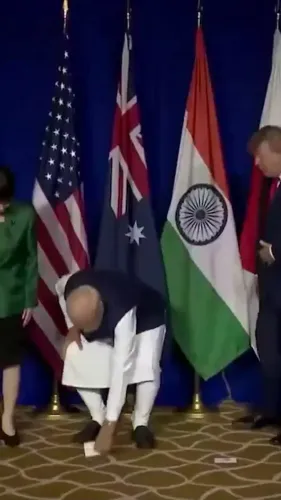
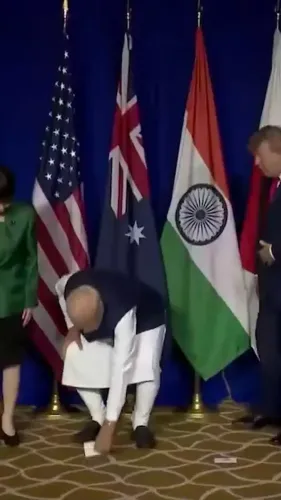
A small act in Manila became a large statement about national pride. Union Panchayati Raj and Fisheries Minister Rajiv Ranjan Singh, posting on November 17, 2026, praised Prime Minister Narendra Modi for personally picking up a fallen representation of the tricolor from the ground during his visit to the Philippines — holding it up as a living example of what respect for the national flag truly looks like.
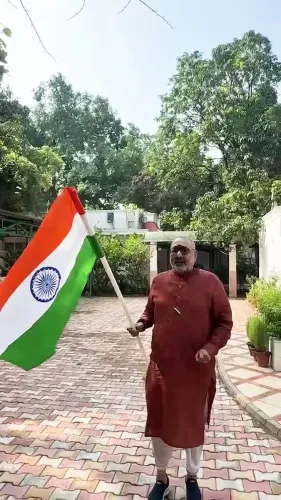
Sharing a video of the moment, Minister Singh wrote in Hindi: 'Rashtradhwaj ke prati sammaan hi Rashtra ke prati sammaan hai' — 'Respect for the national flag is respect for the nation itself.' He described the Prime Minister's gesture as a small act carrying a large message: that the nation's honour and identity stand above all else.
What Modi did — and why it travelled fast
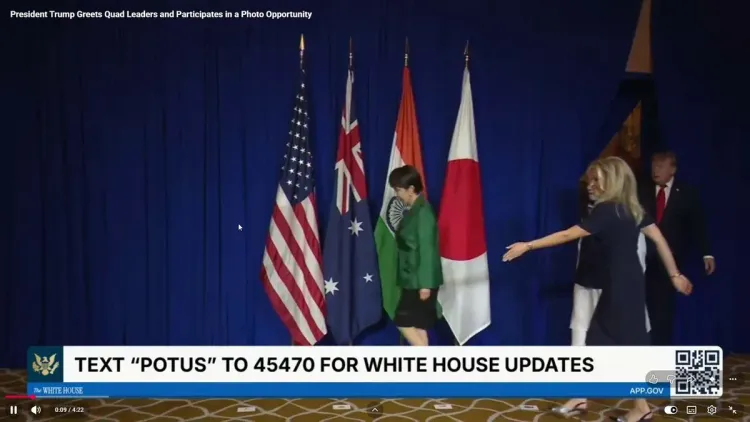
According to the post, PM Modi noticed a symbolic representation of the tricolor lying on the ground in Manila and bent down to pick it up himself — unprompted, without ceremony. That instinctive act, captured on video, is precisely the kind of moment that moves quickly across social media: no speechwriter required, no podium needed. The gesture speaks in a visual language that cuts across languages and regions.
Minister Singh framed it in cultural terms, calling it 'yahi sanskaar, yahi bhaavna' — 'this very value, this very feeling' — the real strength of India. For a government that has consistently placed national symbols at the centre of its cultural messaging, the moment lands as authentic proof of point rather than choreographed optics.
Manila, the tricolor, and India's Act East moment
The Philippines has been a growing node in India's Act East Policy, with bilateral ties deepening across defence, trade, and people-to-people links. A Prime Ministerial visit to Manila carries its own strategic weight in the Indo-Pacific conversation. That Modi's most-shared moment from the trip is not a signing ceremony or a joint statement, but a quiet act of personal reverence for the flag, tells its own story about which images define the visit at home.
The Indian national flag was adopted by the Constituent Assembly on 22 July 1947. The Flag Code of India, revised in 2002, codifies in law what this moment expressed in action: the tricolor is not a backdrop — it is the nation made visible.
Ministers amplify, diaspora watches
Senior NDA allies amplifying the Prime Minister's overseas conduct is a well-worn pattern — but it works because overseas visits are where domestic audiences most keenly track how India is represented on the world stage. For the Indian diaspora in Southeast Asia especially, a Prime Minister who notices and responds to a fallen flag without being asked carries unmistakable emotional resonance.
The incident, whatever its precise context, has already done its cultural work: a Cabinet minister, a viral video, and a nation's symbol picked up from the ground — sometimes the clearest political messages need no translation at all.
Point of View
Keeping the tricolor as an emotionally charged political symbol. The Manila setting adds a layer of soft-power messaging: India's leader, on a strategic Indo-Pacific visit, is seen not just negotiating interests but embodying principles. For the NDA's core audience, that combination of geopolitical presence and symbolic reverence is a powerful double signal.
NationPress
17 Nov 2026
Frequently Asked Questions
What did PM Modi do with the tricolor in Manila?
According to Union Minister Lalan Singh's post, PM Modi personally picked up a fallen symbolic representation of the Indian tricolor from the ground during his visit to Manila, Philippines — an unprompted gesture of respect for the national flag.
Why did Lalan Singh post about PM Modi and the tricolor?
Lalan Singh shared a video of the moment to highlight what he called Modi's 'sensitivity and reverence' for the national flag, framing it as evidence that India's national honour is paramount — a message aimed at domestic and diaspora audiences.
What is the Flag Code of India?
The Flag Code of India, revised in 2002, is the legal framework governing how the Indian national flag may be displayed, used, and respected in public. It codifies the rules of conduct around the tricolor that citizens and officials are expected to follow.
Why was PM Modi in Manila?
Manila is the capital of the Philippines, a country with an expanding strategic partnership with India under the Act East Policy. Indian prime ministers visit Manila for bilateral meetings and regional forums, particularly in the Indo-Pacific context.