Rijiju Salutes Tricolour at Red Fort on Independence Day
Synopsis
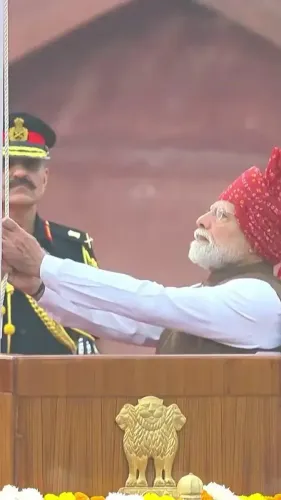
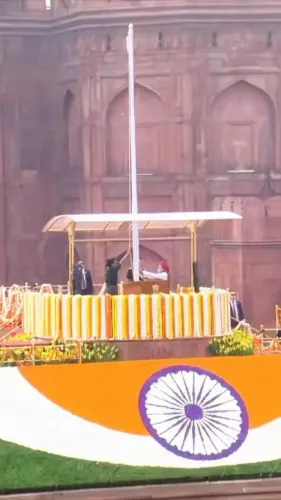
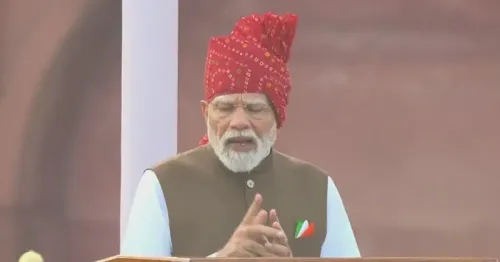
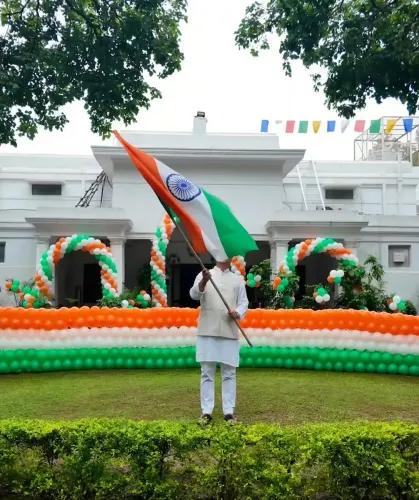
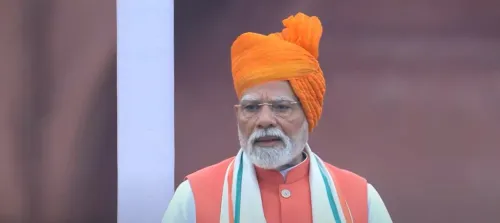
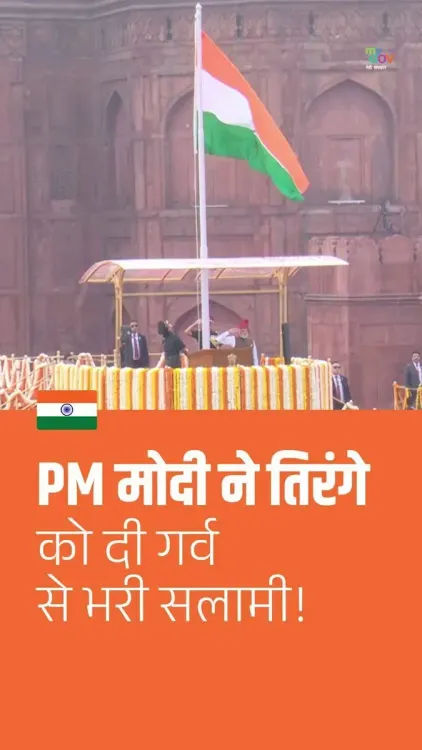
Union Parliamentary Affairs Minister Kiren Rijiju saluted PM Narendra Modi's flag hoisting at the Red Fort on Independence Day, calling the sight of the Tricolour atop the historic monument the most beautiful image in India, and affirming 'India First, Tricolour supreme.'
Key Takeaways
Kiren Rijiju , Union Minister of Parliamentary Affairs and Minority Affairs, posted a tribute on 15 August marking Independence Day.
PM Narendra Modi hoisted the Tricolour at the Red Fort in Delhi , continuing a tradition that began with Jawaharlal Nehru in 1947 .
Rijiju described the sight of the Tricolour atop the Red Fort as the most beautiful image for every Indian.
His post carried the refrain 'Bharat Pratham, Tiranga Sarvopari' — 'India First, Tricolour supreme' — alongside a video of the ceremony.
The post reflects the established pattern of senior BJP ministers amplifying the PM's role and national symbols on Independence Day.
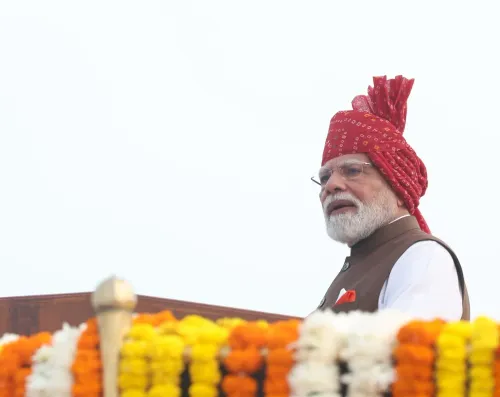
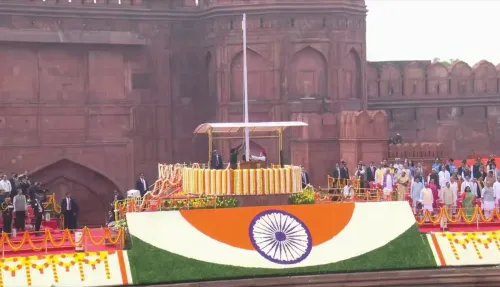
The Tricolour unfurling over the ramparts of the Red Fort on 15 August is one of the most enduring images in the Indian republic's calendar — and on India's Independence Day, Union Parliamentary Affairs and Minority Affairs Minister Kiren Rijiju marked the moment with a tribute to the occasion and to Prime Minister Narendra Modi's flag hoisting at the historic monument.
Rijiju wrote, 'लाल किले की प्राचीर पर लहराता तिरंगा और हर भारतीय के दिल में उमड़ता राष्ट्रगौरव, इससे सुंदर दृश्य क्या हो सकता है!' — 'The Tricolour flying atop the ramparts of the Red Fort and the surge of national pride in every Indian's heart — what sight could be more beautiful!' He added that PM Modi saluted the Tricolour 'with pride and honour,' closing with the refrain: 'India First, the Tricolour supreme.'
A Tradition Stretching Back to 1947
The Prime Minister's flag hoisting at the Red Fort in Delhi is not ceremony for ceremony's sake — it is a constitutional and emotional anchor of the republic. The tradition began with Jawaharlal Nehru in 1947 and has continued unbroken through every government since. Each year, the ramparts of the Mughal-era fort become the backdrop for the nation's most-watched address, connecting millions of Indians to a single moment of collective identity.
Prime Minister Modi, who has led the Independence Day address from the Red Fort since 2014, has consistently used the occasion to outline government priorities alongside the patriotic observance. The fort's symbolic weight — as both a seat of Mughal power and the site where India's founding leaders first claimed the republic — gives the annual ceremony a gravity that no other venue could replicate.
Senior BJP Leadership Amplifies the National Moment
Rijiju's post fits a well-established pattern: senior ministers of the ruling party use Independence Day to publicly foreground national symbols and the Prime Minister's central role in the commemoration. For Rijiju, a veteran BJP leader from Arunachal Pradesh who holds two Union portfolios, the message is also a statement of political identity — 'Bharat Pratham, Tiranga Sarvopari' (India First, Tricolour supreme) doubles as both patriotic sentiment and party positioning.
The post was accompanied by a video, amplifying the visual spectacle of the flag hoisting to Rijiju's social media following on a day when national attention is trained squarely on New Delhi.
On a day when the Tricolour flies from every government building across the subcontinent, the image of it catching the wind above the Red Fort remains the one frame that stops the country cold — and India's political leadership knows exactly how to make it count.
Point of View
Strategic in framing. By centering the Prime Minister's flag hoisting and closing with 'India First, Tricolour supreme,' the message simultaneously marks the national occasion and reinforces the BJP's long-running positioning as the party of assertive nationalism. The Red Fort address has always been political as much as ceremonial, and amplifying it through ministerial social media extends its reach well beyond the broadcast moment. For Rijiju specifically — a northeastern leader in a symbolically important border state — publicly foregrounding national unity carries an additional regional resonance that goes beyond routine party messaging.
NationPress
29 Sept 2026
Frequently Asked Questions
Why does the Prime Minister hoist the flag at the Red Fort on Independence Day?
The tradition of the Prime Minister hoisting the national flag at the Red Fort in Delhi on 15 August began with Jawaharlal Nehru in 1947 and has continued unbroken ever since, making it the republic's most prominent annual patriotic ceremony.
What did Kiren Rijiju say on Independence Day?
Kiren Rijiju wrote that the sight of the Tricolour flying atop the Red Fort and the surge of national pride in every Indian's heart is the most beautiful sight imaginable, and praised PM Modi for saluting the flag with pride and honour.
Who is Kiren Rijiju?
Kiren Rijiju is a senior BJP leader from Arunachal Pradesh and currently serves as Union Minister of Parliamentary Affairs and Minister of Minority Affairs in the central government.
What is the significance of the Red Fort on Independence Day?
The Red Fort in Delhi is the designated venue for the Prime Minister's flag hoisting and national address every 15 August . Its historical weight — as the site where India's founders first proclaimed the republic — gives the ceremony its unique national gravity.
What does 'Bharat Pratham, Tiranga Sarvopari' mean?
'Bharat Pratham, Tiranga Sarvopari' translates to 'India First, Tricolour supreme' — a patriotic refrain used by Rijiju in his Independence Day post to emphasise national pride and the primacy of the national flag.