Revolutionizing India’s Manufacturing: BHAVYA’s Vision for 25% GDP Contribution by 2032
Synopsis
Discover how the Bharat Audyogik Vikas Yojna (BHAVYA) is set to transform India's manufacturing sector, potentially increasing its GDP contribution to 25% by 2032. Learn about the implications for MSMEs and the broader economy.
Key Takeaways
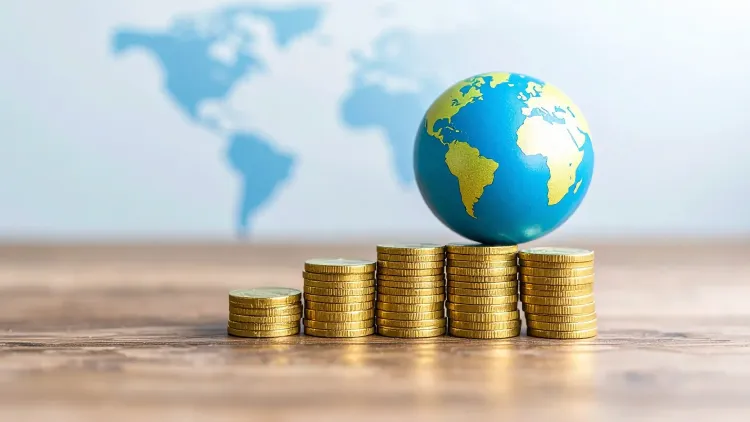
BHAVYA initiative aims to boost manufacturing's GDP share to 25% by 2032 .
Focus on plug-and-play industrial parks to streamline operations.
Significant support for MSMEs to enhance resilience and competitiveness.
Government aims to attract new investments and create jobs.
Financial assistance for developing essential industrial infrastructure.
New Delhi, March 20 (NationPress) The plug-and-play model for industrial growth under the Bharat Audyogik Vikas Yojna (BHAVYA) has the potential to boost the manufacturing sector's contribution to India's GDP to 25% by the year 2032, experts revealed on Friday.
The President of ASSOCHAM, Nirmal K. Minda, commended the BHAVYA initiative, labeling it a groundbreaking advancement for India's manufacturing landscape. He noted that the model offers a comprehensive, streamlined approach to doing business, addressing everything from approvals to operational execution, which aligns with the aspirations of a progressive India and the vision of Viksit Bharat.
Minda highlighted the indispensable role of MSMEs in driving India's economic development, stating that the BHAVYA initiative will fortify their growth path and improve their adaptability within the global market.
The proposed future-oriented, sustainable, and efficient industrial parks are set to empower MSMEs and startups, enabling them to become more resilient and competitive on a global scale, he remarked.
According to Minda, BHAVYA has the capacity to transform India's industrial framework, counter global economic challenges, and elevate the nation's growth trajectory.
This week, the Union Cabinet granted approval for the BHAVYA plan, which aims to establish 100 plug-and-play industrial parks throughout the nation.
The initiative seeks to bolster industrial infrastructure, attract new investments, and generate substantial employment opportunities while enhancing the ease of doing business via expedited approvals and single-window systems.
Earlier this week, Prime Minister Narendra Modi asserted that the scheme will significantly improve the business environment through streamlined approval processes and single-window systems, while also benefiting the logistics and services sectors.
The plug-and-play framework will enable industries to commence operations swiftly, backed by pre-approved land, ready-to-use infrastructure, and integrated services, thereby significantly lowering entry barriers for investors.
As part of the scheme, industrial parks ranging from 100 to 1,000 acres will be developed, with financial support of up to Rs 1 crore per acre, covering essential infrastructure such as internal roads, utilities, drainage systems, and common facilities, in addition to value-added infrastructure like factory sheds, testing laboratories, and warehousing.
aar/pk
Point of View
It's clear that the BHAVYA initiative represents a pivotal moment for India's manufacturing sector. By focusing on a plug-and-play model, it aims to significantly enhance the ease of doing business and promote economic growth, particularly for MSMEs. The commitment to expanding industrial infrastructure is not just timely; it's essential for positioning India as a competitive player in the global market.
NationPress
23 Sept 2026
Frequently Asked Questions
What is the BHAVYA scheme?
The BHAVYA scheme is an initiative aimed at developing 100 plug-and-play industrial parks across India to enhance the manufacturing sector's contribution to GDP.
How will the BHAVYA scheme affect MSMEs?
The scheme is designed to strengthen the growth trajectory of MSMEs, making them more resilient and globally competitive.
What are the expected benefits of the BHAVYA initiative?
Expected benefits include improved ease of doing business, attracting new investments, and creating large-scale employment opportunities.
What support will be provided under the BHAVYA scheme?
Financial assistance of up to Rs 1 crore per acre will be available for developing industrial parks, covering essential infrastructure and facilities.
When is the BHAVYA initiative expected to impact GDP?
The initiative aims to contribute to increasing the share of manufacturing in India's GDP to 25% by the year 2032.