Union Cabinet Approves BHAVYA Scheme: Rs 33,660 Crore for 100 Industrial Parks
Synopsis
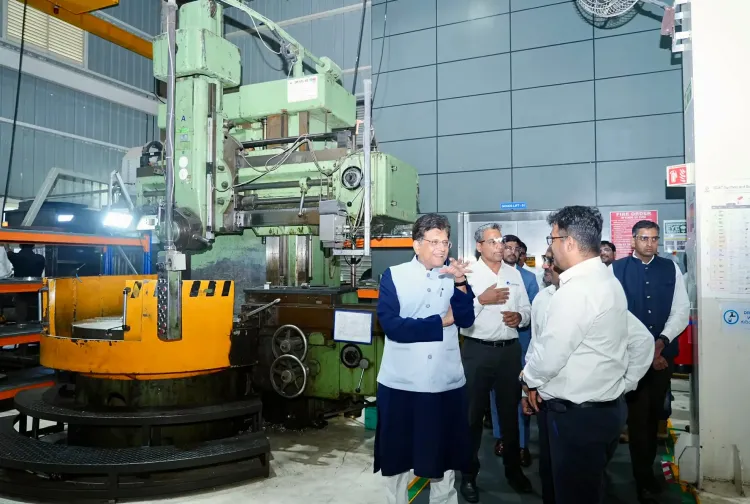
The Union Cabinet has greenlit the BHAVYA scheme, earmarking Rs 33,660 crore for the establishment of 100 plug-and-play industrial parks across India, aimed at economic acceleration and job creation.
Key Takeaways
Investment of Rs 33,660 crore for 100 industrial parks.
Focus on plug-and-play industrial ecosystems .
Streamlined processes for ease of doing business .
Funding for core and social infrastructure.
Creation of lakhs of jobs across the nation.
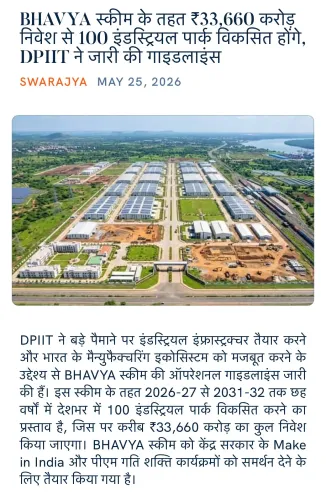
New Delhi, March 18 (NationPress) The Union Cabinet, led by Prime Minister Narendra Modi, has given its nod to the Bharat Audyogik Vikas Yojna (BHAVYA) with a financial outlay of Rs 33,660 crore to establish 100 ready-to-use industrial parks nationwide. This initiative is tailored to boost economic growth and create numerous job opportunities.
The primary goal of the scheme is to construct world-class industrial infrastructure, which will unleash the manufacturing capabilities of the nation and propel India's growth trajectory, as stated in an official announcement.
Building on the achievements of the Industrial Smart Cities initiated under the National Industrial Corridor Development Programme (NICDP), BHAVYA will collaborate with state governments and private entities for its execution.
A key feature of BHAVYA is its commitment to deregulation and improving the ease of doing business. This includes simplified approvals, efficient single-window systems, and state-driven reforms that are friendly to investors, as outlined in the statement.
The scheme will provide plug-and-play industrial environments, facilitating a swift transition from planning to production for industries. With pre-approved land, ready infrastructure, and comprehensive services, BHAVYA aims to lower the entry barriers for prospective investors.
Under this initiative, industrial parks ranging from 100 to 1,000 acres will be developed, with financial backing of up to Rs 1 crore per acre allocated for essential infrastructure such as internal roads, underground utilities, drainage systems, common treatment facilities, ICT frameworks, and administrative systems. Additionally, it will include value-added infrastructure like pre-built factory spaces, custom-built units, testing laboratories, and warehousing. Moreover, it will support social infrastructure, including housing for workers and essential amenities.
Funding for external infrastructure will cover up to 25% of the project costs, ensuring optimal connectivity and integration with existing networks, according to the official statement.
The selection of projects will be conducted through a competitive mode, ensuring that only top-tier, reform-driven, and investment-ready proposals are advanced.
The industrial parks will be designed as innovative and sustainable ecosystems, adhering to the PM GatiShakti Principles to enable seamless multimodal connectivity and effective last-mile access.
They will also prioritize green energy and sustainable resource management, featuring integrated underground utility corridors that foster a no-dig environment for efficient maintenance and uninterrupted industrial activities.
These parks are set to redefine industrial infrastructure standards, ensuring reliability, minimizing inefficiencies, and boosting productivity across various sectors, as per the statement.
BHAVYA is anticipated to facilitate extensive job creation, yielding significant direct and indirect employment opportunities in manufacturing, logistics, and services while attracting substantial investments.
This initiative will encompass all states and Union Territories, creating lakhs of job opportunities throughout the nation and accelerating industrial growth on a national scale.
By encouraging cluster-based development and co-location of industries, suppliers, and service providers, BHAVYA will fortify domestic supply chains, foster regional industrialization, and generate new possibilities for millions of individuals, as highlighted in the statement.
The primary beneficiaries of this scheme will be manufacturing units, MSMEs, startups, and global investors in search of ready-to-use industrial infrastructure, while secondary beneficiaries will include workers, logistics providers, service sector businesses, and local communities.
Point of View
The approval of the BHAVYA scheme represents a significant stride towards enhancing India's industrial infrastructure and promoting economic growth. By focusing on streamlined processes and investor readiness, this initiative aims to create a robust environment for job creation and regional development, aligning with the nation's broader economic goals.
NationPress
21 Sept 2026
Frequently Asked Questions
What is the BHAVYA scheme?
The BHAVYA scheme is an initiative approved by the Union Cabinet to develop 100 industrial parks across India with an investment of Rs 33,660 crore, aimed at boosting economic growth and job creation.
How will the BHAVYA scheme benefit investors?
The scheme offers plug-and-play industrial ecosystems, pre-approved land, and comprehensive infrastructure, significantly reducing entry barriers for investors.
What types of infrastructure will be funded under the BHAVYA scheme?
Funding will cover core infrastructure such as internal roads, utilities, drainage systems, and social infrastructure, including worker housing and necessary amenities.
Who are the primary beneficiaries of the BHAVYA scheme?
Manufacturing units, MSMEs, startups, and global investors seeking industrial infrastructure are the primary beneficiaries.
When was the BHAVYA scheme approved?
The BHAVYA scheme was approved on March 18, 2023, by the Union Cabinet.