Goyal targets Rahul Gandhi over Election Commission appointments
Synopsis
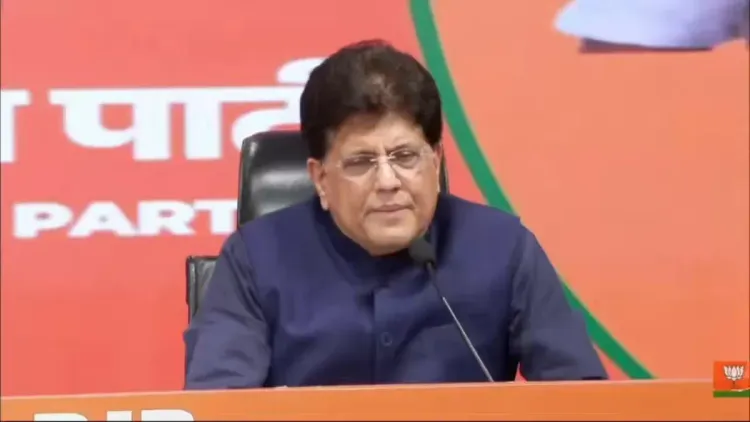
Commerce Minister Piyush Goyal posted a four-point list on X accusing Rahul Gandhi and Congress-led governments of rewarding Chief Election Commissioners with party tickets, cabinet posts, and governorships, and of shielding a commissioner alleged to act as a Congress agent.
Key Takeaways
Union Minister Piyush Goyal posted on October 13, 2026 targeting Rahul Gandhi's record on Election Commission appointments.
The post alleges one Chief Election Commissioner was given a party election ticket , one inducted into the Union Cabinet , and two made Governors .
A fourth allegation: the Congress government refused to remove an Election Commissioner whom the Chief Election Commissioner had flagged as acting like a 'party agent.' Article 324 of the Constitution mandates the Election Commission's independence; post-retirement appointments have long fuelled charges of institutional compromise.
The specific individuals in Goyal's post are unnamed; the broader pattern of such appointments spans multiple governments and parties.
As Leader of the House in the Rajya Sabha , Goyal's charge carries potential parliamentary resonance ahead of any debate on Election Commissioner appointment reform.
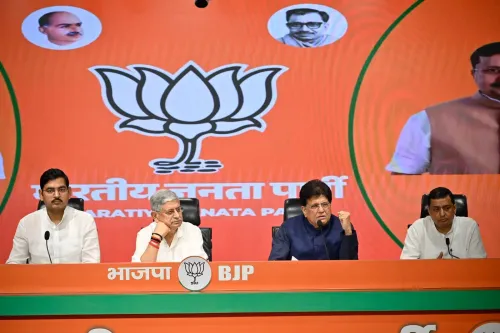
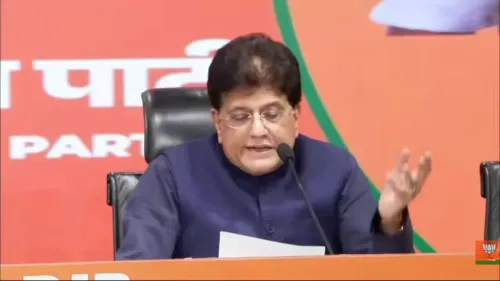
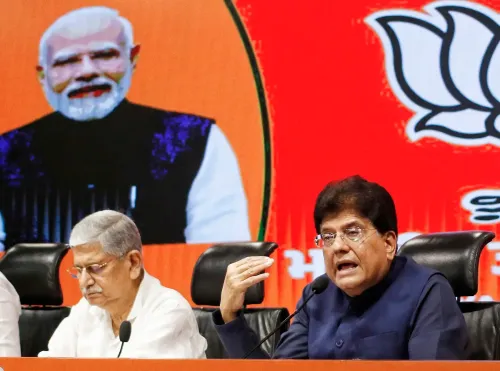
A pointed political salvo landed on Tuesday, October 13, 2026, when Union Commerce and Industry Minister Piyush Goyal posted a charge-sheet style list on X, accusing Rahul Gandhi and the Congress-led governments of systematically rewarding former election officials with party tickets, cabinet berths, and gubernatorial posts — and of refusing to act when a sitting Chief Election Commissioner allegedly flagged partisan conduct inside the poll body itself.
Posting in Hindi, Goyal laid out what he called Rahul Gandhi ka track record — 'Rahul Gandhi's track record' — on the Election Commission of India. The four-point indictment: one Chief Election Commissioner was fielded as a party candidate; one was inducted into the Union Cabinet; two were appointed Governors; and on one occasion, when a Chief Election Commissioner reportedly said that an Election Commissioner below him was functioning 'like an agent of Congress', the government refused to remove that official. 'Such partisanship,' Goyal wrote, 'we would rarely have seen in any government.'The constitutional stakes: why Election Commission appointments matter
Article 324 of the Constitution of India (1950) vests the superintendence, direction, and control of all elections in the Election Commission of India, making its independence a bedrock guarantee of democratic legitimacy. The post-retirement career of election officials has therefore always been a politically sensitive flashpoint — critics argue that the prospect of a plum appointment creates an incentive for in-office favour, while defenders note that former officials are citizens with the same right to public roles as anyone else. Goyal's post does not name the specific individuals involved, and the research background flags that matching these incidents to named officials requires cross-checking official appointment records. The broad pattern, however, is part of a long-running debate in Indian politics: successive governments, including those led by the Bharatiya Janata Party, have faced similar questions about post-retirement appointments to constitutional and gubernatorial posts.Congress's vulnerability on this charge — and the broader political war
The timing of the post matters. With debates on the appointment process for Election Commissioners occasionally surfacing in parliamentary sessions, any parliamentary discussion on reforming the selection mechanism could keep this issue in play. Goyal, as Leader of the House in the Rajya Sabha, occupies a platform from which such charges carry institutional weight beyond a routine social media jab. For Rahul Gandhi and the Indian National Congress, the post revives a historical liability — the decades when Congress held power at the Centre give opponents a long record to mine. The party has not yet responded publicly to this specific post. The exchange underscores a fundamental tension in Indian democracy: the Election Commission's credibility depends on the perception of arm's-length distance from the ruling party of the day — a perception every government, regardless of stripe, has struggled to maintain without controversy.Point of View
The BJP pre-empts any opposition attempt to weaponise institutional-integrity arguments against the current government. The charge is not new, but its packaging as a 'track record' list signals an effort to anchor it as electoral recall material. The absence of names is both a legal hedge and a rhetorical device: it forces Congress to either deny the pattern broadly or get drawn into defending specific appointments. For the broader debate on Election Commission reform, the post adds heat without generating light — real accountability would require naming officials, dates, and documented evidence.
NationPress
27 Nov 2026
Frequently Asked Questions
What did Piyush Goyal say about Rahul Gandhi and the Election Commission?
Goyal posted a four-point list on X alleging that Congress-led governments gave party election tickets, cabinet posts, and gubernatorial appointments to former Chief Election Commissioners, and refused to remove an Election Commissioner said to be acting as a Congress partisan.
Is it illegal to appoint a former Chief Election Commissioner to a government post?
There is no explicit constitutional bar, but such appointments are widely seen as compromising the Election Commission's independence. Debates on cooling-off periods for election officials have periodically surfaced in India's parliament.
What does Article 324 say about the Election Commission of India?
Article 324 vests the superintendence, direction, and control of elections in the Election Commission, establishing it as an autonomous constitutional body meant to conduct free and fair elections.
Has the BJP also faced similar accusations about Election Commission appointments?
Yes. The broader research pattern notes that successive governments — including BJP-led ones — have faced questions about post-retirement appointments of election officials to constitutional and gubernatorial positions.
Who is Piyush Goyal and why does his post carry political weight?
Piyush Goyal is the Union Minister of Commerce and Industry and Leader of the House in the Rajya Sabha, making him one of the BJP's most senior parliamentary voices; his public statements often signal party strategy.