BJP accuses Congress of misusing ECI, awarding Padma Vibhushan to sitting CEC
Synopsis
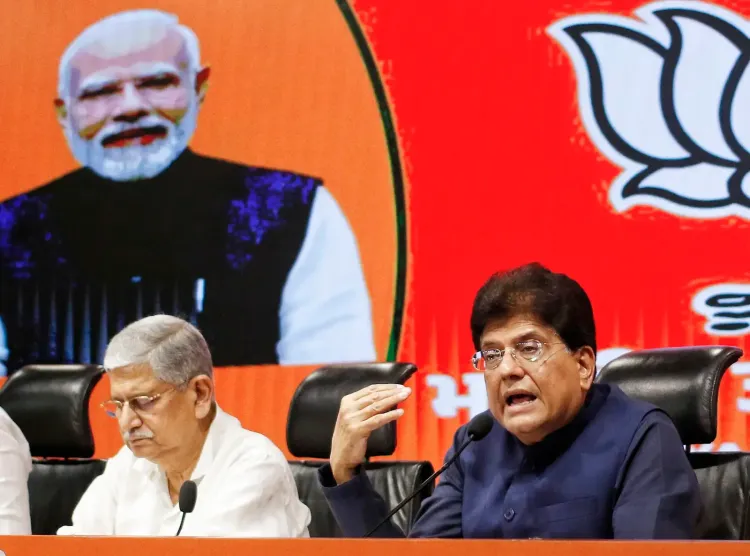
BJP's Piyush Goyal laid out a case-by-case indictment of Congress's alleged decades-long pattern of rewarding Election Commissioners — from fielding T.N. Seshan against L.K. Advani to conferring the Padma Vibhushan on a sitting CEC, and, most recently, appointing a Kerala electoral officer as a state CM's secretary within a month of elections in May 2026.
Key Takeaways
BJP leader Piyush Goyal on 13 October 2026 accused Congress of systematically rewarding Chief Election Commissioners and electoral officers with political posts.
Gill was allegedly conferred the Padma Vibhushan in 2000 while still the sitting CEC , and later joined Congress, entered the Rajya Sabha in 2004 , and became a Union Minister in 2008 .
Seshan was fielded as a Congress candidate against L.K.
Advani in 1999 , despite being praised for his electoral integrity.
Gopalaswami reportedly sought the removal of Naveen Chawla in 2009 , alleging partisan conduct; the government instead made Chawla the CEC.
BJP credited the 2023 law under PM Modi that added the Leader of the Opposition to the EC appointment selection committee.
Kerala Chief Electoral Officer Ratan U.
Kelkar was reportedly appointed CM V.D.
Satheesan's Secretary within a month of state elections in May 2026 .
The Bharatiya Janata Party (BJP) on Tuesday, 13 October 2026, formally accused the Indian National Congress of systematically undermining the impartiality of the Election Commission of India (ECI) by offering political rewards — including gubernatorial posts, cabinet berths, party tickets, and even India's second-highest civilian honour — to sitting and retired Chief Election Commissioners (CECs) and other electoral officers during the previous UPA government's tenure.
Key Allegations at the Press Conference
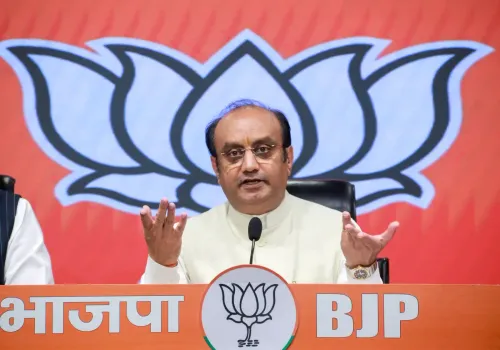
Addressing a press conference in New Delhi, Union Minister and BJP leader Piyush Goyal laid out a string of specific cases he said amounted to political quid pro quo. Goyal asserted that the NDA government under Prime Minister Narendra Modi had, by contrast, granted the Election Commission complete autonomy and had never offered political benefits to any appointed Election Commissioner.
'The NDA government has never attempted to offer political benefits to any appointed Election Commissioner. It has allowed them to work honestly and has never committed the wrongdoing of offering them political positions in violation of the legal provisions,' Goyal said.
The Historical Cases BJP Cited
Goyal alleged that the Congress had appointed a CEC as a candidate on its own party ticket, inducted another into the Union Cabinet, and appointed two CECs as Governors. He specifically named former CEC T.N. Seshan, recalling that even as the Congress praised Seshan's integrity during his tenure, 'in 1999, it gave him the opportunity to contest on a Congress ticket against L.K. Advani.'
The Union Minister reserved particular criticism for the case of former CEC M.S. Gill, who served as Chief Election Commissioner from 1996 to 2001. Goyal alleged Gill was conferred the Padma Vibhushan — India's second-highest civilian award — in 2000, while he was still the sitting Chief Election Commissioner. 'Was this not a kind of reward for sycophancy?' Goyal asked. Gill subsequently joined the Congress, was elected to the Rajya Sabha in 2004, and was inducted into the Union Cabinet in 2008, according to Goyal.
Goyal also noted that former CEC R.K. Trivedi, whose tenure ended on 31 December 1985, was appointed Governor of Gujarat by the Rajiv Gandhi-led Congress government within two months, on 26 February 1986.
The Naveen Chawla Controversy
The BJP leader revisited one of the most contentious episodes in ECI history — the appointment of Naveen Chawla as an Election Commissioner, which Goyal said the then UPA government had in 2005 attributed directly to Sonia Gandhi. 'How could Sonia Gandhi appoint him without holding any government position? Who was running the government at that time?' Goyal asked pointedly.
He further alleged that in 2009, then-CEC N. Gopalaswami had formally appealed to the government to remove Chawla, accusing him of partisan conduct and favouring the Congress. Despite this appeal, Goyal alleged, the then government appointed Chawla as CEC 'due to his loyalty to the Congress and Sonia Gandhi.'
State-Level Officers and the Kerala Cases
Goyal extended the allegation to electoral officers at the state level. He cited the case of Tika Ram Meena, described as a former Chief Electoral Officer of Kerala, who he said was later brought into the Congress's manifesto team in Rajasthan and inducted as a Congress party member. He also cited Ratan U. Kelkar, identified as the Chief Electoral Officer of Kerala during recent state elections, whom Kerala Chief Minister V.D. Satheesan reportedly appointed as his Secretary within a month of the elections, in May 2026. 'Isn't this a case of political quid pro quo, where the message is, "Help us in the elections, and we will immediately appoint you to a position?"' Goyal said.
The 2023 Law and What Changes
Goyal credited the Modi government with reforming the appointment process through a new law enacted in 2023, under which the Leader of the Opposition was added to the selection committee for Election Commissioners and the CEC. 'Now, the Prime Minister and the Leader of the Opposition sit together to decide who should become an Election Commissioner and who should become the Chief Election Commissioner,' he said, contrasting this with what he described as earlier unilateral appointments by the government of the day.
The Congress had not responded to the specific allegations at the time of publishing. The BJP's offensive comes amid ongoing political sparring over the independence of constitutional bodies ahead of scheduled state elections.
Point of View
From M.S. Gill's Padma Vibhushan to N. Gopalaswami's ignored removal request, are documented in public record and difficult to dismiss entirely. What the BJP does not address is whether adding the Leader of the Opposition to the 2023 selection panel resolves structural conflicts of interest, or merely distributes them across the aisle. The Kerala case involving Ratan U. Kelkar is the freshest and arguably the most pointed — and Congress has yet to rebut it on the merits.
NationPress
13 Oct 2026
Frequently Asked Questions
What did BJP's Piyush Goyal allege about Congress and the Election Commission?
Goyal alleged that Congress, during the UPA era, systematically rewarded Chief Election Commissioners and electoral officers with party tickets, cabinet positions, gubernatorial appointments, and even India's second-highest civilian honour — the Padma Vibhushan — while a CEC was still in office. He presented multiple named cases spanning from 1985 to 2026 to support the claim.
Who was M.S. Gill, and why is he central to the BJP's allegations?
M.S. Gill served as Chief Election Commissioner from 1996 to 2001. BJP alleges he was awarded the Padma Vibhushan in 2000 while still the sitting CEC, and that he subsequently joined Congress, was elected to the Rajya Sabha in 2004, and was made a Union Minister in 2008 — a trajectory the BJP describes as political reward for conduct in office.
What happened in the Naveen Chawla case that BJP raised?
According to Goyal, then-CEC N. Gopalaswami in 2009 formally requested the government to remove Election Commissioner Naveen Chawla, accusing him of partisan conduct favouring Congress. The government declined and subsequently appointed Chawla as CEC — a decision the BJP characterises as rewarding political loyalty over institutional integrity.
What is the 2023 law on Election Commission appointments that BJP cited?
The 2023 law introduced by the Modi government added the Leader of the Opposition to the selection committee that recommends Election Commissioners and the Chief Election Commissioner. Previously, the appointment was made by the government alone without a formal multi-party consultative mechanism.
What is the Kerala electoral officer case from May 2026 that BJP highlighted?
BJP alleged that Ratan U. Kelkar, who served as Chief Electoral Officer of Kerala during the recent state elections, was appointed as Secretary to Chief Minister V.D. Satheesan within a month of those elections, in May 2026. The BJP characterised this as a potential quid pro quo, though no formal investigation has been cited.