Goyal Hails IMF's 7% GDP Projection for India in 2027
Synopsis
The IMF's World Economic Outlook for October 2026 projects India's GDP growth at 7% for 2027, placing it among the fastest-growing major economies. Commerce Minister Piyush Goyal cited the report to highlight India's economic momentum and the contribution of PM Modi's free trade agreements to global supply chain resilience.
Key Takeaways
The IMF's World Economic Outlook October 2026 projects 7% GDP growth for India in 2027 .
The projection places India among the fastest-growing major economies globally.
Union Commerce Minister Piyush Goyal cited the report on October 13, 2026 , linking it to India's FTA agenda under PM Narendra Modi .
India's FTAs — including agreements with the UAE (2022) and Australia (December 2022) — are credited with building resilient global supply chains.
The IMF report comes as major developed economies project growth well below 3% , widening India's relative advantage.
Ongoing FTA negotiations with the EU, UK, and GCC nations remain key to watch as India deepens trade integration.
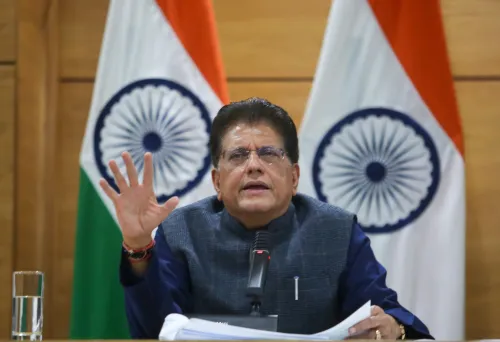
India is on track to rank among the world's fastest-growing major economies — and now the International Monetary Fund has put a number on it. Union Commerce and Industry Minister Piyush Goyal on Tuesday, October 13, 2026, pointed to the IMF's World Economic Outlook October 2026 report, which projects 7% GDP growth for India in 2027, citing it as fresh global validation of the country's economic trajectory.
What the IMF's October 2026 WEO Says About India
The IMF's World Economic Outlook, published biannually, is the gold standard for comparative growth projections across member economies. A 7% growth forecast would place India firmly ahead of virtually every other major economy at a time when much of the developed world continues to grapple with sluggish demand and elevated interest rates. Minister Goyal described the outlook as proof of an 'UNSTOPPABLE INDIA', underlining the projection as a signal of structural momentum, not a cyclical blip.
The IMF has for several successive years flagged India as a standout performer among large economies, driven by robust domestic consumption, infrastructure investment, and a expanding services sector. The October 2026 edition of the report continues that narrative, placing India in a select tier of economies still delivering high-single-digit growth.
FTAs Under Modi Credited With Building Resilient Supply Chains
Goyal's post went beyond the GDP headline, drawing an explicit link between the IMF's optimism and India's accelerating free trade agreement agenda under Prime Minister Narendra Modi. He noted that India's multiple FTAs 'are also expected to positively contribute to global economic activity and build resilient supply chains' — a framing that positions India not just as a growth story but as a stabilising force in global trade architecture.
India has significantly expanded its FTA footprint in recent years. The Comprehensive Economic Partnership Agreement with the UAE was signed in 2022, followed by the India-Australia Economic Cooperation and Trade Agreement, which entered into force in December 2022. These agreements unlocked new corridors for Indian exporters and signalled a strategic pivot away from decades of trade-policy caution. Negotiations with partners including the European Union, the United Kingdom, and Gulf Cooperation Council nations have proceeded in parallel, reflecting an ambition to weave India deeper into global value chains.
The emphasis on 'resilient supply chains' is deliberate. Post-2020 global disruptions — from pandemic-era bottlenecks to geopolitical fractures — pushed multinational firms to diversify sourcing away from single-country dependence. India has actively positioned itself as an alternative manufacturing and services hub, with the FTA strategy designed to lower the tariff and regulatory barriers that historically made re-routing supply chains to India costly.
Why the 7% Benchmark Carries Weight
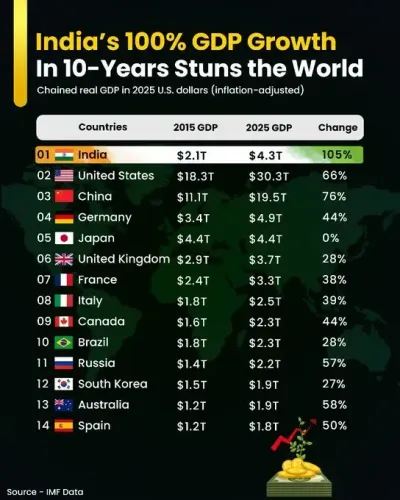
Among the G20 economies, a 7% growth rate stands in a category almost entirely occupied by India. China's growth has moderated into the 4-5% range; the United States and the European Union are projected at well under 3%. For global capital allocators and multinational corporations weighing long-term investment decisions, an IMF-stamped projection at that level is a powerful signal — one that the Commerce Ministry is clearly keen to amplify at home and abroad.
Indian exporters, logistics firms, and supply chain partners with an eye on fresh FTA markets will watch closely as specific treaty provisions come into force and as India's goods and services penetrate new geographies. The real test of the growth story, analysts have argued, lies in translating macro projections into jobs, factory orders, and export receipts on the ground.
The IMF has spoken. Now comes the harder part — keeping the 7% engine running.
Point of View
And internationally to attract investment. Minister Goyal's post is part of a deliberate communications strategy that ties macro data to specific policy levers, namely FTAs, rather than presenting growth as an autonomous phenomenon. The FTA-to-supply-chain narrative is significant: it frames India's trade policy not merely as an export play but as a geopolitical offer to global firms seeking China-plus-one diversification. Whether the 7% projection translates into durable, broad-based growth — beyond services and large enterprises — will define the real legacy of this moment.
NationPress
13 Oct 2026
Frequently Asked Questions
What is the IMF's GDP growth projection for India in 2027?
The IMF's World Economic Outlook for October 2026 projects India's GDP growth at 7% for 2027, placing it among the fastest-growing major economies in the world.
Why did Piyush Goyal post about the IMF report?
Union Commerce and Industry Minister Piyush Goyal highlighted the IMF report to showcase India's strong economic trajectory and to credit PM Modi's free trade agreements for contributing to global economic activity and resilient supply chains.
Which free trade agreements has India signed under PM Modi?
Under PM Narendra Modi, India signed the Comprehensive Economic Partnership Agreement with the UAE in 2022 and the India-Australia Economic Cooperation and Trade Agreement, which entered into force in December 2022, among others.
How does India's projected 7% growth compare to other major economies?
A 7% growth rate would place India well ahead of most G20 peers — China is projected in the 4-5% range, while the United States and European Union are expected to grow at under 3%, making India a standout in the global landscape.
What is the IMF World Economic Outlook report?
The IMF World Economic Outlook is a flagship report published biannually by the International Monetary Fund, providing GDP growth projections and economic analysis for member countries across the globe.