Jaishankar meets 2nd Jamsaheb Youth Exchange participants
Synopsis
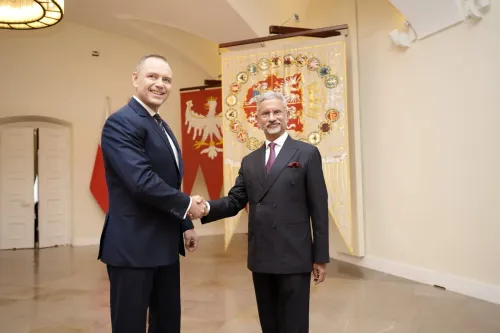
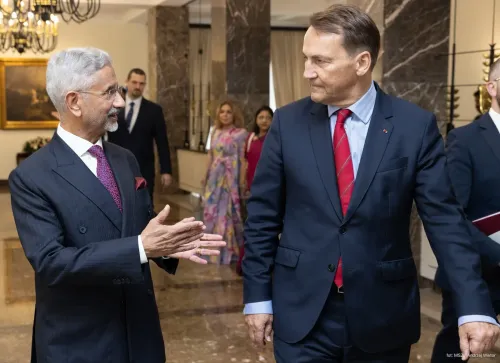
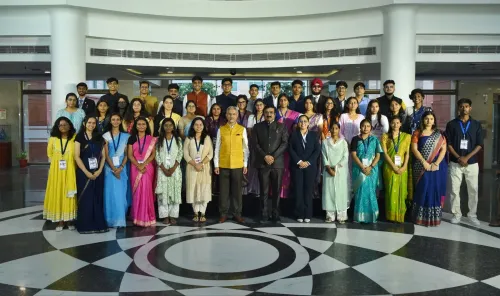
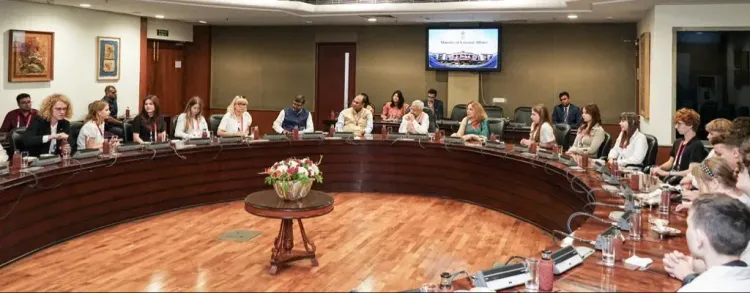
EAM Dr. S. Jaishankar met participants of the 2nd Jamsaheb Memorial Youth Exchange Programme on October 13, 2026, invoking the legacy of the 'Dobry Maharaja' who sheltered Polish children at Balachadi, Gujarat, during World War II as the living foundation of India-Poland ties.
Key Takeaways
Jaishankar met participants of the 2nd Jamsaheb Memorial Youth Exchange Programme on October 13, 2026 .
The programme honours Digvijaysinhji Ranjitsinhji Jadeja , the Maharaja of Nawanagar, known in Poland as the Dobry Maharaja (Good Maharaja).
In 1942 , the Maharaja sheltered Polish child refugees at Balachadi, Gujarat , during World War II — the founding episode of modern India-Poland people-to-people ties.
The second edition of the exchange marks its transition from a commemorative gesture to a recurring bilateral institution.
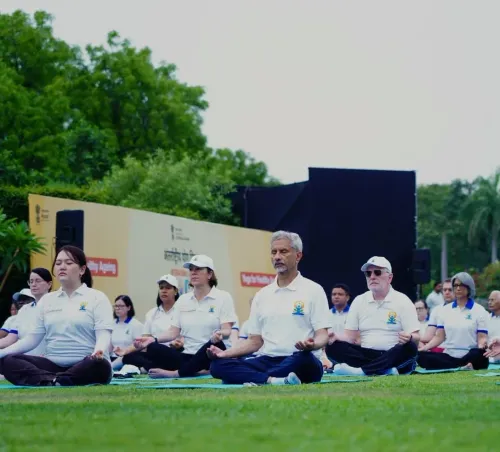
Jaishankar personally engaged with participants about their experiences travelling in India, underscoring the programme's people-first diplomatic character.
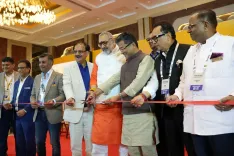
A wartime act of compassion — one that saved hundreds of Polish children from the chaos of World War II — is still building bridges, more than eight decades later. Union External Affairs Minister Dr. S. Jaishankar on Tuesday, October 13, 2026, met participants of the 2nd Jamsaheb Memorial Youth Exchange Programme, an India-Poland people-to-people initiative rooted in one of history's quieter acts of extraordinary humanity.
The 'Dobry Maharaja' and the bond that endures
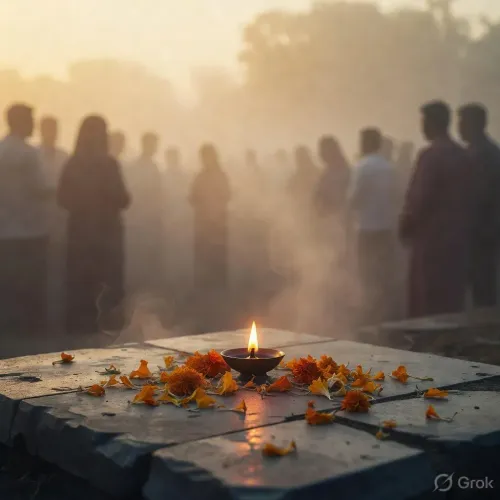
At the heart of this exchange is Digvijaysinhji Ranjitsinhji Jadeja, the Maharaja of Nawanagar, remembered in Poland as the Dobry Maharaja — the 'Good Maharaja'. In 1942, at a moment when the world was tearing itself apart, he opened a refugee camp at Balachadi, Gujarat, to shelter Polish children evacuated from Soviet-occupied territories. Hundreds of young lives were given safety, warmth, and dignity. Poland did not forget.
That singular act of empathy became the founding narrative of a distinct strand in India-Poland relations — one that bypasses trade ledgers and strategic calculations and goes straight to the human register. Dr. Jaishankar described it as 'a special bond between India and Poland, cherished to this day.'
Young voices, old stories, new conversations
The Jamsaheb Memorial Youth Exchange Programme is the institutional expression of that bond — bringing young Poles to India to experience the country firsthand and to understand, from the ground up, why a Gujarati maharaja's generosity is still taught in Polish schools. The second edition of the programme marks a consolidation of what began as a commemorative gesture into a recurring diplomatic ritual.
Dr. Jaishankar spoke directly with the participants about their experiences travelling through India and the interactions that shaped their visit. It is the kind of diplomacy that does not produce communiqués — but does produce lifelong impressions.
Soft power with a genuine story behind it
India's soft-power toolkit often leans on yoga, cuisine, or Bollywood. The Nawanagar story is different. It is specific, documented, and emotionally undeniable — a fact that gives it unusual staying power in public diplomacy. Successive Indian governments have returned to the Balachadi episode precisely because it needs no embellishment. The story tells itself.
With the second edition now complete, the programme signals that both sides intend this to be a permanent feature of the bilateral relationship — not a one-off commemoration but an annual bridge between the next generation of Indians and Poles.
Eighty-four years after a maharaja opened his doors to strangers in need, those strangers' grandchildren are being welcomed back — this time, by choice.
Point of View
Emotionally resonant episode rather than manufactured cultural outreach. By personally receiving the second cohort, Dr. Jaishankar signals that the Ministry of External Affairs is deliberately institutionalising this soft-power asset as a durable thread in the India-Poland bilateral fabric. The progression from a first to a second edition is the key marker: it suggests both sides have agreed to make this annual, converting a wartime memory into a living diplomatic tool. As India expands its European partnerships beyond the traditional economic and security axes, heritage-based people-to-people programmes like this one quietly build the long-term constituency of goodwill that formal summitry alone cannot manufacture.
NationPress
13 Oct 2026
Frequently Asked Questions
What is the Jamsaheb Memorial Youth Exchange Programme?
It is an India-Poland youth exchange initiative that commemorates the humanitarian legacy of the Maharaja of Nawanagar, who sheltered Polish child refugees in Gujarat during World War II. The second edition took place in 2026.
Who was the 'Dobry Maharaja'?
'Dobry Maharaja' means 'Good Maharaja' in Polish and refers to Digvijaysinhji Ranjitsinhji Jadeja, the Maharaja of Nawanagar, who in 1942 set up a refugee camp at Balachadi, Gujarat, to provide safety to hundreds of Polish children displaced by the war.
What happened at Balachadi during World War II?
In 1942, the Maharaja of Nawanagar established a refugee camp at Balachadi, Gujarat, sheltering Polish children who had been evacuated from Soviet-occupied territories during World War II. The episode is foundational to India-Poland historical ties.
Why did Jaishankar meet the youth exchange participants?
As Union External Affairs Minister, Dr. Jaishankar met the participants of the 2nd Jamsaheb Memorial Youth Exchange Programme on October 13, 2026, to engage with young Poles on their experiences in India and to reaffirm the historical bond between the two countries.
How does the Jamsaheb programme fit into India-Poland relations?
India and Poland maintain a distinct people-to-people connection anchored in the WWII-era Balachadi story. The Jamsaheb Memorial Youth Exchange Programme is the primary institutional vehicle for sustaining that connection, supplementing standard diplomatic and economic channels.