Jaishankar marks Partition Remembrance Day, flags geopolitical lessons
Synopsis
On Partition Horrors Remembrance Day, External Affairs Minister Dr. S. Jaishankar honoured the courage of 1947 survivors while calling on India to heed the painful geopolitical lessons of the Partition — framing historical memory as a live instrument of foreign-policy consciousness.
Key Takeaways
Jaishankar posted on Partition Horrors Remembrance Day, 14 August 2026 , honouring survivors of the 1947 Partition.
He called attention to both the 'enormous human suffering' and the 'far-reaching geopolitical consequences' of Partition.
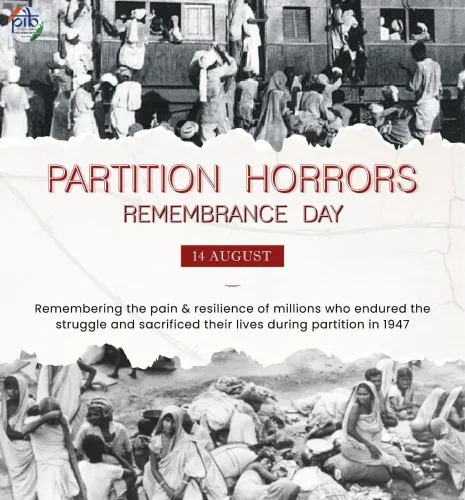
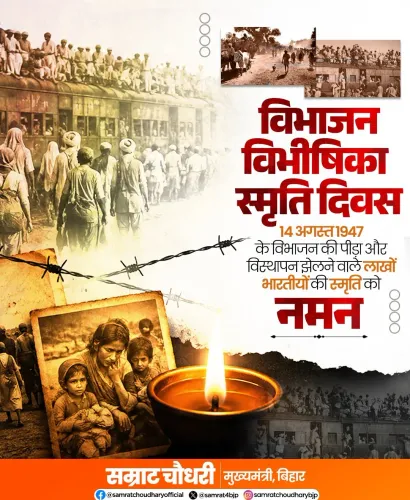
Partition Horrors Remembrance Day was formally instituted by the Government of India in 2021 , observed annually on 14 August .
The 1947 Partition caused an estimated one to two million deaths and one of the largest forced migrations in history.
Senior Indian ministers have consistently used the occasion to link historical memory to contemporary foreign-policy narratives, particularly regarding India-Pakistan relations .
Seventy-nine years after one of history's most violent mass displacements, Union External Affairs Minister Dr. S. Jaishankar used Partition Horrors Remembrance Day on 14 August 2026 to call on Indians to honour the survivors — and to confront the hard geopolitical lessons that 1947 left behind.
A day of remembrance, not just mourning
Jaishankar's post struck a deliberate two-register note: salute the courage of those who rebuilt shattered lives, but do not let the memory soften into sentiment alone. 'We must also remember the painful lessons from this period of our history,' he wrote — a line that does more than mourn. It frames historical memory as a live policy tool.
Partition Horrors Remembrance Day was instituted by the Government of India in 2021, designating 14 August — the day Pakistan marks its independence — as an annual occasion to commemorate the victims of the 1947 division of British India. The observance is now in its fifth year.
The scale of 1947's wound
The Partition triggered one of the largest forced migrations in recorded history. Estimates place the death toll at between one and two million people, with millions more uprooted across what became India and Pakistan. Communal violence tore through Punjab and Bengal with a ferocity that left generational trauma on both sides of the new borders.
For a serving External Affairs Minister to invoke the 'far-reaching geopolitical consequences' of that moment is not incidental. Since the observance began, senior Indian ministers have consistently used the occasion to connect the human cost of Partition with its enduring imprint on India-Pakistan relations — a diplomatic subtext that requires no elaboration for any attentive reader.
Memory as foreign-policy framing
Jaishankar is not the first EAM to speak on this date, but his framing — 'enormous human suffering' paired with 'far-reaching geopolitical consequences' — is precise. It situates grief inside a strategic vocabulary, signalling that New Delhi views the Partition not as closed history but as context for present-day positions on sovereignty, territorial integrity, and bilateral relations.
That is the real weight of the post: a reminder that for India's foreign-policy establishment, 14 August is simultaneously a day of mourning and a day of reckoning.
Point of View
It has functioned as an annual calibration point for official messaging that fuses historical grief with strategic intent. For India's External Affairs Ministry, memory is not merely commemorative; it is argumentative. That framing, repeated each 14 August by senior ministers, gradually normalises a foreign-policy posture in which the Partition's unresolved wounds are held as explicit justification for present-day positions.
NationPress
29 Sept 2026
Frequently Asked Questions
What is Partition Horrors Remembrance Day?
Partition Horrors Remembrance Day is an annual observance on 14 August instituted by the Government of India in 2021 to commemorate the victims of the 1947 Partition of British India , which caused mass displacement and an estimated one to two million deaths.
Why did Jaishankar post about Partition Remembrance Day in 2026?
Dr. S. Jaishankar , as Union External Affairs Minister, marked the annual observance on 14 August 2026 by honouring survivors and urging India to remember the 'painful lessons' and geopolitical consequences of the 1947 Partition.
How many people died in the 1947 Partition of India?
Estimates place the death toll from the 1947 Partition at between one and two million people , with millions more displaced in one of the largest forced migrations in recorded history.
When was Partition Horrors Remembrance Day started in India?
The Government of India formally designated 14 August as Partition Horrors Remembrance Day in 2021 .
What geopolitical consequences does India associate with the 1947 Partition?
Indian officials, including the External Affairs Minister, have linked the Partition to the origins of India-Pakistan tensions , framing it as foundational context for New Delhi's positions on sovereignty, territorial integrity, and bilateral relations.