CM Samrat Choudhary pays tribute on Partition Horrors Remembrance Day
Synopsis
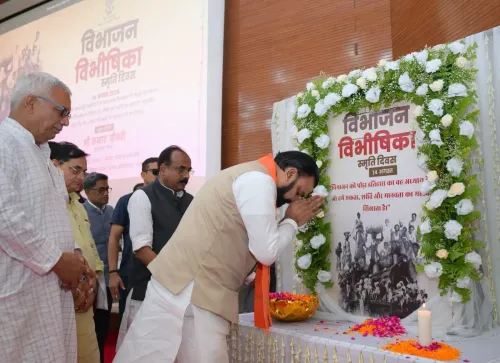
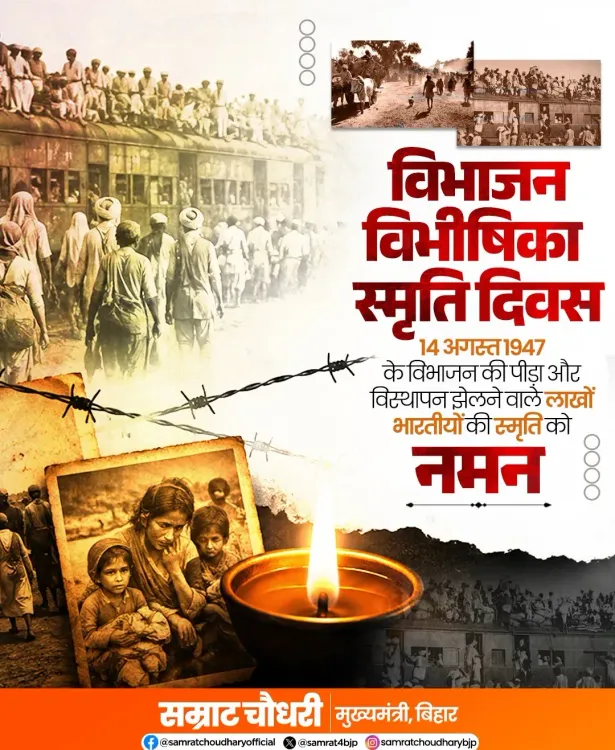
Bihar Chief Minister Samrat Choudhary on 14 August 2026 paid solemn tribute to victims and survivors of the 1947 Partition, calling it an indelible memory of pain and displacement for millions of families, on the nationally observed Partition Horrors Remembrance Day.
Key Takeaways
Bihar CM Samrat Choudhary posted a solemn tribute on 14 August 2026 for Partition Horrors Remembrance Day.
He described the 1947 Partition as 'an indelible memory of pain, displacement, and struggle of millions of families' — not merely a historical chapter.
The Union Government declared 14 August as Partition Horrors Remembrance Day in 2021 to honour victims of the Partition.
The 1947 Partition caused an estimated 10 to 20 million displacements and hundreds of thousands of deaths.
BJP-led central and state governments have marked the date with official observances every year since 2021 .
Seventy-nine years after one of history's most violent mass displacements, the wounds of 1947 are still being counted — in families fractured across borders, in lives uprooted overnight, in a grief that no census can fully capture. On Partition Horrors Remembrance Day, 14 August 2026, Bihar Chief Minister Samrat Choudhary offered a solemn tribute to those who lost their lives and loved ones in the catastrophe of Partition.
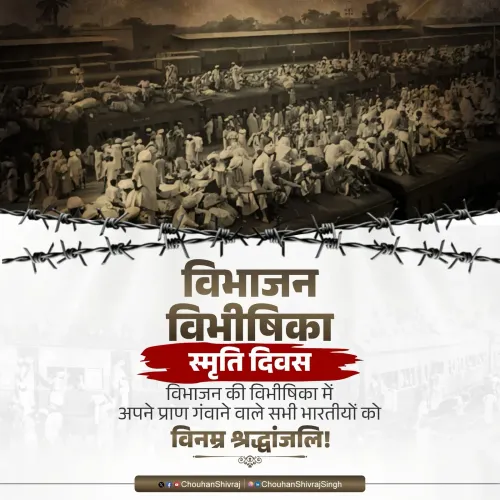
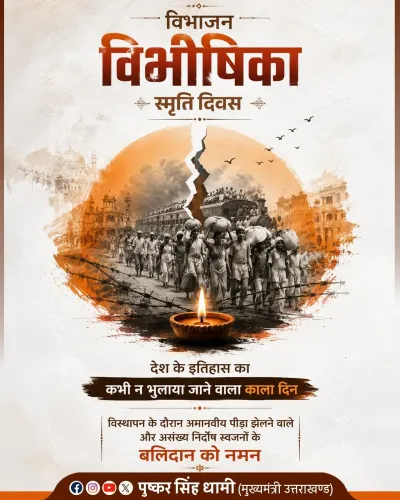
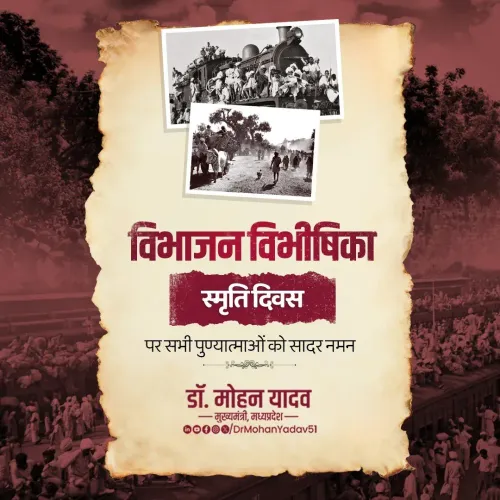
Posting in Hindi, CM Choudhary wrote: 'विभाजन की विभीषिका केवल इतिहास का एक अध्याय नहीं, बल्कि लाखों परिवारों के दर्द, विस्थापन और संघर्ष की अमिट स्मृति है' — 'The horrors of Partition are not merely a chapter in history, but an indelible memory of the pain, displacement, and struggle of millions of families.' He offered humble homage to all Indians who perished in the violence or endured the anguish of being separated from their own, saluting their courage, struggle, and sacrifice with the phrase 'शत्-शत् नमन' — a hundred-fold bow of reverence.
A day born from a nation's unresolved grief
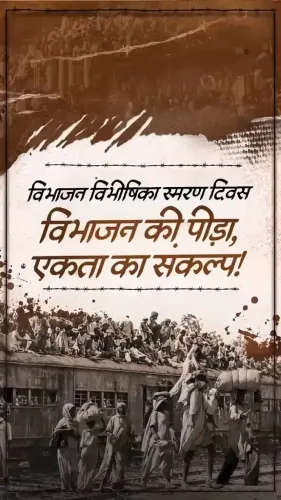
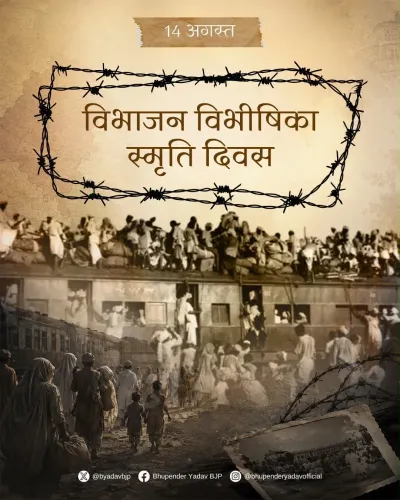
The observance has a deliberate origin. In 2021, the Union Government formally declared 14 August as Partition Horrors Remembrance Day — choosing the eve of Independence Day to ensure the cost of freedom is never decoupled from its celebration. The 1947 Partition of British India into India and Pakistan triggered one of the largest forced migrations in recorded history: estimates place the death toll in the hundreds of thousands, with 10 to 20 million people displaced across a newly drawn border.
Since that declaration, central and state governments have marked the date with official statements, cultural programmes, and survivor testimonies — an institutional effort to keep the human scale of that rupture visible in national memory, beyond textbook footnotes.
Bihar's voice in a national remembrance
CM Choudhary's statement places Bihar within that national chorus of remembrance. The post, tagged #PartitionHorrorsRemembranceDay, reflects the wider pattern of BJP-led governments anchoring the observance in official discourse each year. For the families of survivors — many of whom rebuilt lives in Bihar and across India after crossing the border with little more than the clothes they wore — such acknowledgements carry a weight that is anything but ceremonial.
The memory of Partition is not fading. It is being formally institutionalised — and on this day, Bihar's Chief Minister made clear that his state stands in that act of remembrance.
Point of View
Distinct from the celebratory register of Independence Day. For the BJP, the observance serves both a commemorative and a political function — foregrounding the trauma of Partition as a foundational national memory. State-level statements like CM Choudhary's extend that framing beyond Delhi, signalling that the remembrance is a party-wide, governance-level commitment rather than a Central Government gesture alone. Over time, the question will be whether the observance deepens into survivor-led, archival, or educational programming — or remains primarily in the register of annual official statements.
NationPress
29 Sept 2026
Frequently Asked Questions
What is Partition Horrors Remembrance Day?
Partition Horrors Remembrance Day is an annual national observance on 14 August , declared by the Union Government in 2021 , to honour the victims and survivors of the 1947 Partition of British India into India and Pakistan.
Why is Partition Horrors Remembrance Day observed on 14 August?
14 August — the eve of India's Independence Day — was chosen so that the immense human cost of Partition is remembered alongside the celebration of freedom, ensuring the two are not decoupled in national memory.
How many people were displaced in the 1947 Partition?
Estimates place the displacement at 10 to 20 million people , with hundreds of thousands killed in the accompanying communal violence — making it one of the largest forced migrations in recorded history.
What did Bihar CM Samrat Choudhary say on Partition Horrors Remembrance Day 2026?
Bihar Chief Minister Samrat Choudhary said the horrors of Partition are 'not merely a chapter in history, but an indelible memory of the pain, displacement, and struggle of millions of families,' and offered tribute to all who perished or were displaced.
When did India start observing Partition Horrors Remembrance Day?
The observance began in 2021 , when the Union Government formally declared 14 August as Partition Horrors Remembrance Day.