CM Dhami Pays Tribute on Partition Horrors Remembrance Day
Synopsis
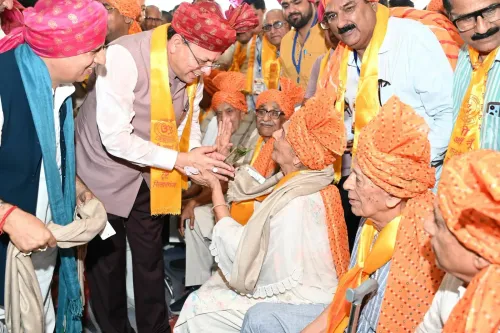
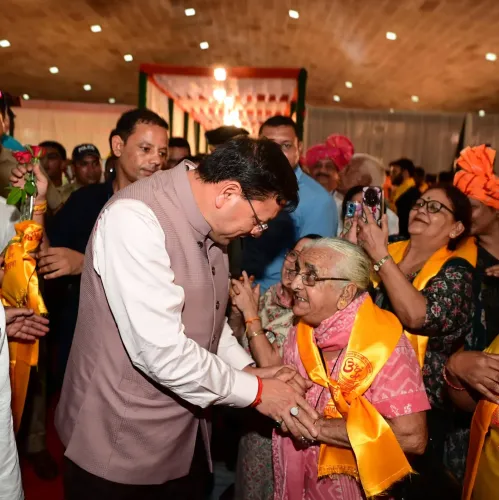
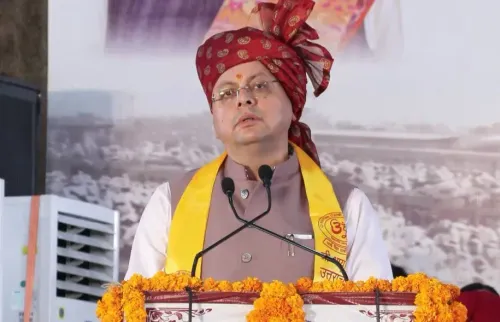
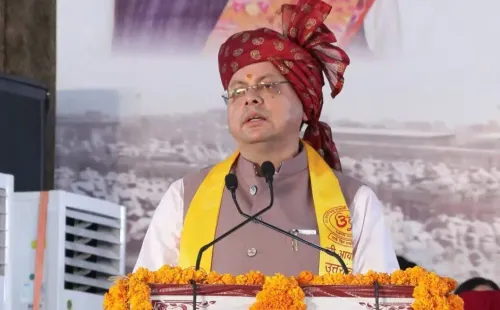
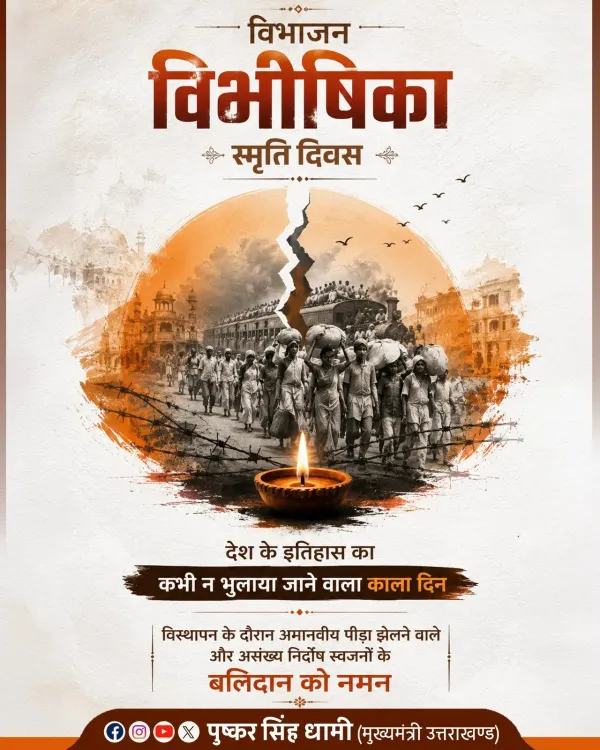
Uttarakhand Chief Minister Pushkar Singh Dhami marked Partition Horrors Remembrance Day on 14 August 2026 with a solemn tribute to those who suffered displacement, family separation, and loss in the 1947 division of British India into India and Pakistan.
Key Takeaways
Uttarakhand Chief Minister Pushkar Singh Dhami posted a tribute on 14 August 2026 for Partition Horrors Remembrance Day.
He honoured those who showed 'indomitable courage, patience, and humanity' amid the horrors of the 1947 Partition .
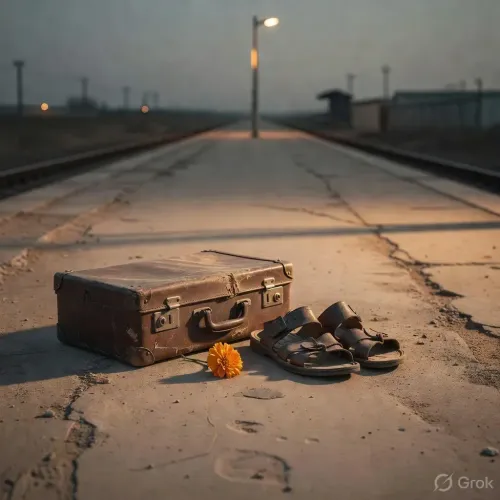
The post described Partition as not merely a division of borders but a rupture that separated families, destroyed homes, and extinguished crores of dreams.
14 August was designated Partition Horrors Remembrance Day by the Government of India in 2021 , placed a day before Independence Day to honour the human cost of 1947.
The observance has been marked annually by BJP-led state governments with statements focusing on the human, not merely territorial, dimensions of Partition.
Seventy-nine years after one of history's most violent mass displacements, Uttarakhand Chief Minister Pushkar Singh Dhami paused on 14 August 2026 to honour the millions who endured the catastrophe of India's Partition — not as a political statement, but as a solemn act of national remembrance.
In a post marking Partition Horrors Remembrance Day, CM Dhami offered what he called a 'bhavpurn naman' — a heartfelt salute — to those who, in his words, 'demonstrated indomitable courage, patience, and humanity while enduring unbearable pain amid the horrors of Partition.' The tribute was both personal in register and vast in its sweep, acknowledging the loss of homes, livelihoods, lifelong memories, and millions of futures cut short.
A Day Carved from Collective Grief
14 August was designated Partition Horrors Remembrance Day by the Government of India in 2021, deliberately placed a day before Independence Day to ensure the human cost of 1947 is never eclipsed by the celebration that follows. The 1947 Partition of British India into India and Pakistan triggered one of the largest forced migrations in recorded history — millions uprooted from their ancestral lands, families torn apart across newly drawn borders, and communal violence that left an indelible scar on the subcontinent's memory.
CM Dhami's post captured that weight precisely: 'The tragedy of communal partition was not merely a division of borders — it separated countless families from their own, devastated homes and courtyards, and left crores of dreams forever incomplete.' The language is deliberate, grounding the abstract horror in the intimate — a courtyard, a dream, a name left behind.
Pain That Lives in Collective Memory
What makes the annual observance significant is its insistence that Partition is not merely a chapter in a history textbook. As Dhami wrote, it is 'an eternal pain inscribed in our national consciousness' — one that continues to remind every generation of the stakes of humanity, unity, and brotherhood. Since the day's central notification, BJP-led state governments across India have marked it with statements and events that foreground the human cost of 1947 rather than its territorial or political dimensions alone.
For the survivors still living, and the descendants who carry inherited grief, the annual remembrance is less a political ritual than a public acknowledgement that their loss was real, immense, and still matters.
As long as those memories breathe in families across both nations, 14 August will carry two weights at once — the joy of a freedom won, and the grief of the price paid for it.
Point of View
Framed in the language of humanity and brotherhood rather than communal blame, reflects a calibrated register: solemn enough to honour genuine suffering, broad enough to avoid sharpening sectarian edges. The observance, instituted centrally in 2021, has given state leaders a recurring platform to connect local identity with a shared national wound. Whether the day deepens into a genuine site of historical reckoning or remains a ritual of political solidarity is the question each August will answer.
NationPress
28 Sept 2026
Frequently Asked Questions
What is Partition Horrors Remembrance Day?
Partition Horrors Remembrance Day is observed on 14 August every year. The Government of India designated this day in 2021 to commemorate the immense suffering, displacement, and loss of life caused by the 1947 Partition of British India into India and Pakistan.
Why is Partition Horrors Remembrance Day on 14 August?
The day falls on 14 August — the eve of India's Independence Day — to ensure the human cost of the 1947 Partition is acknowledged alongside the celebration of freedom, keeping both the grief and the triumph of that moment in national memory simultaneously.
What did CM Pushkar Singh Dhami say on Partition Horrors Remembrance Day 2026?
Uttarakhand Chief Minister Pushkar Singh Dhami offered a heartfelt tribute to those who endured the horrors of Partition, calling it 'not merely a division of borders' but a tragedy that separated families, destroyed homes, and left crores of dreams forever incomplete. He described the pain as 'an eternal sorrow inscribed in our national consciousness.'
How many people were displaced in the 1947 Partition of India?
The 1947 Partition of British India triggered one of the largest forced migrations in recorded history, with millions of people displaced across the newly created borders of India and Pakistan , accompanied by widespread communal violence and family separations.
Which state is Pushkar Singh Dhami the Chief Minister of?
Pushkar Singh Dhami is the Chief Minister of Uttarakhand and a senior leader of the Bharatiya Janata Party (BJP) .