CM Tamang Marks Partition Horrors Remembrance Day
Synopsis
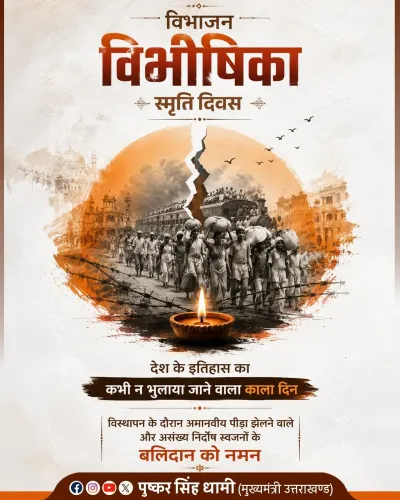
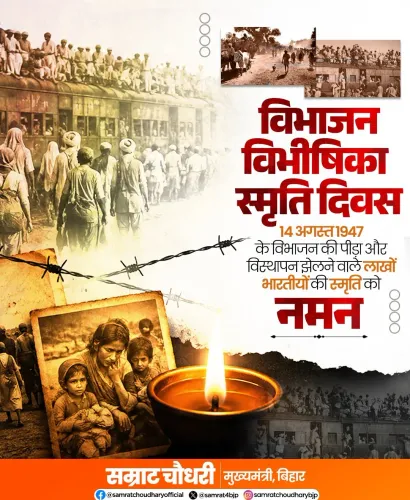
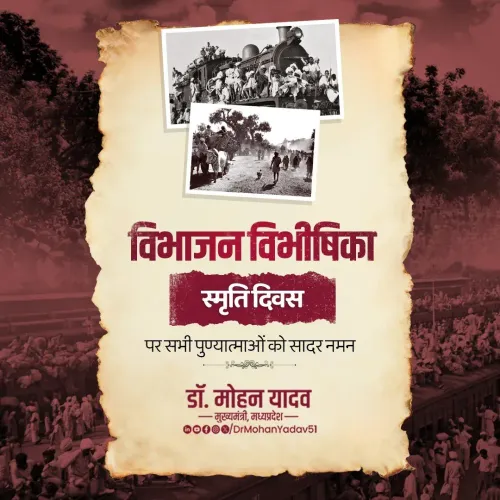
Sikkim Chief Minister Prem Singh Tamang marked Partition Horrors Remembrance Day on 14 August with a solemn call to remember the lives lost in 1947 and build a future grounded in unity, compassion, and harmony.
Key Takeaways
Sikkim Chief Minister Prem Singh Tamang posted a solemn tribute on Partition Horrors Remembrance Day, 14 August .
He called for remembering 'the lives lost, families displaced, and the immense suffering' of the 1947 Partition .
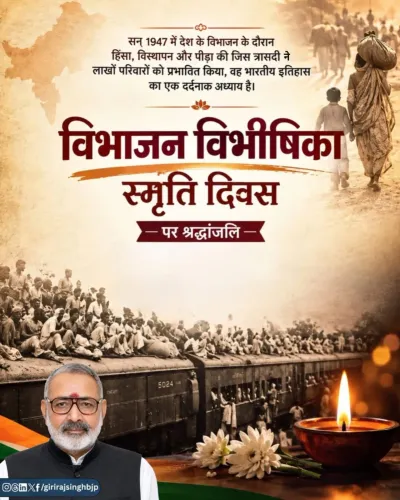
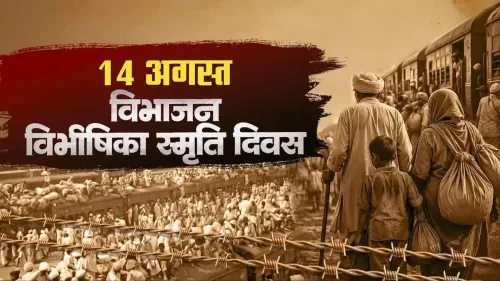
Partition Horrors Remembrance Day was declared by the Government of India in 2021 and falls annually on 14 August .
The 1947 Partition displaced an estimated 10 to 20 million people and caused mass communal violence.
CM Tamang urged drawing 'strength from the lessons' of the past and working toward 'unity, compassion, peace, and harmony.'
Every year on 14 August, India pauses to reckon with one of the most devastating ruptures in its modern history — and Sikkim Chief Minister Prem Singh Tamang joined that solemn national moment with a call for unity and compassion rooted in the memory of 1947.
In his message, CM Tamang wrote: 'On Partition Horrors Remembrance Day, we solemnly remember the lives lost, families displaced, and the immense suffering endured during a tragic chapter of our history. May we remember the atrocities of the past, draw strength from the lessons they teach us, and work towards a future founded on unity, compassion, peace, and harmony.'
A day born from a decision to never forget
The Government of India declared 14 August as Partition Horrors Remembrance Day in 2021 — a formal acknowledgement that the trauma of 1947 deserved its own place on the national calendar. The Partition displaced an estimated 10 to 20 million people and claimed hundreds of thousands of lives in communal violence, making it one of the largest forced migrations in recorded history.
The observance sits one day before Independence Day, a deliberate juxtaposition: freedom and its cost, side by side. Schools, government offices, and civil society groups across the country use the date to reflect on that cost and on the imperative of communal harmony.
Tamang's message in the broader remembrance
CM Tamang, the founder-president of the Sikkim Krantikari Morcha, joins a chorus of leaders across party lines who mark the day each year. His framing — drawing 'strength from the lessons' of atrocity and building toward 'unity, compassion, peace, and harmony' — reflects the tone the observance was designed to carry: grief without bitterness, memory without incitement.
For Sikkim, a state that joined the Indian Union in 1975 and carries its own distinct history of integration, such national remembrances also serve as a thread connecting the state to the wider arc of the republic's founding trauma.
The past does not stay past. How a nation chooses to remember it shapes what it builds next.
Point of View
Instituted in 2021, has become a fixture of India's annual political calendar, drawing statements from leaders across the ideological spectrum. CM Tamang's message follows that pattern — grief framed as a foundation for unity, not division. For a ruling party like the Sikkim Krantikari Morcha, whose base is a small Himalayan state with its own complex history of national integration, aligning with pan-India remembrance days also serves a subtle federalist purpose: affirming Sikkim's place within the republic's shared memory. The day's positioning on the eve of Independence Day continues to make it a powerful symbolic counterweight — liberty and its human price, inseparable.
NationPress
29 Sept 2026
Frequently Asked Questions
What is Partition Horrors Remembrance Day?
Partition Horrors Remembrance Day is a national observance held every year on 14 August in India, declared by the Government of India in 2021 , to commemorate the lives lost and families displaced during the 1947 Partition of British India.
Why is Partition Remembrance Day observed on 14 August?
14 August was chosen because it falls one day before India's Independence Day on 15 August , placing the memory of the Partition's human cost directly alongside the celebration of freedom.
What did Sikkim CM Prem Singh Tamang say on Partition Remembrance Day?
CM Prem Singh Tamang called for solemnly remembering 'the lives lost, families displaced, and the immense suffering' of the Partition, and urged Indians to 'work towards a future founded on unity, compassion, peace, and harmony.'
When was Partition Horrors Remembrance Day declared?
The Government of India declared 14 August as Partition Horrors Remembrance Day in 2021 .
Who is Prem Singh Tamang?
Prem Singh Tamang is the Chief Minister of Sikkim and the founder-president of the Sikkim Krantikari Morcha (SKM) , the ruling party in the state.