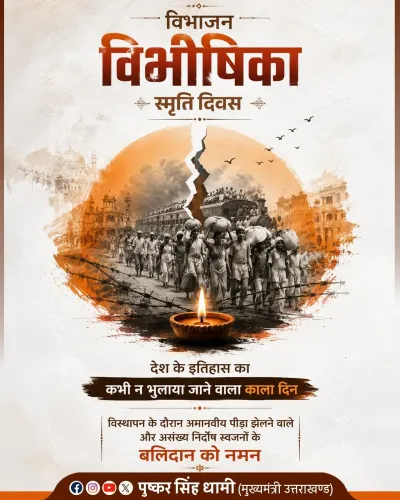
CM Dhami marks Partition Day, blames Congress for 1947 tragedy
Synopsis
On Partition Horrors Remembrance Day, Uttarakhand CM Pushkar Singh Dhami blamed the then-Congress leadership's 'power hunger' and 'one family's political ambition' for the 1947 partition tragedy, calling for stronger national unity and lessons from history.
Key Takeaways
Uttarakhand CM Pushkar Singh Dhami posted on 14 August 2026 , marking Partition Horrors Remembrance Day.
He blamed the 'power hunger of the then-Congress leadership and the political ambition of one family' for the 1947 partition.
Partition Horrors Remembrance Day was declared by the central government in 2021 to be observed every 14 August .
The 1947 partition displaced an estimated 10–20 million people and caused massive communal violence.
BJP leaders have consistently used this day since 2014 to attribute partition's costs to Congress-era decisions.
Dhami called for drawing lessons from history to strengthen national unity, integrity, and social harmony.
Seventy-nine years after the bloodiest border was drawn in modern history, Uttarakhand Chief Minister Pushkar Singh Dhami used Partition Horrors Remembrance Day on 14 August 2026 to lay the moral weight of that catastrophe squarely at the feet of the then-Congress leadership — and to demand that India never forget the lesson.
Dhami wrote in Hindi: 'Durbhagyapurn hai ki tatkalin Congress netritva ki satta ki bhukh aur ek parivar ki rajnitik mahatvakansha ne desh ko aise vibhajan ki trasadi ki or dhakela' — 'It is unfortunate that the power hunger of the then-Congress leadership and the political ambition of one family pushed the country toward the tragedy of such a partition, whose pain was borne by crores of people and whose price was paid by generations.'
A day built from the ruins of 1947
Partition Horrors Remembrance Day was instituted by the central government in 2021, designating 14 August — the day Pakistan came into being — as an annual occasion to honour the millions displaced, killed, or shattered by the 1947 division of British India. The violence that accompanied partition is estimated to have claimed between 200,000 and 2 million lives, with roughly 10 to 20 million people uprooted in one of history's largest forced migrations.
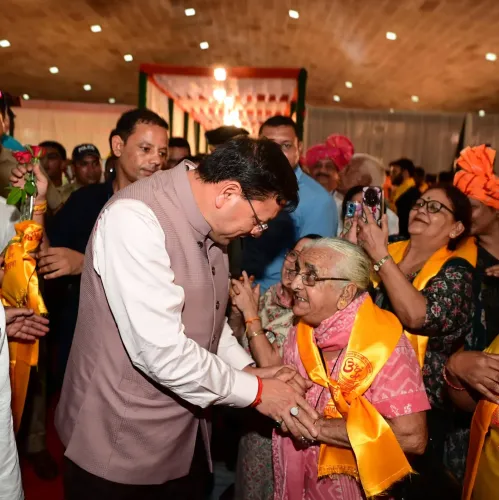
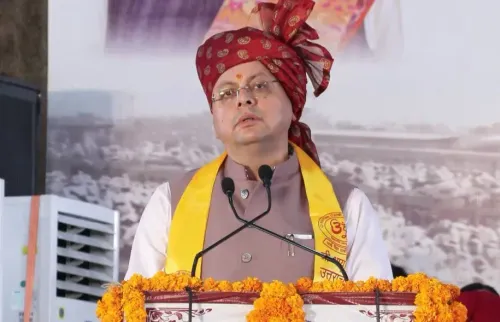
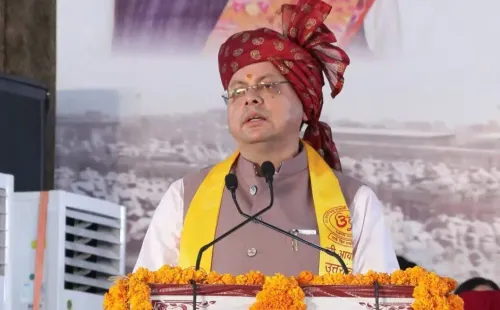
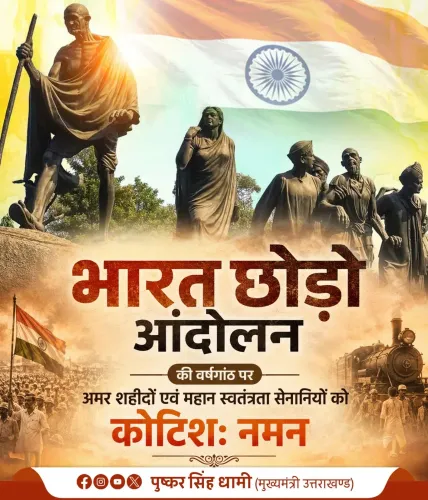
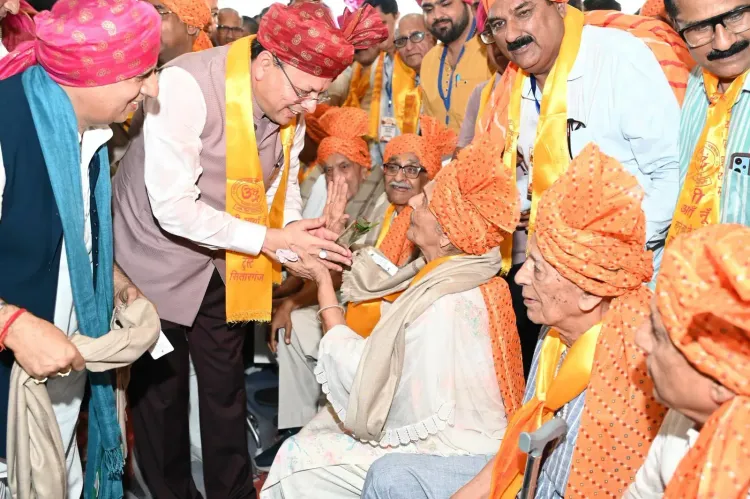
Dhami's post carries four images, underlining the visual weight the BJP attaches to this commemoration. His framing — 'one family's political ambition' — is a recurring shorthand in BJP political messaging that points to the Nehru-Gandhi dynasty, though the post does not name individuals explicitly.
BJP's annual reckoning with partition history
Since 2014, BJP-led governments and leaders have consistently marked 14 August with statements that recall partition's human toll and attribute responsibility to Congress-era decisions. The pattern is deliberate: by institutionalising remembrance, the party seeks to anchor a counter-narrative to the dominant independence-movement story in which Congress is the unambiguous hero.
Dhami closed with a forward-looking resolve: remembering those decisions today is necessary 'so that lessons can be drawn from history and the resolve to give the highest priority to the nation's unity, integrity, and social harmony grows stronger.' The framing is both a condemnation and a mobilisation — grief weaponised into a pledge.
As India marks its 80th Independence Day on 15 August 2026, the political contest over who owns the memory of 1947 is as live as ever — and statements like Dhami's ensure that partition, not just freedom, stays at the centre of that conversation.
Point of View
The party uses 14 August to foreground partition's trauma and assign political culpability to Congress. Institutionalising Partition Horrors Remembrance Day in 2021 gave this narrative an official calendar anchor, making it harder for opponents to dismiss as mere electioneering. The 'one family' phrasing deliberately evokes dynastic critique without requiring a named target, broadening the political indictment while retaining deniability. With the 80th Independence Day falling the next day, the timing amplifies the contrast the BJP wants voters to carry into the celebrations.
NationPress
28 Sept 2026
Frequently Asked Questions
What is Partition Horrors Remembrance Day?
Partition Horrors Remembrance Day is observed every year on 14 August in India. It was declared by the central government in 2021 to honour the memory of the millions who suffered, were displaced, or died during the 1947 partition of British India into India and Pakistan.
What did CM Dhami say about the 1947 partition?
Uttarakhand CM Pushkar Singh Dhami said it was 'unfortunate' that the 'power hunger of the then-Congress leadership and the political ambition of one family' pushed the country toward the partition tragedy, whose pain was borne by crores of people across generations.
Why do BJP leaders blame Congress for the partition?
Since 2014 , BJP-led governments and leaders have regularly argued that decisions taken by the Congress-led interim government in 1946–47 — including negotiations over the transfer of power — contributed to the partition. This forms a recurring theme in BJP political messaging around national unity.
When was Partition Horrors Remembrance Day started in India?
The central government instituted Partition Horrors Remembrance Day in 2021 , designating 14 August each year as the day of commemoration.
How many people were affected by the 1947 partition of India?
The 1947 partition is estimated to have displaced between 10 and 20 million people and caused communal violence that claimed hundreds of thousands — by some estimates up to two million — lives, making it one of the largest forced migrations in history.