CM Dhami Recalls Partition Horror on Remembrance Day
Synopsis
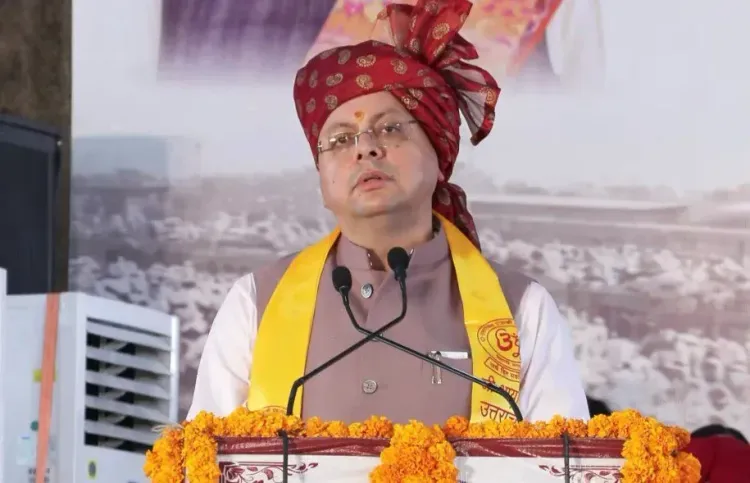
On Partition Horrors Remembrance Day, Uttarakhand Chief Minister Pushkar Singh Dhami recalled the 1947 Partition's devastating toll, evoking the haunting image of trains that carried corpses instead of passengers — a grief beyond imagination, he said.
Key Takeaways
Pushkar Singh Dhami , Chief Minister of Uttarakhand, marked Partition Horrors Remembrance Day on 14 August 2026 with a solemn statement.
He recalled that during the 1947 Partition , trains arrived carrying corpses rather than passengers — one of the era's most haunting symbols of mass violence.
The Government of India notified 14 August as Partition Horrors Remembrance Day in 2021 to institutionalise annual commemoration of Partition suffering.
The 1947 Partition displaced millions and killed hundreds of thousands in communal violence across Punjab , Bengal , and other regions.
Dhami's statement forms part of a nationwide annual pattern of political leaders honouring Partition victims and survivors on this date.
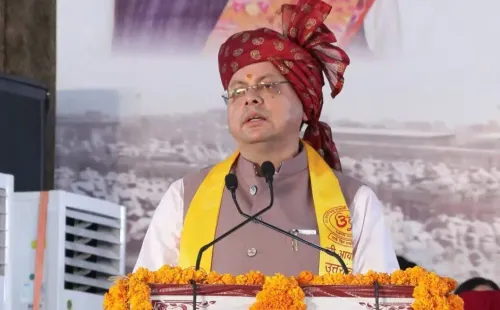
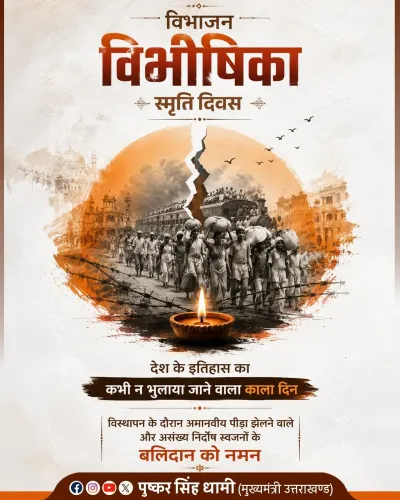
Trains that once carried passengers came back carrying only corpses. On 14 August 2026 — Partition Horrors Remembrance Day — Uttarakhand Chief Minister Pushkar Singh Dhami invoked that searing image to remind the nation of the unimaginable suffering that accompanied the 1947 division of India.
Dhami's words, shared by the Chief Minister's Office of Uttarakhand, were stark and unsparing: 'विभाजन के उस दौर में लोगों ने जो पीड़ा झेली, उसकी कल्पना नहीं की जा सकती।' ['The suffering people endured during the era of Partition is beyond imagination. It was a horrifying sight. At that time, trains would arrive not with passengers but with corpses.']
A Day the Nation Chose Not to Forget
The observance is not incidental. In 2021, the Government of India formally notified 14 August as Partition Horrors Remembrance Day, institutionalising annual reflection on the mass violence, displacement, and grief that accompanied the birth of two nations. Millions were uprooted; hundreds of thousands were killed in communal carnage that swept across Punjab, Bengal, and beyond.
The train — once the symbol of colonial modernity connecting a subcontinent — became, in those months of 1947, a vessel of death. Entire carriages arrived at border stations filled with the bodies of those who had set out hoping for safety on the other side. It is this image that Dhami placed at the centre of his statement.
Partition Families and the Politics of Memory
Across India, political leaders mark 14 August with statements honouring the survivors and victims of Partition — a pattern that has grown more structured since the 2021 central notification. For the families of those who lived through displacement, such annual observances represent official acknowledgement of a trauma that for decades remained on the margins of public commemoration.
Dhami, who represents the BJP and has served as Chief Minister of Uttarakhand since 2021, framed the remembrance in human terms rather than political ones — letting the horror of the image speak for itself.
Seventy nine years on, the trains run on schedule. But the memory of what they once carried refuses to leave the platform.
Point of View
Embedding Partition grief into the annual civic calendar. Dhami's invocation of the 'corpse trains' imagery signals how the observance has moved from bureaucratic notification to visceral public storytelling. The long term question is whether this remembrance culture translates into archival, educational, or welfare initiatives for surviving Partition affected families.
NationPress
29 Sept 2026
Frequently Asked Questions
What is Partition Horrors Remembrance Day?
Partition Horrors Remembrance Day is observed every year on 14 August in India. The Government of India notified the day in 2021 to commemorate the suffering, displacement, and mass violence that accompanied the 1947 Partition of the subcontinent into India and Pakistan.
What did Uttarakhand CM Pushkar Singh Dhami say about the Partition?
CM Pushkar Singh Dhami said the suffering people endured during Partition is beyond imagination, describing it as a horrifying sight. He specifically recalled that trains, instead of carrying passengers, would arrive filled with corpses during the violence of 1947 .
When was Partition Horrors Remembrance Day first observed?
The Government of India notified 14 August as Partition Horrors Remembrance Day in 2021 , and it has been observed annually since then, with political leaders across the country issuing statements honouring victims and survivors.
How many people were affected by the 1947 Partition of India?
The 1947 Partition is one of the largest forced migrations in human history, displacing an estimated 10 to 20 million people and resulting in the deaths of hundreds of thousands in communal violence, particularly in Punjab and Bengal .
Who is Pushkar Singh Dhami?
Pushkar Singh Dhami is the Chief Minister of Uttarakhand , representing the BJP . He has held the post since 2021 .