Rajnath Singh pays tribute on Partition Horrors Remembrance Day
Synopsis
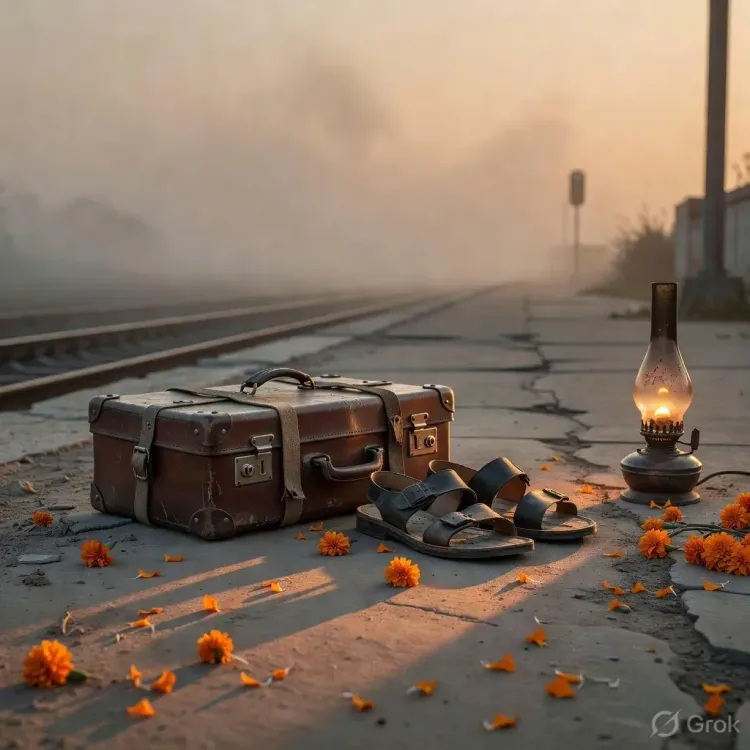
Union Defence Minister Rajnath Singh marked Partition Horrors Remembrance Day on 14 August 2026 with a tribute to the millions killed and displaced in the 1947 Partition, urging India to draw lessons from that tragedy and build a society where such division never recurs.
Key Takeaways
Rajnath Singh posted a solemn tribute on 14 August 2026 marking Partition Horrors Remembrance Day .
He paid homage to all known and unknown victims of the 1947 Partition of India and to families displaced from their homeland.
Singh called remembrance a duty, urging India to build a 'strong, harmonious and compassionate' nation that never repeats the pain of partition.
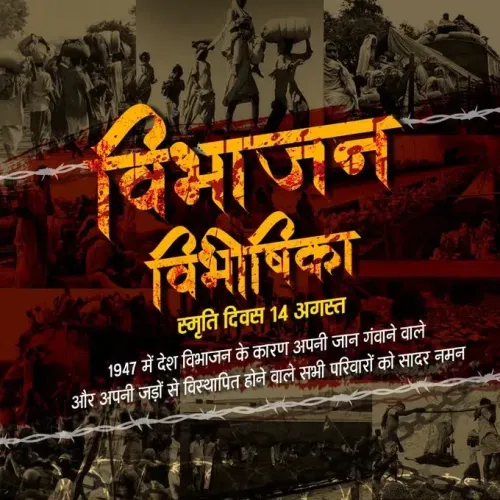
Partition Horrors Remembrance Day was instituted by Prime Minister Narendra Modi in 2021 and is observed annually on 14 August .
The observance falls one day before Independence Day (15 August) , pairing national grief with national celebration.
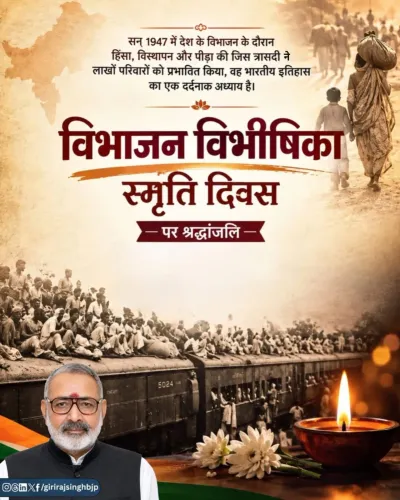
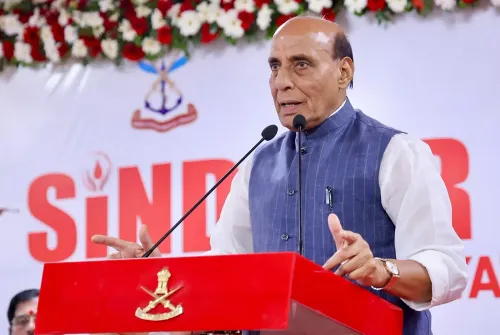
On the eve of Independence Day, Union Defence Minister Rajnath Singh offered a solemn tribute to the millions displaced and killed in the 1947 Partition of India — a wound that cut across generations and geographies — marking Partition Horrors Remembrance Day on 14 August 2026.
In a post in Hindi, Singh wrote: 'Partition Horrors Remembrance Day reminds us of the tragedy of India's partition, which filled the lives of millions of families with deep grief, displacement and uncertainty. It is not merely a painful chapter of history, but also a memory of the struggle, courage, sacrifice and patience of countless people who, despite losing their homes, families, property and loved ones, showed the resolve to rebuild their lives.'
Singh added that remembrance alone is not enough. 'It is our duty to learn from history's wounds and build a strong, harmonious and compassionate India where the pain of partition never has to be endured by any society again.' He closed with a personal tribute: 'My humble homage to all known and unknown people who gave their lives in the horrors of the country's partition, and to the countless families displaced from their homeland and roots.'
A day born from the weight of 1947
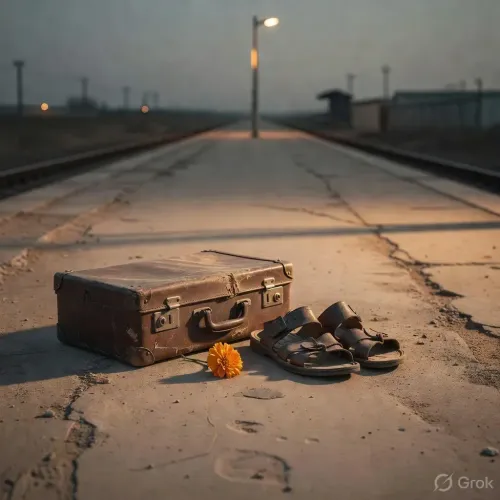
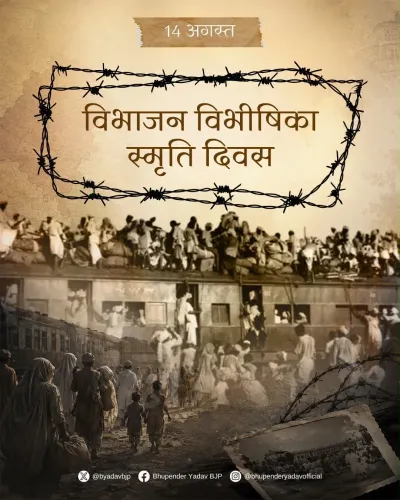
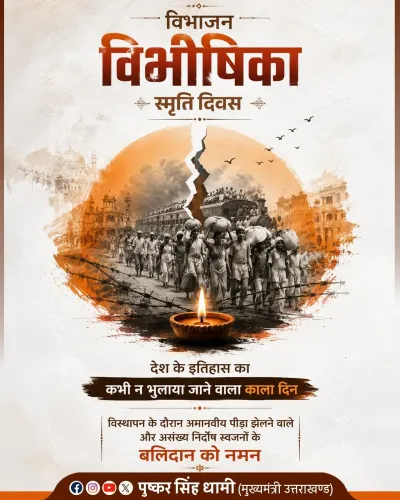
Prime Minister Narendra Modi announced in 2021 that 14 August would be observed annually as Partition Horrors Remembrance Day — a formal acknowledgement of the human catastrophe that accompanied the birth of independent India and Pakistan. The 1947 Partition triggered one of the largest forced migrations in recorded history, with estimates of those displaced running into the millions and the death toll counted in hundreds of thousands.
The observance falls one day before Independence Day on 15 August — a deliberate placement that sets grief and gratitude side by side, asking the nation to hold both at once.
Remembrance as a call to national unity
Singh's message carries a forward-looking charge embedded inside a tribute. The framing — honour the past, but build a future that never repeats it — has become the defining note of official commemoration of this day since its institution. For survivors and their descendants, many of whom still carry the lived memory of uprooting, the annual observance is both validation and vigil.
As India marks its 80th year of independence, the voices of those who crossed borders with nothing but survival are fading into archive and oral history. The day asks the country not to let that silence become forgetting.
Point of View
Such observances also carry demographic urgency — the generation with first-hand memory of partition is nearly gone, making official commemoration the primary keeper of that history.
NationPress
29 Sept 2026
Frequently Asked Questions
What is Partition Horrors Remembrance Day?
Partition Horrors Remembrance Day is an annual observance held on 14 August to honour the victims of the 1947 Partition of India . It was instituted by Prime Minister Narendra Modi in 2021 to keep the memory of the partition's human cost alive.
Why is Partition Horrors Remembrance Day on 14 August?
14 August is observed as Partition Horrors Remembrance Day — one day before India's Independence Day on 15 August — so that the nation acknowledges the grief and displacement that accompanied independence alongside its celebration.
What did Rajnath Singh say on Partition Horrors Remembrance Day 2026?
Rajnath Singh offered a tribute to all known and unknown victims of the 1947 Partition and to displaced families, and called on India to build a 'strong, harmonious and compassionate' society so that the pain of partition is never repeated.
How many people were displaced in the 1947 Partition of India?
The 1947 Partition triggered one of the largest forced migrations in history, with millions of people displaced across the India-Pakistan border and hundreds of thousands killed in accompanying violence.
Who instituted Partition Horrors Remembrance Day in India?
Prime Minister Narendra Modi announced in 2021 that 14 August would be observed each year as Partition Horrors Remembrance Day to honour partition victims and keep their memory alive.