PM Modi marks Partition Horrors Remembrance Day
Synopsis
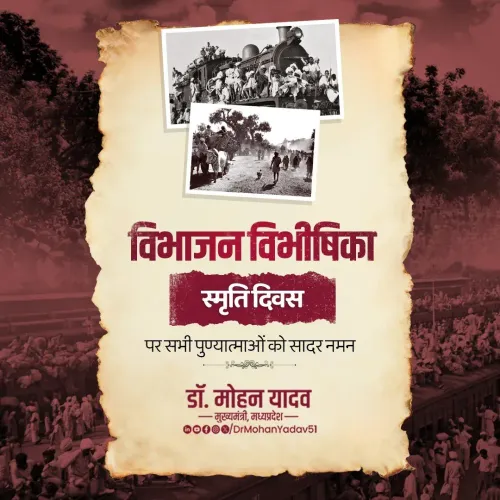
Prime Minister Narendra Modi marked Partition Horrors Remembrance Day on 14 August, honouring the courage of those uprooted and bereaved by the 1947 division of British India — an annual observance the government instituted in 2021 to keep the human cost of independence in national memory.
Key Takeaways
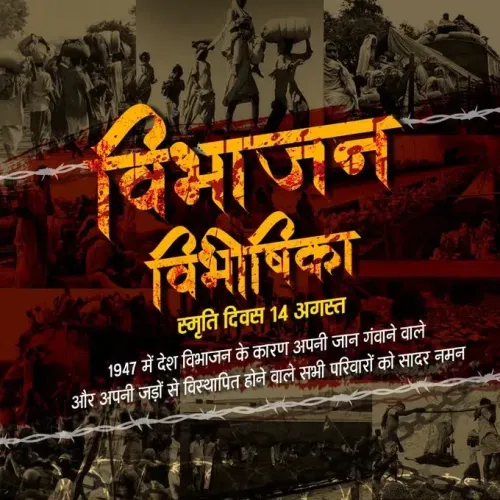
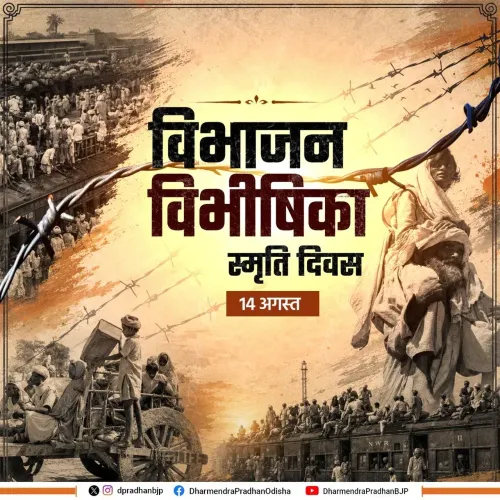
14 August is observed annually as Partition Horrors Remembrance Day , instituted by the Ministry of Home Affairs in 2021 .
The 1947 Partition displaced an estimated 10 to 20 million people and caused communal violence that killed hundreds of thousands.
PM Modi's message honoured the 'courage of all those who were impacted by Partition' and acknowledged families uprooted and loved ones lost.
The date falls on the eve of Independence Day (15 August) , pairing remembrance of cost with celebration of freedom.
The observance is part of a broader government effort to document and preserve the history of Partition-era migration and violence.
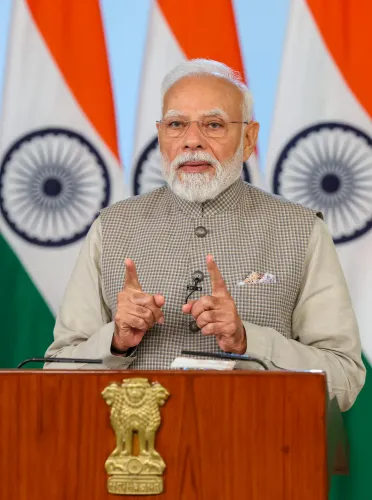
Seventy-nine years after one of history's most violent mass displacements, Prime Minister Narendra Modi paused on 14 August to honour the millions whose lives were shattered by the 1947 Partition of India — a wound the nation has carried across generations.
In his post, the Prime Minister wrote: 'We recall the courage of all those who were impacted by Partition. It was a moment in history that tore apart several lives… families were uprooted, loved ones were lost and immense suffering was endured.'
A day born from the scale of 1947's tragedy
The observance has its roots in a 2021 decision by the Ministry of Home Affairs, which formally designated 14 August as Partition Horrors Remembrance Day. The date — the eve of India's Independence Day — was chosen deliberately: a moment to sit with the cost of freedom before the celebrations of 15 August begin.
Historians estimate that the Partition uprooted between 10 and 20 million people, making it one of the largest forced migrations in recorded history. Communal violence claimed hundreds of thousands of lives across the newly drawn borders of India and Pakistan.
Remembrance as national policy
Since its institution, the annual observance has become a fixed point in India's official calendar — a government acknowledgement that the trauma of 1947 deserves its own space in collective memory, distinct from the triumph of independence. The broader pattern has included discussions around archival projects and school curricula that document the scale of displacement and loss.
For the families of survivors — now into their third and fourth generations — the day carries a weight no policy document can fully capture. The Prime Minister's message, brief as it is, lands on a date when that weight is felt most acutely.
As India marks another year of independence, the remembrance of what it cost remains the other side of that story — one the country is still, slowly, learning to tell in full.
Point of View
And preceding, Independence Day celebrations. Institutionalising the date in 2021 was a signal that the state would own this history rather than leave it to family memory alone. Repeated high-level messaging on the day reinforces that framing, keeping the Partition's human cost visible in public discourse across generations that did not live it.
NationPress
28 Sept 2026
Frequently Asked Questions
What is Partition Horrors Remembrance Day?
Partition Horrors Remembrance Day is observed every year on 14 August to commemorate the suffering, displacement, and loss of life caused by the 1947 Partition of British India into the independent nations of India and Pakistan. The day was formally instituted by India's Ministry of Home Affairs in 2021 .
Why is Partition Horrors Remembrance Day on 14 August?
14 August was chosen because it falls on the eve of India's Independence Day (15 August) , placing the remembrance of Partition's human cost immediately before the national celebration of freedom — a deliberate pairing of grief and gratitude.
How many people were displaced during the 1947 Partition?
Historians estimate that the 1947 Partition displaced between 10 and 20 million people , making it one of the largest forced migrations in recorded history. Communal violence accompanying the division claimed hundreds of thousands of lives.
When did India officially recognise Partition Horrors Remembrance Day?
The Ministry of Home Affairs officially notified 14 August as Partition Horrors Remembrance Day in 2021 , under the Modi government.
What did PM Modi say on Partition Horrors Remembrance Day?
PM Modi wrote that the day recalls 'the courage of all those who were impacted by Partition,' describing it as a moment that 'tore apart several lives' — with families uprooted, loved ones lost, and immense suffering endured.