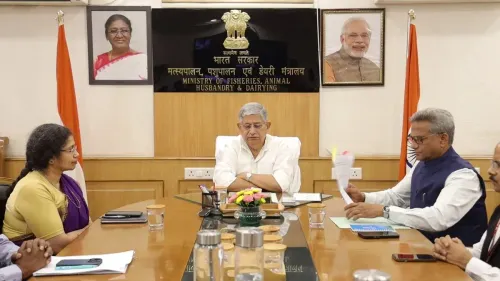
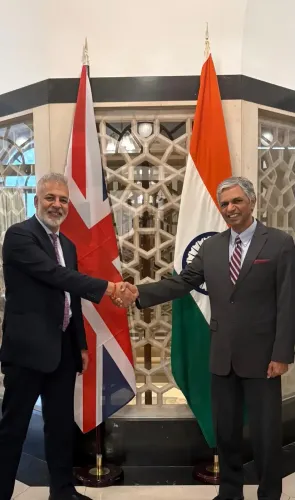
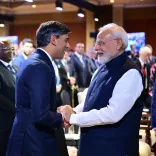
Lalan Singh holds bilateral talks with UK's Dame Angela Eagle on animal husbandry
Synopsis
Union Minister Rajiv Ranjan Singh (Lalan Singh) held bilateral talks with UK Secretary of State Dame Angela Eagle on October 13, 2026, to deepen cooperation in animal husbandry, dairy, and allied sectors — advancing India-UK engagement alongside ongoing FTA negotiations.
Key Takeaways
Union Minister Lalan Singh held bilateral talks with UK Secretary of State Dame Angela Eagle on October 13, 2026 .
The discussions focused on deepening cooperation in animal husbandry and allied sectors , including dairy and fisheries.
The talks build on the India-UK Enhanced Trade Partnership launched in 2021 and FTA negotiations begun in January 2022 .
Key areas for potential progress include technology transfer, cold-chain investment, and sanitary and phytosanitary standards .
Analysts will watch for follow-up MoUs or joint working groups emerging from the bilateral engagement.
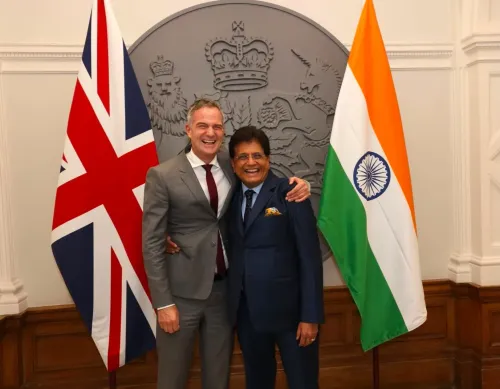
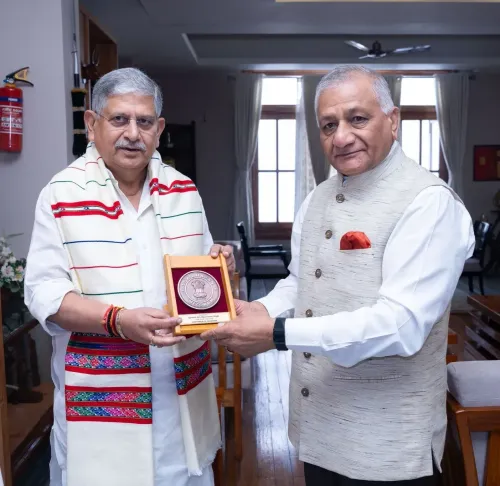
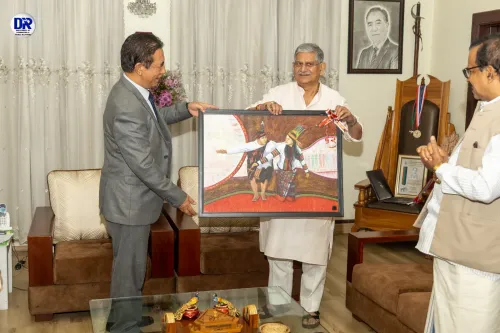
India's livestock and dairy diplomacy moved into sharper focus on Tuesday, October 13, 2026, when Union Panchayati Raj and Fisheries Minister Rajiv Ranjan Singh — popularly known as Lalan Singh — sat down with UK Secretary of State Dame Angela Eagle for bilateral discussions aimed at deepening cooperation in animal husbandry and allied sectors.
Where the India-UK agricultural partnership stands
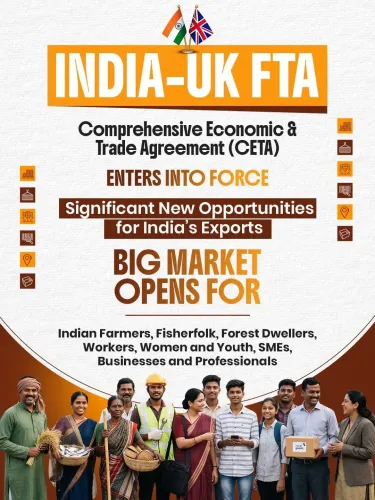
The meeting did not happen in a vacuum. India and the United Kingdom launched their Enhanced Trade Partnership in 2021, and formal negotiations for a comprehensive India-UK Free Trade Agreement began in January 2022, with dedicated chapters covering agriculture and dairy. That framework has since provided the scaffolding for targeted sectoral dialogues — exactly the kind Singh and Eagle sat down for today.
The sectors on the table matter enormously to India's rural economy. Animal husbandry, dairy processing, and fisheries together support hundreds of millions of livelihoods, from Bihar's cattle farmers to coastal fisheries cooperatives along India's eastern and western seaboards. Progress in these talks could open corridors for British technology transfer, cold-chain investment, and market access — areas where the UK has consistently positioned itself as a partner of choice since its exit from the European Union.
Why a post-Brexit UK is eager for this dialogue
London has moved deliberately to diversify its agricultural trade relationships after Brexit removed the buffer of EU single-market rules. India — with one of the world's largest dairy and livestock sectors — represents a high-value strategic partner, not just a large consumer market. For New Delhi, the calculus is equally clear: modernising animal husbandry and fisheries value chains requires technology and standards expertise that bilateral UK partnerships can accelerate, complementing domestic schemes under the Ministry of Fisheries, Animal Husbandry and Dairying.
Lalan Singh brings considerable political weight to these talks. As a senior Janata Dal (United) leader from Bihar — a state where livestock farming is central to the agrarian economy — he carries both ministerial authority and a ground-level understanding of what cooperation must ultimately deliver for rural households.
What analysts will watch next
The immediate question is whether today's talks produce a concrete follow-up — a joint working group, a memorandum of understanding, or a specific commitment on sanitary and phytosanitary measures, which remain among the most contested chapters in the broader FTA negotiation. Any such outcome would mark a tangible step forward in a partnership that has moved in fits and starts since 2022.
If today's conversation translates into a formal bilateral mechanism on animal husbandry, India's dairy farmers and fisheries cooperatives may eventually feel its effects — one trade chapter at a time.
Point of View
Whose JD(U) base is rooted in Bihar's agrarian economy, these talks carry domestic political resonance alongside diplomatic value. The dairy and fisheries chapters of the India-UK FTA have historically been flashpoints over sanitary standards; a bilateral mechanism at this level could help defuse technical disagreements before they calcify into negotiating deadlocks. Watch this space for whether a working-group announcement follows — that would signal real momentum, not just goodwill.
NationPress
13 Oct 2026
Frequently Asked Questions
Who is Dame Angela Eagle and what is her role in the India-UK talks?
Dame Angela Eagle is a UK Labour MP serving as Secretary of State. She met Union Minister Lalan Singh on October 13, 2026, to discuss bilateral cooperation in animal husbandry and allied sectors between India and the United Kingdom.
What is the India-UK Free Trade Agreement and where do agriculture talks stand?
The India-UK Free Trade Agreement negotiations were formally launched in January 2022, building on the Enhanced Trade Partnership of 2021. Agriculture and dairy chapters remain among the more complex sections, with sanitary and phytosanitary standards being a key sticking point.
Who is Lalan Singh and which ministry does he head?
Lalan Singh, formally known as Rajiv Ranjan Singh, is a senior Janata Dal (United) leader from Bihar. He serves as Union Minister for Panchayati Raj, Fisheries, Animal Husbandry and Dairying in the central government.
What sectors are covered in India-UK animal husbandry cooperation talks?
The bilateral cooperation discussions cover animal husbandry, dairy processing, and fisheries — sectors critical to India's rural economy. Potential areas of UK partnership include technology transfer, cold-chain infrastructure, and market access for processed products.
What should we watch for after the Lalan Singh-Angela Eagle bilateral meeting?
Key outcomes to watch include the announcement of joint working groups, memoranda of understanding, or specific commitments on sanitary and phytosanitary measures — any of which would signal concrete progress beyond the goodwill of the meeting itself.