Rahul Gandhi Targets Gyanesh Kumar, Calls ECI Appointment 'Match-Fixing'

Synopsis
Congress leader Rahul Gandhi accused Election Commissioner Gyanesh Kumar of having recruited for the BJP as a serving IAS officer before being appointed under the 2023 law that removed the Chief Justice from the selection panel — reigniting the debate over the Election Commission of India's independence.
Key Takeaways
Rahul Gandhi on 26 September 2026 alleged that Election Commissioner Gyanesh Kumar was used to recruit for the BJP while still a serving IAS officer .
Gandhi described Kumar as an 'umpire' placed by Modi and Shah to 'match-fix' India's elections.
In 2023 , Parliament replaced the Supreme Court-mandated selection panel — which included the Chief Justice — with an executive-headed committee to appoint election commissioners.
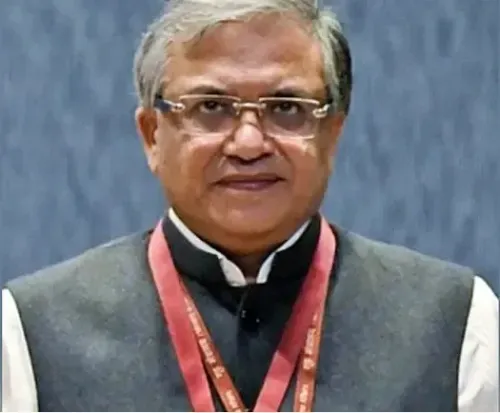
Gyanesh Kumar was appointed under this new framework, making him a focal point of the institutional independence debate.
The constitutional validity of the 2023 appointment law remains subject to Supreme Court scrutiny.
The specific claim about Kumar's prior BJP recruitment role is an unverified allegation and is not independently confirmed by public record.
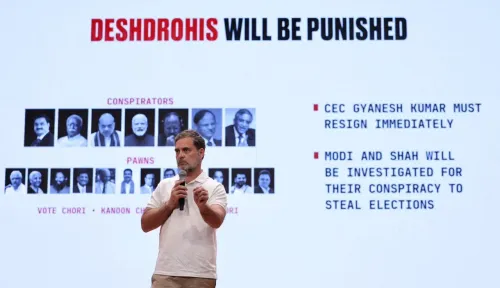
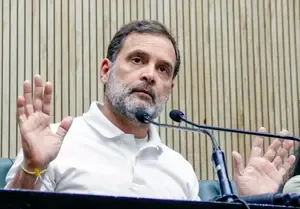
The integrity of India's electoral machinery is once again at the centre of a sharp political confrontation. Congress leader Rahul Gandhi, in a post on X on Saturday, 26 September 2026, alleged that Election Commissioner Gyanesh Kumar — a serving IAS officer at the time — was first used to recruit for the Bharatiya Janata Party before being installed by Prime Minister Narendra Modi and Home Minister Amit Shah to oversee the country's elections.
Gandhi's language was deliberately blunt. He wrote: 'First, Gyanesh Kumar — then a serving IAS officer — was used to recruit for the BJP. Then Modi and Shah made him the umpire and put him in charge of match-fixing India's elections.' The cricket metaphor — 'umpire' and 'match-fixing' — was a pointed rhetorical frame designed to imply that an independent referee had been replaced with a partisan actor. The post is accompanied by a video.
The 2023 Appointment Law at the Heart of the Row
Gandhi's accusation lands on terrain that was already contested before this post. In 2023, Parliament passed the Chief Election Commissioner and Other Election Commissioners (Appointment, Conditions of Service and Term of Office) Act, overhauling how the country's top election officials are chosen. The new law replaced a Supreme Court-mandated selection panel — which included the Chief Justice of India — with a committee headed by the Prime Minister. Critics, including opposition parties and constitutional scholars, argued at the time that removing the judiciary from the process concentrated appointment power in the executive's hands. Supporters of the law contended that Parliament was acting within its constitutional mandate.
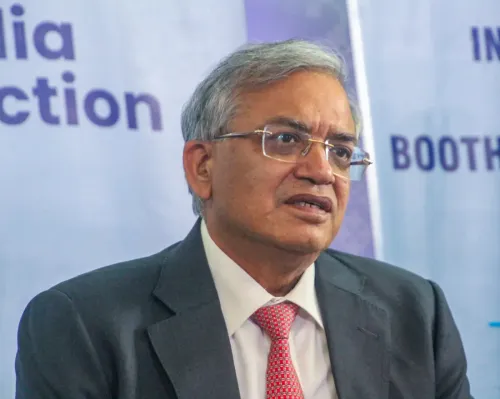
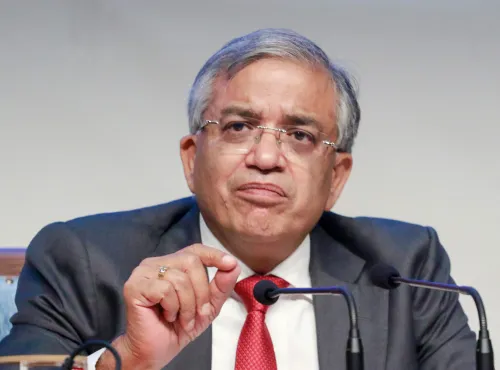
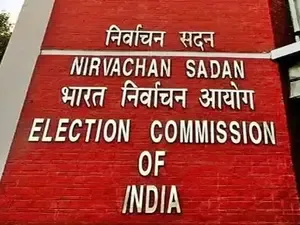
Gyanesh Kumar's appointment as Election Commissioner came under this revised framework, making him a direct symbol of the controversy around that legislation. The Election Commission of India is a constitutional body responsible for superintending, directing, and controlling all elections to Parliament and state legislatures — one of the most consequential offices in democratic governance.
Opposition's Wider Institutional Alarm
Gandhi's attack fits a sustained pattern of Congress and allied opposition parties alleging that the current central government has systematically hollowed out the independence of constitutional and statutory institutions. The Central Bureau of Investigation and the Enforcement Directorate have faced similar accusations of being deployed selectively against political opponents — charges the government has consistently denied. The election commissioners controversy, however, carries a particular charge: the Election Commission is the one body whose perceived impartiality is foundational to the legitimacy of every election result.
It is important to note that the specific claim about Gyanesh Kumar personally recruiting for the BJP during his IAS career is not established by widely verified public record, and NationPress does not independently assert it. Gandhi's post presents it as an allegation.
What the Courts May Decide
The legal front remains open. The constitutional validity of the 2023 appointment law — and whether the exclusion of the Chief Justice from the selection panel violates the basic structure of the Constitution — is a question that pending Supreme Court proceedings may yet resolve. Any judicial verdict would directly affect the standing of appointments made under the current framework, including Gyanesh Kumar's. With assembly elections in several states on the horizon, the timing of Gandhi's broadside ensures the debate over the Election Commission's independence will not stay confined to courtrooms.
The Election Commission has not publicly responded to Gandhi's post as of the time of publication.
Point of View
Populist language designed to reach voters, not just lawyers. The 'match-fixing' metaphor is surgically chosen: it implies not just bias but active corruption of the result, which is a far graver charge than mere partisanship. By naming a specific official rather than attacking the law abstractly, Gandhi personalises the accountability argument and creates a pressure point that will follow Gyanesh Kumar into every future election ruling he oversees. The Supreme Court's eventual verdict on the appointment law will either validate or undercut this line of attack — which means the opposition has a political incentive to keep the judicial process in public view.
NationPress
26 Sept 2026
Frequently Asked Questions
Who is Gyanesh Kumar and why is he controversial?
Gyanesh Kumar is an IAS officer appointed as Election Commissioner of India under the 2023 appointment law that replaced the Supreme Court-mandated selection panel with a committee headed by the Prime Minister. Opposition parties allege his appointment reflects political influence over the constitutional body.
What did Rahul Gandhi say about Gyanesh Kumar on 26 September 2026?
Rahul Gandhi alleged that Gyanesh Kumar , while a serving IAS officer, was used to recruit for the BJP , and that Modi and Shah subsequently installed him as election commissioner to 'match-fix' India's elections — a charge Gandhi made in a post on X on 26 September 2026 .
What changed in the Election Commissioner appointment process in 2023?
In 2023 , Parliament passed a law replacing the selection committee that included the Chief Justice of India with one headed by the Prime Minister , giving the executive greater control over appointments to the Election Commission of India .
Is the 2023 election commissioner appointment law under legal challenge?
Yes. The constitutional validity of the 2023 Chief Election Commissioner and Other Election Commissioners Act is subject to pending proceedings before the Supreme Court of India , with challengers arguing it violates the constitutional principle of an independent election authority.
Has the Election Commission of India responded to Rahul Gandhi's allegations?
As of the time of publication, the Election Commission of India had not issued a public response to Rahul Gandhi 's post of 26 September 2026 .