CM Dhami announces four Uttarakhand disaster-management steps
Synopsis
On Uttarakhand's first Disaster Management Day, CM Pushkar Singh Dhami put house fires on the disaster list for SDRF relief, pledged rewards for volunteer rescuers, ordered training for retired uniformed personnel, and released the IRS handbook and SDMP 2026-27.
Key Takeaways
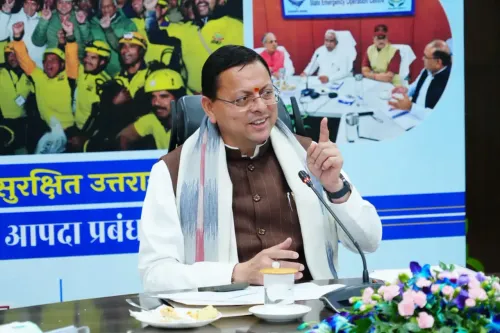
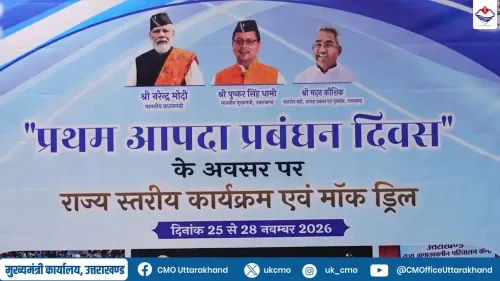
CM Pushkar Singh Dhami addressed students at the Dehradun Secretariat on the state's first Disaster Management Day on 27 November 2026.
Accidental fires in residential buildings will be treated as disasters, with relief as per SDRF norms.
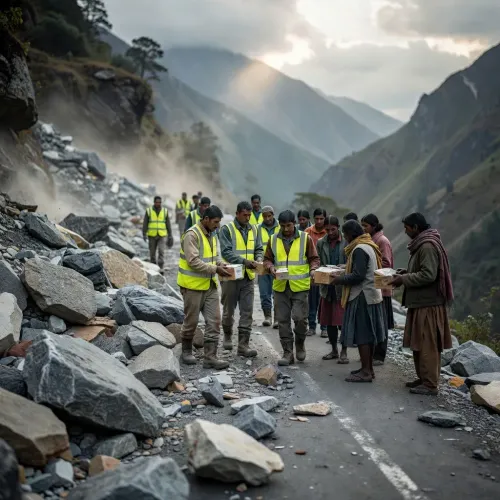
People who selflessly help in disasters and road accidents will be rewarded.
Retired armed forces, CAPF, police and other uniformed personnel will receive disaster-management training.
The Incident Response System handbook and Uttarakhand SDMP 2026-27 were released at the same programme.
Cabinet ministers including Satpal Maharaj, Madan Kaushik, Ganesh Joshi and others attended.
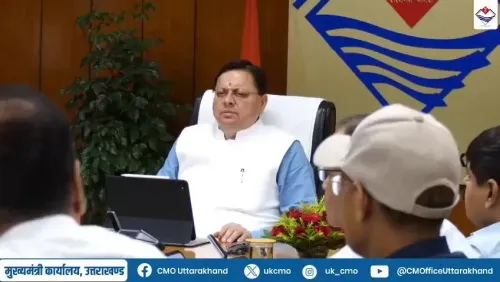
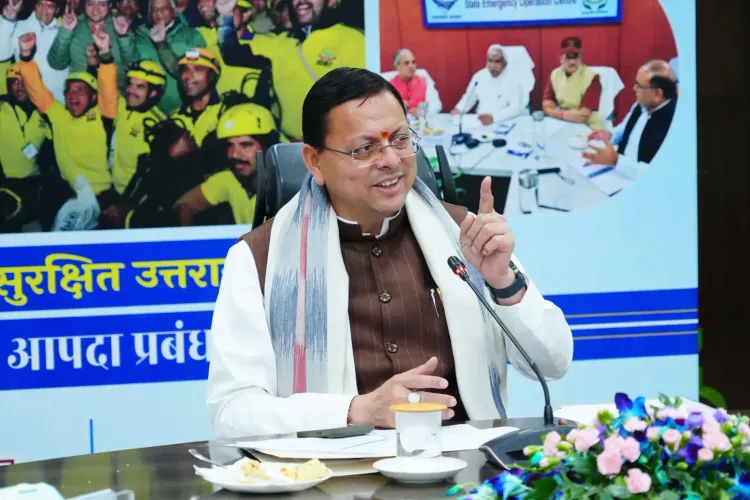
Uttarakhand Chief Minister Pushkar Singh Dhami used the state's first Disaster Management Day to recast accidental house fires as a disaster — promising relief on SDRF scales to families whose homes burn — and to fold volunteers and retired uniformed personnel into the official response. Addressing students from various fields at the Secretariat in Dehradun on Friday, 27 November 2026, he made four announcements aimed at hardening the disaster machinery and widening public participation, and released the Incident Response System handbook along with the State Disaster Management Plan for 2026-27.
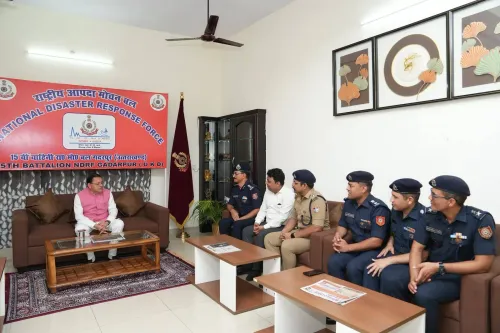
He wrote that accidental fires in residential buildings would be included in the disaster category, with affected households paid as per SDRF standards. People who selflessly help in relief and rescue during disasters and road accidents would be rewarded. Retired personnel of the armed forces, Central Armed Police Forces, police and other uniformed services would be trained in disaster management so that janbhagidari (public participation) rests on trained capacity rather than goodwill alone.
House fires now sit on the disaster list
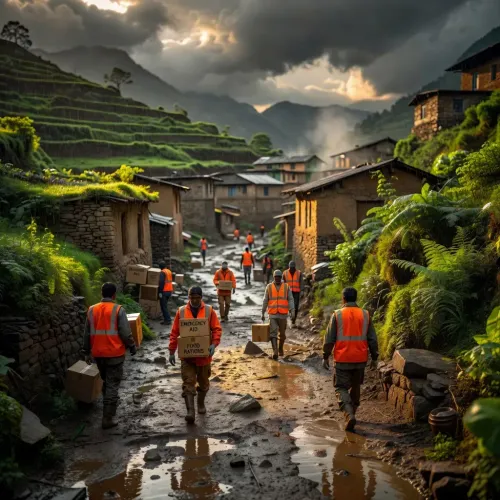
For a Himalayan state whose public memory is shaped by cloudbursts, landslides and the 2013 Kedarnath floods, folding everyday residential fires into the disaster category is a concrete change in who gets paid, and how fast. Relief will follow SDRF norms — the same scale used after floods and earthquakes — rather than remaining a discretionary civic grant.
Uttarakhand set up its State Disaster Management Authority in 2007, two years after the Disaster Management Act 2005. Friday's fire decision continues a long effort to widen what the state treats as a disaster and to standardise the cheque that follows.
Rewards for civilian rescuers, training for veterans
The next planks target people, not paper. Volunteers who join relief and rescue during disasters and road accidents without seeking anything in return will be honoured. Ex-servicemen and retirees from the Central Armed Police Forces, police and other uniformed services will receive disaster-management training — a standing reserve of people already used to operating under command in a crisis.
The National Disaster Management Authority has promoted the Incident Response System and community training across states since the early 2010s. Folding veterans into that pipeline fits that national push and Uttarakhand's own post-2013 drive to make disaster work a public duty, not only a monsoon-season scramble.
IRS handbook and SDMP 2026-27 released
On the same dais, Dhami unveiled the Incident Response System (IRS) handbook and the Uttarakhand State Disaster Management Plan (SDMP 2026-27). IRS is the national template for organising on-ground disaster operations; the SDMP is the state's periodic preparedness, mitigation and response plan. Chapter-level contents of the new plan were not spelled out in his remarks.
Cabinet ministers Satpal Maharaj, Madan Kaushik, Ganesh Joshi, Dhan Singh, Khajan Dass, Pradeep Batra and B.S. Chaudhary attended, along with other dignitaries. The primary audience was students — a choice that framed disaster management as a civic skill, not a closed file of the Secretariat.
The test is not the dais. It is whether fire-hit families actually receive SDRF-scale relief in 2027, and whether veteran-training batches leave the classroom for the hills before the next monsoon.
Point of View
Moving from ad-hoc relief toward standardised incident command and community involvement. Friday's package — treating house fires as disasters, rewarding civilian rescuers, and training veterans — sits inside NDMA guidance on the Incident Response System rather than breaking from it. The political signal is that disaster work is being recast as a standing civic duty, not only a monsoon-season emergency. Whether SDRF payouts for fire and the veteran-training pipeline actually move in 2027 will decide if the announcements become a durable safety net.
NationPress
27 Nov 2026
Frequently Asked Questions
What did Uttarakhand CM Pushkar Dhami announce on Disaster Management Day?
He announced that accidental residential fires will be treated as disasters with SDRF relief, that volunteer rescuers will be rewarded, and that retired uniformed personnel will be trained in disaster management. He also released the IRS handbook and the Uttarakhand State Disaster Management Plan 2026-27 at a Secretariat programme on 27 November 2026.
Will house fire victims in Uttarakhand get SDRF relief?
Yes. The Chief Minister said accidental fires in residential buildings will now fall in the disaster category, and affected people will receive relief as per SDRF standards. That aligns fire-hit households with the same relief yardstick used after floods and other notified disasters.
What is the Uttarakhand SDMP 2026-27?
It is the Uttarakhand State Disaster Management Plan for 2026-27, the state's periodic document for preparedness, mitigation and response. CM Dhami released it on the first Disaster Management Day along with an Incident Response System handbook; chapter-level details were not set out in his post.
Who will receive disaster management training in Uttarakhand?
Retired personnel of the armed forces, Central Armed Police Forces, police and other uniformed services will be trained. The stated aim is to link disaster management with public participation by using people already familiar with disciplined operations.
When was Uttarakhand's first Disaster Management Day observed?
It was observed on Friday, 27 November 2026, with a programme at the state Secretariat. CM Pushkar Singh Dhami addressed students and made the disaster-management announcements there.