Uttarakhand CMO: Dhami unveils four disaster measures
Synopsis
Uttarakhand's CMO says CM Pushkar Singh Dhami used the first Disaster Management Day in Dehradun to announce four steps, including SDRF cover for residential fires and teacher training.
Key Takeaways
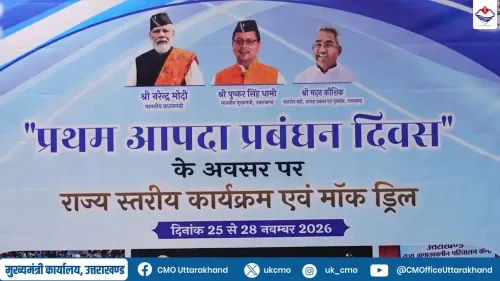
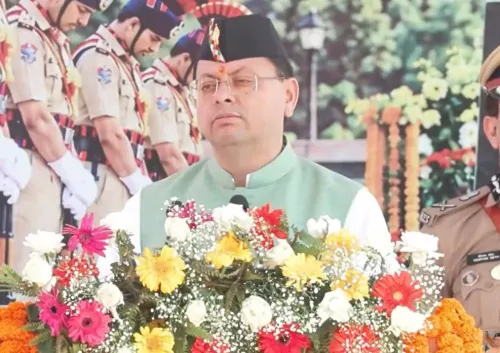
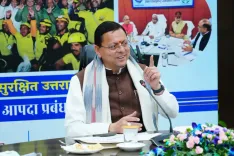
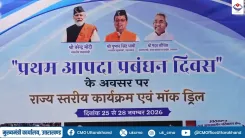
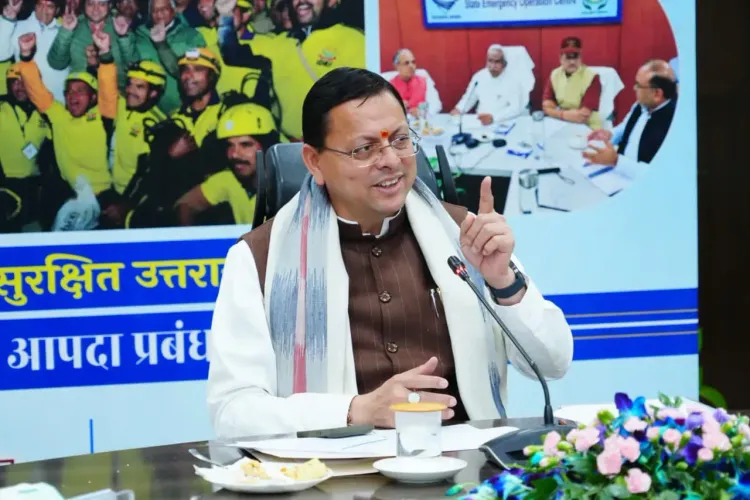
The Chief Minister's Office of Uttarakhand said Pushkar Singh Dhami attended the first Disaster Management Day at the Secretariat, Dehradun, on 27 November 2026.
Retired armed forces, CAPF, police and other uniformed personnel will be trained in disaster rescue and public awareness.
One teacher per 1,000 students in high-enrolment institutions will be trained as a disaster mitra or specialist.
Residential building fires will be treated as disasters, with SDRF relief as per norms; volunteer rescuers in disasters and road accidents will be rewarded.
An IRS handbook and the Uttarakhand SDMP 2026–27 were released; Dhami cited the 17-day Silkyara rescue of 41 workers in November 2023.
The Chief Minister's Office of Uttarakhand said Pushkar Singh Dhami on 27 November 2026 used the state's first Disaster Management Day at the Secretariat in Dehradun to lock in four concrete steps — from treating house fires as disasters to putting a trained teacher in every crowded campus. In a Himalayan state that lives with landslides, floods and earthquakes, the office framed the day as a shift from after-the-fact relief toward people who can act in the first hour.
Four measures Dhami put on the Dehradun dais
The office listed the announcements in order. Retired personnel from the armed forces, the Central Armed Police Forces, the police and other uniformed services will be trained in disaster rescue, then used to raise public awareness. In the first phase, high-enrolment schools, colleges and other institutions will see one teacher per 1,000 students trained by the state as a disaster mitra or disaster-management specialist, so that students stay continuously alert.
A third change reaches inside the home. Any fire caused by an accident in a residential building will be treated as a disaster, and those affected will receive relief under State Disaster Response Fund (SDRF) norms. Fourth, people who selflessly join relief and rescue during disasters and road accidents will be rewarded.
On the same platform the Chief Minister released an Incident Response System (IRS) handbook and the Uttarakhand State Disaster Management Plan (SDMP) 2026–27. He said Uttarakhand's distinctive geography makes disaster management a continuous challenge, and that public awareness plus preparedness at every level are essential. Students, he added, are now being tied into that chain.
Why speed, and why Silkyara, still define the brief
Dhami stressed that rapid response is decisive: once information arrives, the entire machinery must activate and reach the affected. In the last two to three years, he said, the state had faced several disasters, and the administration plus central and state agencies had mounted coordinated relief. He then walked the hall through the Silkyara tunnel rescue in Uttarkashi.
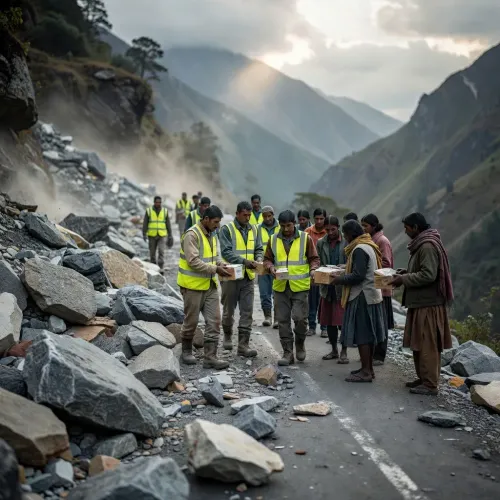
On 12 November 2023, Diwali day, 41 workers were trapped in the Silkyara tunnel. Under the guidance of Prime Minister Narendra Modi, central and state agencies, including teams from the Prime Minister's Office and the Union Ministry of Road Transport and Highways, pushed the operation. Multiple technical options were tried in parallel, with national and international specialists. After nearly 17 days, on 28 November 2023, all 41 workers were brought out safely. Dhami credited the workers' patience, the rescue teams, centre–state coordination — and the blessings of Baba Baukhnag.
Given Uttarakhand's seismic exposure, he also pressed for earthquake mock drills. Chief Secretary Anand Bardhan called Silkyara not only a successful extraction but an example of human sensitivity: patience in harsh conditions, teamwork from the district up to the Government of India, and top leadership guiding from the ground. The aim, he said, must be timely help to the last affected person.
The kicker is operational, not ceremonial. A new handbook and four pledges will matter only if a hillside house fire actually draws SDRF money, and if those trained teachers and veterans are in place before the next Himalayan shock.
Point of View
Schools and ordinary volunteers into official disaster machinery after repeated Himalayan shocks and the Silkyara template of centre–state coordination. Treating residential fires as SDRF-eligible events quietly widens the relief envelope beyond classic natural hazards. Teacher-per-thousand training and ex-servicemen cadres echo the 2005 Disaster Management Act's push for community and school preparedness. The test ahead is rollout: training seats, mock drills and actual SDRF payouts, not another plan on a dais.
NationPress
27 Nov 2026
Frequently Asked Questions
What did CM Pushkar Singh Dhami announce on Disaster Management Day?
The Chief Minister's Office of Uttarakhand said he announced four measures in Dehradun: training retired uniformed personnel, training one teacher per 1,000 students as a disaster specialist, treating residential fires as disasters eligible for SDRF relief, and rewarding volunteer rescuers in disasters and road accidents.
Will house fires in Uttarakhand get SDRF relief?
Yes. The CMO said accidental fires in residential buildings will be accepted as disasters and affected people will get relief as per State Disaster Response Fund norms.
How will schools be involved in Uttarakhand disaster preparedness?
In the first phase, the state will train one teacher as a disaster mitra or specialist for every 1,000 students in high-enrolment schools, colleges and other institutions, to keep students continuously aware.
What documents did Dhami release in Dehradun?
He released an Incident Response System (IRS) handbook and the Uttarakhand State Disaster Management Plan (SDMP) 2026–27, according to the CMO post.
Why did the CM mention the Silkyara tunnel rescue?
He used the November 2023 Uttarkashi operation — 41 workers trapped on 12 November and all rescued on 28 November after about 17 days — as an example of rapid, coordinated centre–state response under Prime Minister Narendra Modi's guidance.