Goyal Accuses Congress of Undermining Election Commission
Synopsis
Commerce Minister Piyush Goyal accused Congress of dismantling the Election Commission's impartial processes during its tenure, in a sharp post on October 13, 2026 — reviving India's long-running battle over institutional independence and electoral integrity.
Key Takeaways
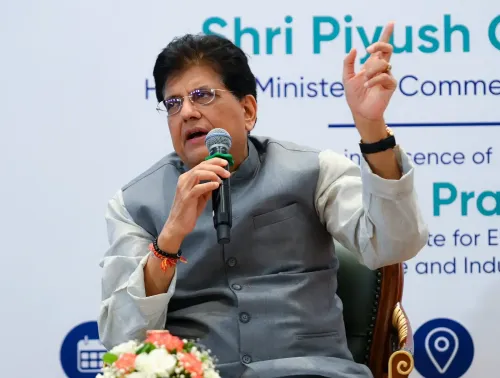
Piyush Goyal , Union Commerce Minister and Rajya Sabha Leader of the House, accused Congress of 'demolishing the impartial processes of the Election Commission' during its governments.
The Election Commission of India , established under Article 324 , is constitutionally mandated to oversee elections free from executive interference.
The sharpest historical precedent cited is the 1975 Emergency , when Congress postponed Lok Sabha elections by one year and curtailed political activity.
Since 2014 , the BJP has made defence of constitutional institutions a signature political position against Congress.
As Leader of the House in the Rajya Sabha , Goyal's charge carries potential legislative consequences, especially amid ongoing electoral reform discussions.
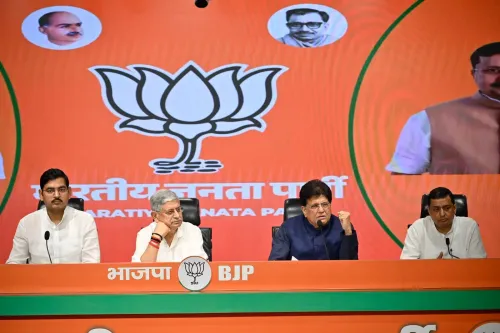
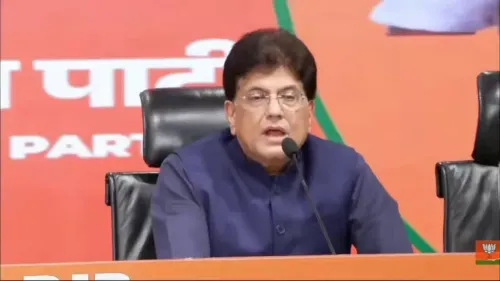
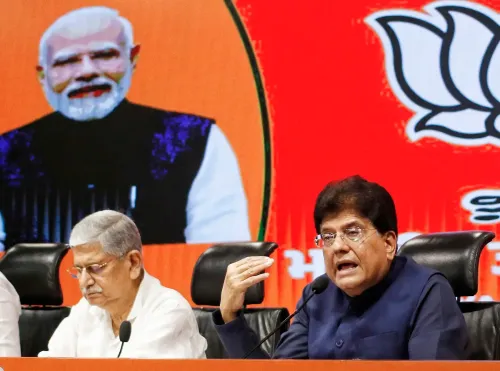
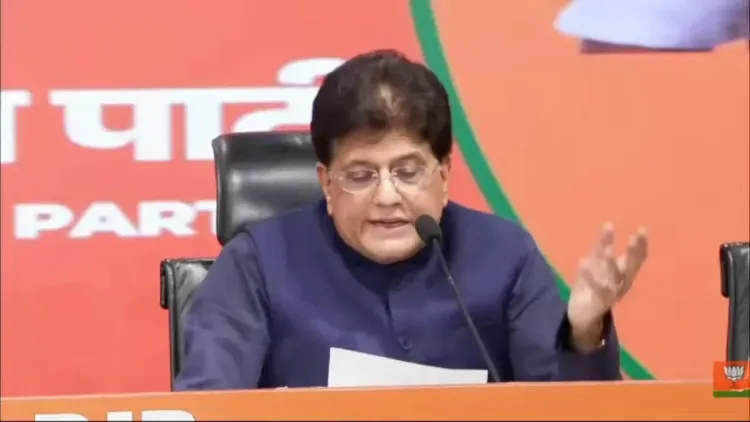
A pointed political broadside landed on Tuesday, October 13, 2026, when Union Commerce and Industry Minister Piyush Goyal took to X to accuse the Indian National Congress of systematically dismantling the fair processes of the Election Commission of India during its years in power — a charge that cuts to the heart of India's long-running debate over institutional independence.
In his post, Minister Goyal wrote: 'कांग्रेस ने अपने कार्यकाल में समय-समय पर चुनाव आयोग की निष्पक्ष प्रक्रिया को ध्वस्त किया' — 'Congress, during its tenure, repeatedly and over time, demolished the impartial processes of the Election Commission.' The accompanying video underlines his charge with what his camp frames as documented evidence of interference.
The Emergency shadow over India's electoral history
The sharpest historical peg for Goyal's accusation is 1975, when the Congress government under Prime Minister Indira Gandhi declared a national Emergency, postponed Lok Sabha elections by one year, and curtailed political activity across the country. Critics have long cited that episode as the most extreme example of a ruling party bending the constitutional machinery — including electoral oversight — to its will.
The Election Commission of India, established under Article 324 of the Constitution, is designed as an autonomous referee: its mandate is the 'superintendence, direction and control' of elections, insulated from executive interference. Any accusation of tampering with that body carries serious constitutional weight, which is precisely why such charges land hard in electoral seasons.
BJP's institutional-integrity pitch, and the Congress rebuttal pattern
Goyal's post fits a well-worn groove in Indian political rhetoric. Since returning to power in 2014, the BJP has consistently positioned itself as the guardian of constitutional institutions — the courts, the central bank, investigative agencies, and the Election Commission — against what it describes as decades of Congress-era erosion. Congress, for its part, has repeatedly fired back with its own charges of institutional capture under the current government.
As Leader of the House in the Rajya Sabha, Goyal occupies a platform where such statements carry legislative as well as political resonance. Any follow-up inside Parliament — particularly in the context of ongoing discussions around electoral law amendments — could sharpen the debate from a social-media exchange into a floor confrontation.
India's voters have heard this argument before. What changes is the stakes: the louder the institutional-integrity debate grows, the more pressure lands on the Election Commission itself to demonstrate its independence to a watchful public.
Point of View
The attack elevates the charge beyond ordinary partisanship into constitutional territory, where it is harder for the opposition to dismiss. The 1975 Emergency remains the BJP's most potent historical exhibit in this argument, and its periodic resurfacing signals that electoral credibility is expected to be a live fault-line in the near-term political cycle. The real audience may be less Congress itself than the swing voter who views institutional impartiality as a non-negotiable baseline.
NationPress
13 Oct 2026
Frequently Asked Questions
What did Piyush Goyal say about Congress and the Election Commission?
Goyal accused Congress of repeatedly dismantling the impartial processes of the Election Commission during its years in government, posting the charge on X on October 13, 2026, alongside a video.
What is the Election Commission of India and why is it important?
The Election Commission of India is a constitutional body established under Article 324, responsible for the superintendence, direction, and control of all elections in India. Its independence from the executive is considered essential to free and fair elections.
How did Congress interfere with elections historically according to BJP's charges?
The most cited episode is the 1975 Emergency under Prime Minister Indira Gandhi, when the Congress government postponed Lok Sabha elections by one year and curtailed political activity — widely regarded as the starkest example of institutional manipulation.
What is Piyush Goyal's role in the current government?
Piyush Goyal is the Union Minister of Commerce and Industry, a senior BJP leader, and Leader of the House in the Rajya Sabha — the upper house of India's Parliament.
Why does the BJP frequently accuse Congress of undermining constitutional institutions?
Since returning to power in 2014, the BJP has positioned institutional integrity as a core political identity, contrasting its governance style with what it describes as Congress's decades of interference in bodies like the Election Commission, judiciary, and investigative agencies.