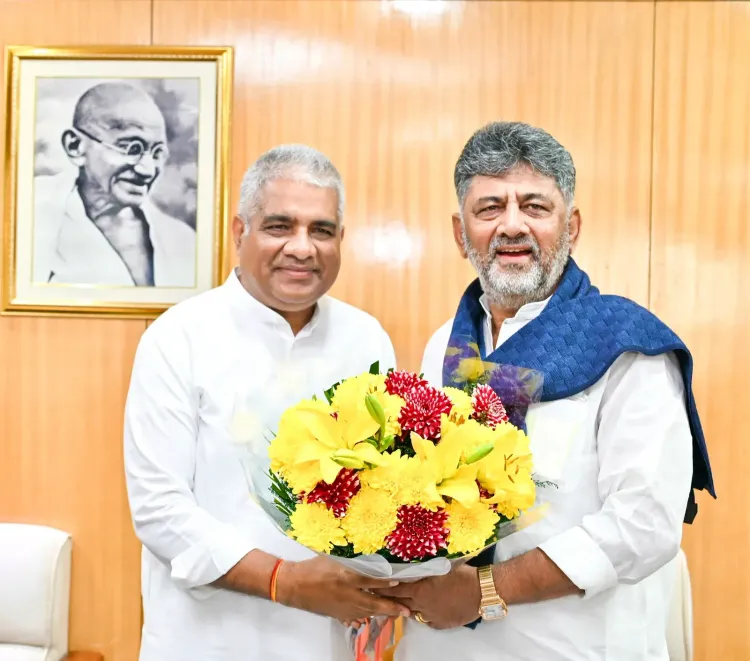
Bhupender Yadav meets CM Shivakumar on Karnataka's sustainable growth
Synopsis
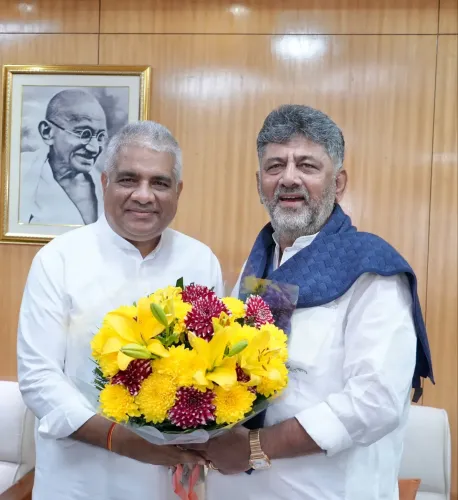
Union Environment Minister Bhupender Yadav held talks with Karnataka Chief Minister D K Shivakumar in New Delhi on October 22, 2026, focusing on the sustainable development of Karnataka — a state central to India's biodiversity and climate agenda.
Key Takeaways
Union Environment Minister Bhupender Yadav and Karnataka CM D K Shivakumar met in New Delhi on October 22, 2026 .
Discussions centred on the sustainable development of Karnataka , according to Yadav's post.
Karnataka encompasses a major share of the Western Ghats , one of the world's biodiversity hotspots.
The meeting reflects India's National Action Plan on Climate Change framework for central-state environmental coordination, active since 2008 .
No specific outcomes or joint statements have been publicly announced following the talks.
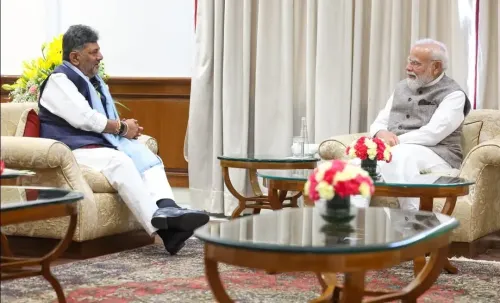
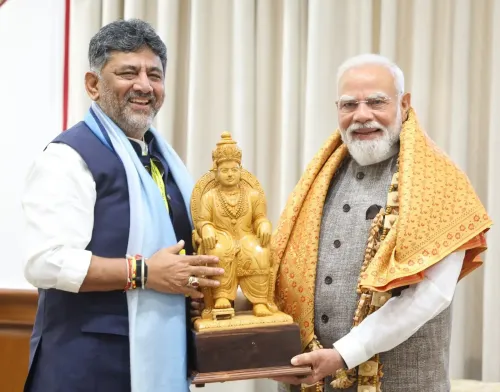
Across the political aisle and across state lines, a rare face-to-face conversation on Karnataka's environmental future took place in the capital on Thursday, October 22, 2026. Union Environment Minister Bhupender Yadav met with Karnataka Chief Minister D K Shivakumar in New Delhi, with both leaders describing the discussions as focused on the sustainable development of Karnataka.
A BJP minister, a Congress CM, one agenda: Karnataka's ecology
The meeting brought together two leaders from opposite ends of the political spectrum — Yadav, a senior BJP figure and the Centre's point-man on forests and climate, and Shivakumar, the Congress chief minister of one of India's most ecologically complex states. That they sat down at all underscores how environmental pressure points in Karnataka — from the biodiversity of the Western Ghats to the urban sprawl straining its cities — demand central-state coordination regardless of party arithmetic.
Why Karnataka sits at the centre of India's sustainability conversation
Karnataka is home to a significant share of India's forest cover and straddles the Western Ghats, one of the world's eight 'hottest hotspots' of biological diversity. At the same time, the state faces mounting pressure from rapid urbanisation, tech-industry expansion around Bengaluru, and competing demands on land and water. Balancing growth with conservation has been a live tension for both state administrators and central ministries for years.
Central-state coordination on these issues has a formal backbone: India's National Action Plan on Climate Change, launched in 2008, created a framework under which states prepare their own climate action plans in dialogue with the Union government. Meetings between the Environment Ministry and state governments have been a routine feature of that cooperative federalism ever since.
What the meeting signals — and what comes next
Yadav characterised the discussions as 'very meaningful,' a phrasing that suggests more than a courtesy call without specifying binding outcomes. The specifics of any decisions or project commitments from October 22 are yet to be publicly detailed. Watchers of Karnataka's environmental governance will be tracking whether the dialogue produces joint statements, fresh funding allocations, or fast-tracked clearances on sustainability initiatives the state has been pursuing.
In prior years, Karnataka has engaged with the Centre on Western Ghats ecology frameworks, pollution control measures in its urban corridors, and climate adaptation planning. Whether this meeting advances any of those threads into concrete action is the question that now hangs in the air.
When a ruling-party Union minister and an Opposition state chief minister frame an off-agenda bilateral as 'meaningful,' the policy world tends to listen — and wait.
Point of View
With a BJP Union minister and a Congress chief minister publicly flagging alignment on sustainable development. For the BJP, it projects a governance-above-politics posture on climate; for Shivakumar, it signals proactive engagement with the Centre on an issue that resonates strongly with Karnataka's urban and rural voters alike. The meeting also comes as India's Western Ghats continue to attract global attention over ecological protection, giving any bilateral on Karnataka's environment a dimension beyond state politics. The real test will be whether 'very meaningful discussions' translate into tangible policy movement — forest clearance timelines, urban sustainability funding, or a formalised action plan — before the next election cycle sharpens the political calculus.
NationPress
22 Oct 2026
Frequently Asked Questions
Why did Bhupender Yadav meet DK Shivakumar in Delhi?
Union Environment Minister Bhupender Yadav met Karnataka Chief Minister D K Shivakumar in New Delhi on October 22, 2026 for discussions on the sustainable development of Karnataka, covering issues tied to the state's forests, Western Ghats ecology and urban growth pressures.
What environmental issues does Karnataka face that require central coordination?
Karnataka is home to a significant part of the Western Ghats biodiversity hotspot and faces rapid urbanisation around Bengaluru, making forest conservation, pollution control and climate adaptation key areas where central and state agencies must coordinate.
What is India's framework for central-state environmental cooperation?
India's National Action Plan on Climate Change, launched in 2008, is the primary framework under which state governments develop climate action plans in coordination with the Union Environment Ministry.
What outcomes came out of the Yadav-Shivakumar meeting?
No specific outcomes or joint policy announcements have been publicly detailed following the October 22, 2026 meeting. Yadav described the discussions as 'very meaningful,' but concrete decisions are yet to be confirmed.
What is the Western Ghats and why does it matter for Karnataka?
The Western Ghats is a mountain range along India's western coast and one of the world's eight biodiversity hotspots. A large section runs through Karnataka, making the state critical to national forest and wildlife conservation efforts.